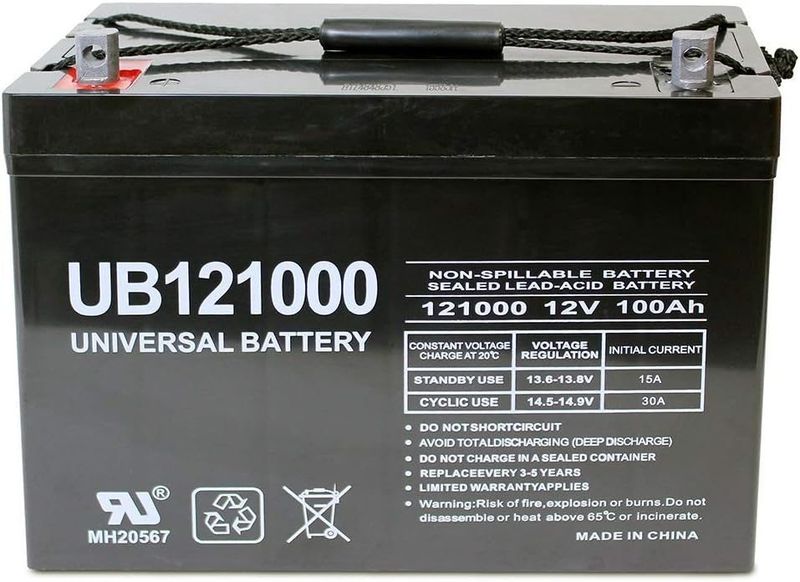
A 12 V 100 Ah AGM deep-cycle battery that discharges from -4 to 140 °F, with a 1,100 A five-second peak and low self-discharge, sold by Amazon at $208.99.
Renogy’s 12 V 100 Ah AGM battery is a sealed lead-acid design. Its strongest argument against LiFePO4 is temperature: Renogy says the upgraded electrolyte discharges from -4 to 140 °F. LiFePO4 batteries generally must not be charged below freezing, and several on this site stop entirely.
The surge figure
A 1,100 A maximum discharge for five seconds is the highest short-term figure on this shelf. It is what starts a motor or an inverter-driven compressor without dropping out.
The cost in weight
It weighs 63.9 lb at 13.1 × 6.9 × 8.6 in. A 100 Ah LiFePO4 battery in the same size weighs about 22 lb.
Banks and storage
Renogy allows unlimited series connection and up to four in parallel. Self-discharge is under 3% a month at 77 °F, which suits seasonal use.
Price on Amazon.com
Amazon.com was selling it at $208.99 on November 2, 2026, with a two-year prorated warranty.
Prices quoted in this text were read on November 2, 2026. The live price is at the top of the page.
What it gets right, and what it leaves out
Strengths
A published discharge range down to -4 °F, where LiFePO4 batteries stop
The highest short-term discharge here, 1,100 A for five seconds
Sold and shipped by Amazon.com
Compromises
63.9 lb, about three times a LiFePO4 battery of the same capacity
The warranty is two years and prorated
Lead-acid usable capacity is well below 100 Ah if you want long life
Specifications
Capacity
12 V, 100 Ah
Chemistry
Sealed lead-acid, AGM
Maximum discharge
1,100 A for 5 seconds
Operating range
Discharge from -4 to 140 °F
Self-discharge
Under 3% per month at 77 °F
Banking
Series without limit, parallel up to 4
Size
13.1 × 6.9 × 8.6 in
Weight
63.9 lb
Warranty
2 years, prorated
Amazon reference
B075RFXHYK
Questions owners ask about this one
How much of the 100 Ah can I use?
Renogy does not state a recommended depth of discharge in the bullets. AGM batteries generally last longest when they are not drained deeply; UPLUS, on this shelf, recommends no more than 80% for its lead-carbon battery and says ordinary AGM should stay at 50%.
Will it run a microwave?
Renogy lists a fridge, a microwave, a CPAP and a coffee maker, through an inverter. The 1,100 A five-second peak covers starting surges; a long microwave run will pull the voltage down quickly.
Can I store it all winter?
Self-discharge is under 3% a month at 77 °F, so it holds a charge through a season, but a lead-acid battery should still be topped up.
Our score
8.0/ 10
A sealed AGM battery that works where lithium will not, at -4 °F, with a strong surge figure. Heavy, and with a short prorated warranty.
Set beside the neighboring portable power units
Same category, nearby prices, between portable power units. What remains is the specifications every one publishes — half empty, a column is no use.
Where the models are not equal, in portable power units
If price decides: Mighty Max ML100-12 Group 27, at $170.
Highest Weight in the table: this model (63.9 lb).
This model holds the table’s highest figure for Weight.
Who this one is for, among portable power units
Cold-climate RVs and cabins, and anyone who wants a sealed battery without a BMS
Sources
Specifications: the manufacturer sheet for portable power gear and the matching Amazon product page. Prices and availability: Keepa. Every figure on this page names its source.
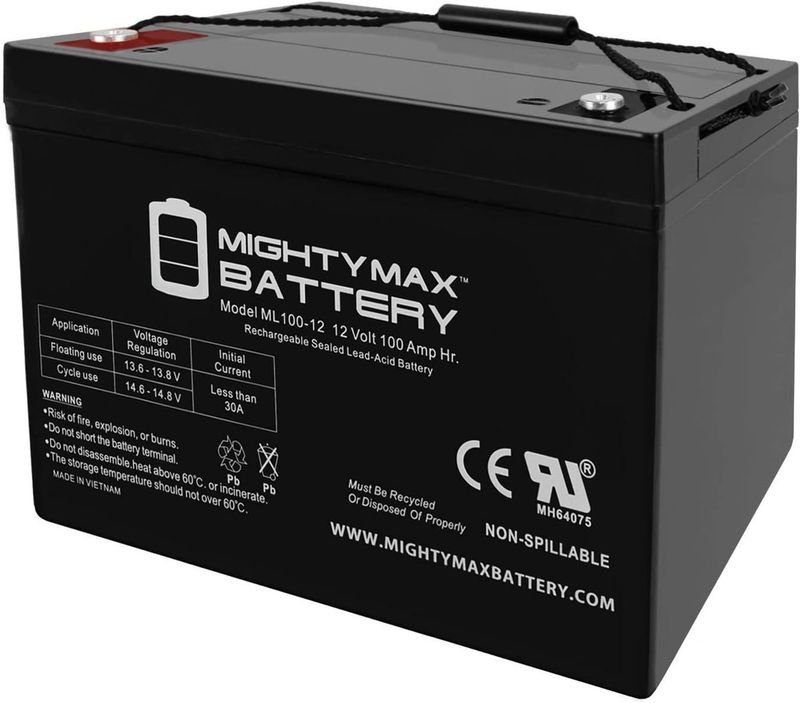
12 V 100 Ah sealed lead-acid AGM battery, Group 27 per the listing, UL certified, 12.09 × 6.65 × 8.48 in, mounts in any position, battery and screws only, 1-year warranty
A UL-certified 12 V 100 Ah sealed AGM battery that mounts in any position, sold by Amazon at $169.99, the cheapest lead-acid option here.
Best for: Solar and backup banks where price matters more than weight or warranty
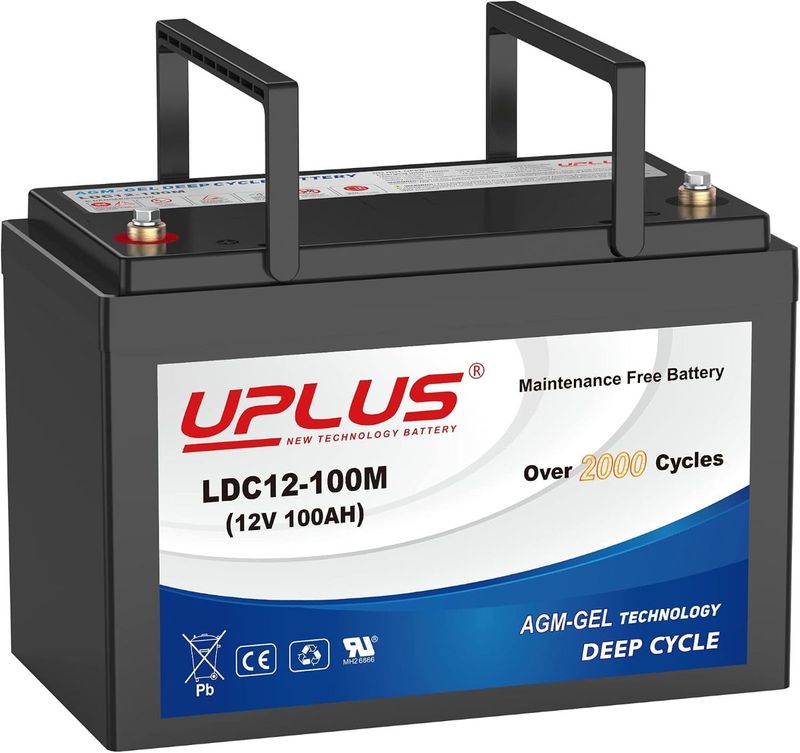
12 V 100 Ah lead-carbon AGM / gel hybrid deep-cycle battery, Group 27 (12.05 × 6.61 × 8.19 in), 80% recommended depth of discharge, 25 A maximum charge (full in 5 hours), 45 A continuous, 710 A (5 s), 60 lb, 2-year warranty
A 12 V 100 Ah lead-carbon AGM battery rated for 80% depth of discharge, with charging and discharge limits in amps, at 60 lb and $171.46.
Best for: Solar and RV banks where you want lead-acid but need to use most of the capacity