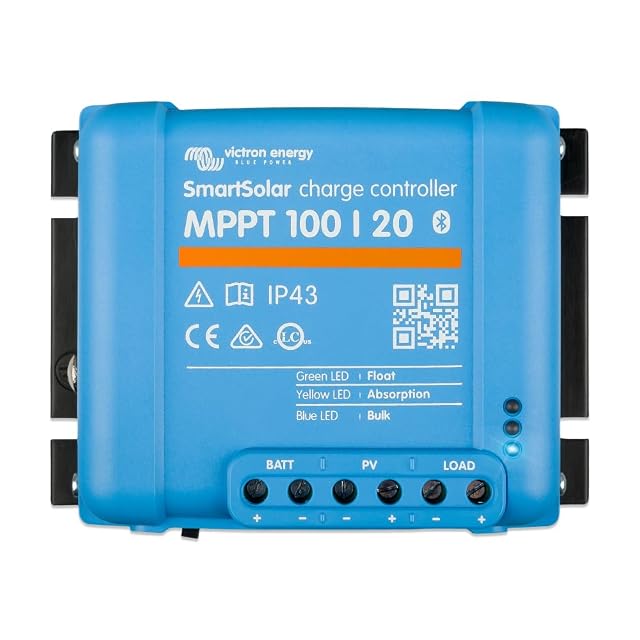
MPPT converts surplus voltage into amps; PWM throws it away
The best MPPT charge controllers for 2026
A charge controller stands between a solar panel and a battery, and the two technologies on the market do genuinely different things. A PWM controller connects the panel to the battery and lets the battery pull the panel down to its own voltage, which wastes the difference; an MPPT controller runs a converter that turns that surplus voltage into extra current, and the gain is real whenever the panel voltage sits well above the battery voltage — which is most of the time with modern panels. The rating that matters is the charge current in amps, because that is the ceiling on what reaches the battery, and the second is the maximum PV voltage, which must survive the panel’s open-circuit voltage on the coldest morning of the year. Tracking efficiency and conversion efficiency are published separately by the better makers and describe two different losses. Battery profiles decide compatibility: a controller with a lithium profile and a user-defined profile can charge anything on this site; one with only a flooded lead-acid curve cannot. Then the practical parts — a display or an app, the terminal sizes, the fusing the maker requires, and the enclosure rating if it lives in a locker. We compare charge current, maximum PV voltage, efficiency, battery profiles, monitoring, wiring sizes and enclosure.