The HomePower 3600 Plus stores 3,584 Wh and delivers 3,600 W. Jackery calls it the lightest 3.6 kWh LFP power station, 29.3% lighter and 34% smaller than other models; it still weighs 77.2 lb, and it rolls on wheels with a telescopic handle.
Its real case is expansion. One unit grows to 21 kWh with extra batteries, and several units reach 43 kWh. Two units in parallel give 7,200 W and 240 V, which brings well pumps, dryers and some heaters within reach.
Connecting it to a home
Jackery describes plug-and-play operation with its MTS transfer switch: plug in, press Power-On. The switch itself still has to be installed at the electrical panel, which in most places is a job for a licensed electrician. Without it, the station powers whatever is plugged into its outlets.
Four ways to recharge
From 0 to 100% in 2 hours with AC and DC together, 2.5 hours on AC, 4 hours on solar, or 2.5 hours from a gas generator. Jackery quotes those times without stating the solar wattage behind the four-hour figure.
Cells and cycle life
The cells use a ceramic membrane, tested at 302 °F against thermal runaway, and Jackery rates them for 6,000 cycles over a 10-year lifespan, with operation in -4 °F conditions. That cycle figure ties with the BLUETTI Elite 200 V2 for the highest published on this site.
Price on Amazon.com
Amazon.com was selling it at $1,899.00 on November 2, 2026, with a five-year manufacturer warranty. That is about 1.9 Wh per dollar, the most expensive per watt-hour in this category, paid for the 240 V path and the 21 kWh ceiling.
Prices quoted in this text were read on November 2, 2026. The live price is at the top of the page.
What it gets right, and what it leaves out
Strengths
240 V from two units, the only station here that can power a 240 V well pump or dryer through parallel units
Expandable to 21 kWh per unit, the largest ceiling in this category
A published 6,000-cycle rating and cold operation to -4 °F
Compromises
240 V needs two units, and whole-home connection needs Jackery’s MTS switch
At 77.2 lb it rolls; nobody carries it
Two AC outlets only, per the spec table
Specifications
Capacity
3,584 Wh, LiFePO4 with ceramic-membrane cells
AC output
3,600 W; 7,200 W and 120/240 V with two units in parallel
Expansion
Up to 21 kWh per unit, 43 kWh with multiple units
Home connection
Plug-and-play with Jackery’s MTS transfer switch
Recharge
Full in 2 hours AC + DC; 2.5 hours on AC; 4 hours on solar; 2.5 hours from a gas generator
Cycle rating
6,000 cycles, 10-year lifespan
Cell safety
Cells tested at 302 °F against thermal runaway; operation down to -4 °F
Mobility
Wheels and a telescopic handle
Weight
77.2 lb
Dimensions
15.2 × 12.2 × 19.3 in
Warranty
5 years
Amazon reference
B0FM8653F1
Questions owners ask about this one
Can it run a 240 V appliance?
Two units in parallel deliver 7,200 W at 120 V and 240 V, which Jackery says runs pumps, heaters and dryers. A single unit is 120 V only.
How does it connect to the house?
Jackery says it powers the home plug-and-play when paired with its MTS transfer switch. Wiring a transfer switch into a panel is electrician work in most jurisdictions.
Can it work in a cold garage?
Jackery says it delivers reliable power in -4 °F blizzards. Charging LiFePO4 below freezing is a separate question; the listing does not detail cold charging.
Our score
8.3/ 10
A 3,584 Wh station that grows to 21 kWh and reaches 240 V with a second unit. Built for the house first, with wheels for moving it.
Set beside the neighboring portable power units
Same category, nearby prices, between portable power units. What remains is the specifications every one publishes — half empty, a column is no use.
Where the models are not equal, in portable power units
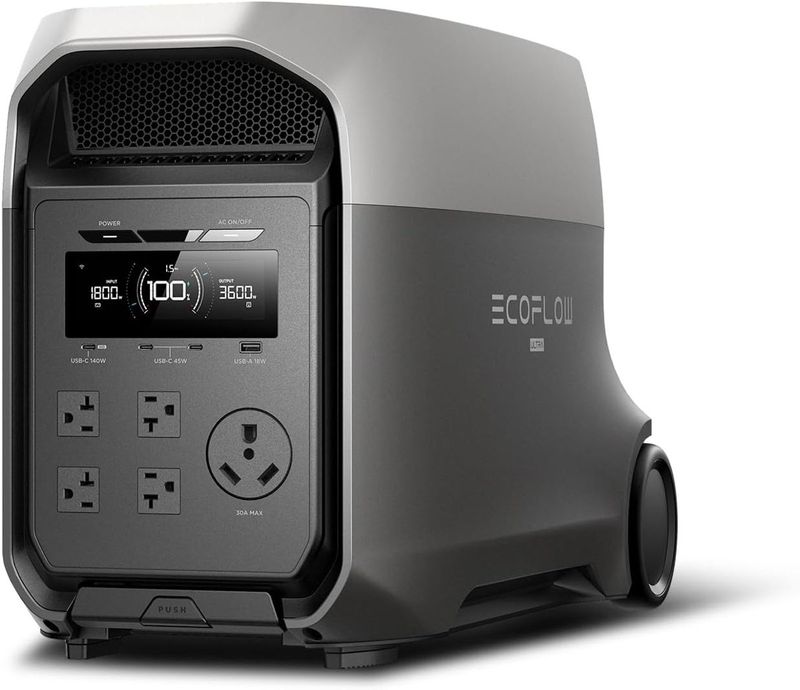
If price decides: EcoFlow DELTA 3 Ultra, at $1299.
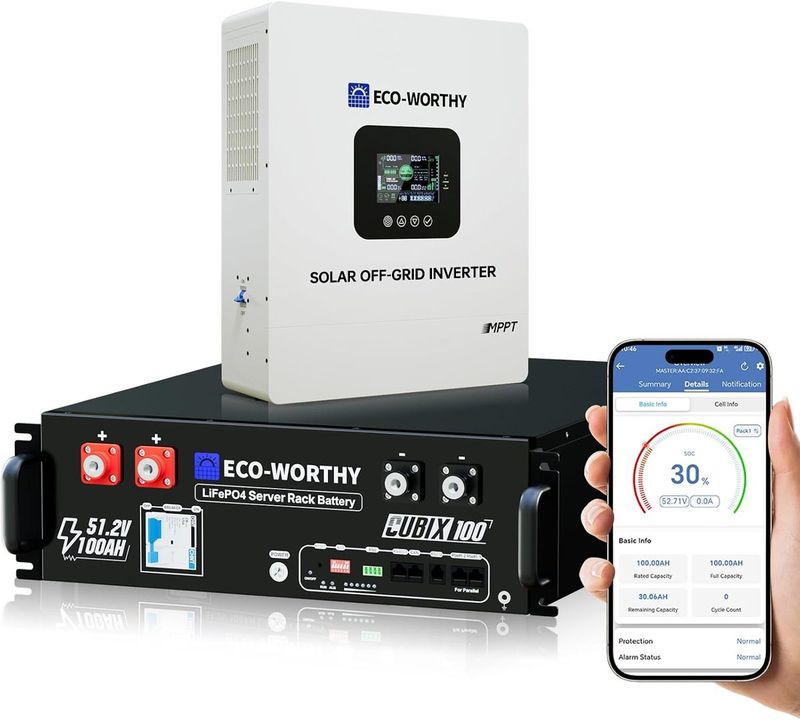
Highest Warranty in the table: ECO-WORTHY 48 V 5,120 Wh battery and 5,000 W inverter kit (Battery 10 years, inverter 2 years).
Who this one is for, among portable power units
Whole-home essentials through multi-day outages, with a path to 240 V and more capacity
Sources
Specifications: the manufacturer sheet for portable power gear and the matching Amazon product page. Prices and availability: Keepa. Every figure on this page names its source.
Home backup power station: 3,072 Wh LiFePO4, 3,600 W continuous (7,200 W surge), under 10 ms UPS, 25 dB under load, four charging methods, 72.1 lb, 5-year warranty
A 3,072 Wh LiFePO4 station with a 3,600 W inverter, a sub-10 ms UPS switch and 25 dB under load, for $1,299: the quiet one in this category.
Best for: A bedroom-quiet backup for a fridge, a CPAP and a home office
Home backup kit: 51.2 V 100 Ah LiFePO4 server rack battery (5,120 Wh) and a 5,000 W 120 V off-grid inverter with 100 A MPPT (120–500 V PV); UL1973 and UL1741 tested; parallel to 30 kW
A 5,120 Wh, 48 V server rack battery and a 5,000 W, 120 V hybrid inverter tested to UL1973 and UL1741, for $1,589.99. A system to install, not a station.
Best for: A permanent solar backup system in a garage or utility room, installed by a pro
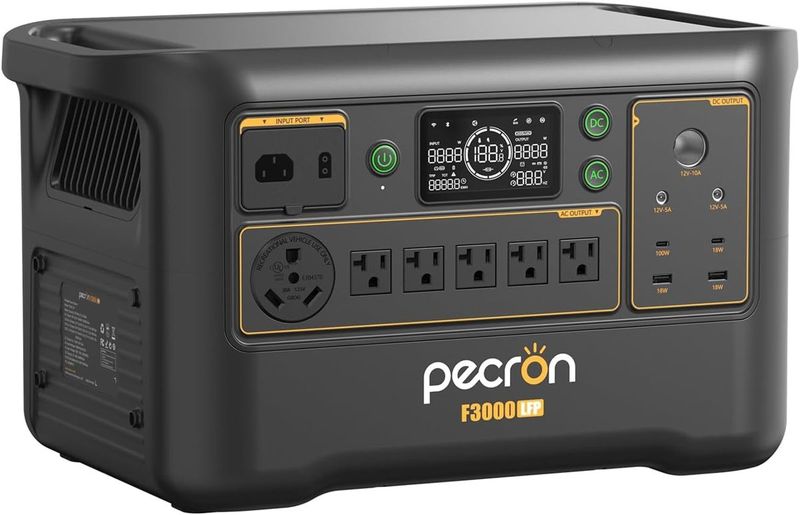
Home backup power station: 3,072 Wh LiFePO4, 3,600 W pure sine wave, 13 ports with six AC outlets, full AC recharge in 2 hours at 1,800 W, 1,600 W solar input (25–120 V), 8–20 ms UPS, expandable to 10,752 Wh
A 3,072 Wh LiFePO4 station with 3,600 W, six AC outlets and 1,600 W of solar input for $899: the lowest price per watt-hour of the all-in-one units here.
Best for: Budget whole-day backup with room to add batteries and a serious solar array