VEVOR’s 6,400 W hybrid inverter is a low-frequency design: a big transformer inside a 78.5 lb, 15.75 × 7.09 × 21.46 in case. Transformer-based inverters are heavier and usually more tolerant of the starting surge of pumps, compressors and power tools. VEVOR quotes 6,400 W continuous and 8,960 W peak.
Split phase
Output is 120/240 V split phase, the same layout as a US home service, so 240 V loads like a well pump or a dryer can run. The inverter works with 48 V lithium, lead-acid and user-defined batteries, with an activation function for lithium.
What the listing leaves vague
A built-in 120 A MPPT controller is listed, but the bullets give no maximum PV voltage or array size. The spec table lists 150 V as input voltage, which is low for a 48 V hybrid and should be confirmed in the manual. There is no Wi-Fi.
Price on Amazon.com
VEMIXO was selling it at $679.90 on November 2, 2026, with 3.6 stars from 15 ratings. It is the cheapest split-phase unit here.
Prices quoted in this text were read on November 2, 2026. The live price is at the top of the page.
What it gets right, and what it leaves out
Strengths
A low-frequency, transformer-based design, built for motor starting and heavy loads
True 120/240 V split phase for well pumps, dryers and other 240 V loads
The lowest entry price for split phase here, $679.90
Compromises
No Wi-Fi or app monitoring
The PV input limits are not stated clearly in the bullets
3.6 stars from 15 ratings at the time of reading
Specifications
Continuous output
6,400 W, 8,960 W peak
AC output
110–120 V / 220–240 V split phase, pure sine wave
Topology
Low-frequency (transformer-based)
Battery
48 V; lithium, lead-acid and user-defined types; lithium activation
Solar controller
120 A MPPT
Operating range
14 to 122 °F
Monitoring
LCD; no Wi-Fi
Weight
78.5 lb
Dimensions
15.75 × 7.09 × 21.46 in
Amazon reference
B0G4TK8Y8W
Questions owners ask about this one
Why does low-frequency matter?
A low-frequency inverter uses a large transformer. It is heavier, 78.5 lb here, but generally handles motor starting surges better than a high-frequency design of the same rating.
Can it run 240 V appliances?
Yes. It outputs 120/240 V split phase, the same arrangement as a US home service.
What panels can it take?
The listing gives a 120 A MPPT controller, but its bullets do not state the maximum PV voltage or wattage. Check the manual before designing the array.
Our score
7.3/ 10
A heavy, transformer-based split-phase inverter for loads that need surge headroom. The listing is short on PV input details and the reviews are mixed.
Set beside the neighboring portable power units
Same category, nearby prices, between portable power units. What remains is the specifications every one publishes — half empty, a column is no use.
Where the models are not equal, in portable power units
If price decides: this model, at $680.
Highest Continuous output in the table: POWLAND 12,000 W 48 V hybrid inverter (12,000 W pure sine wave, 120 V ±5%).
Highest Solar controller in the table: POWLAND 12,000 W 48 V hybrid inverter (200 A MPPT).
Who this one is for, among portable power units
Off-grid cabins and shops with motors to start and no need for app monitoring
Sources
Specifications: the manufacturer sheet for portable power gear and the matching Amazon product page. Prices and availability: Keepa. Every figure on this page names its source.
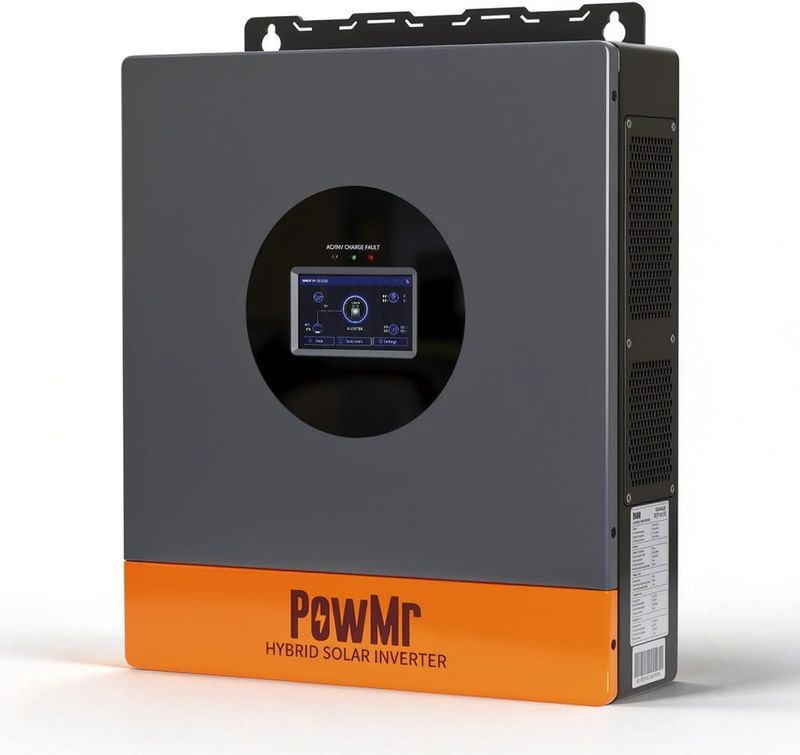
8,000 W 48 V split-phase hybrid solar inverter, 16,000 W surge, adjustable 120/240 V, 120 A MPPT with 10,500 W PV input (125–425 V MPPT, 500 V Voc), 45 A AC input, Wi-Fi and Bluetooth, 35 lb, 12-month warranty
An 8,000 W split-phase hybrid inverter that takes 10,500 W of PV at up to 500 V, with Wi-Fi, Bluetooth and adjustable output voltage, at 35 lb.
Best for: Grid-backup and off-grid homes with a large roof array
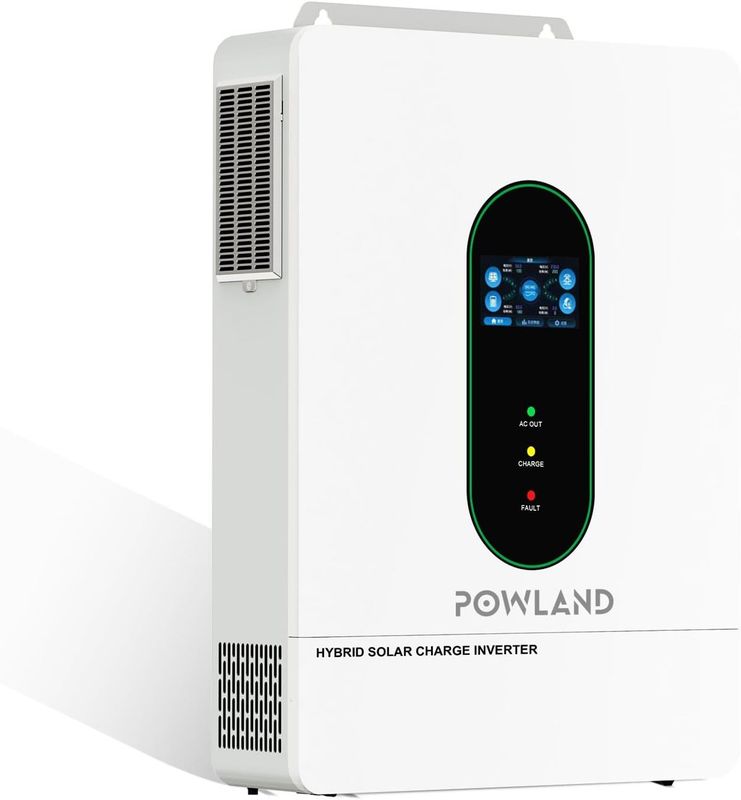
12,000 W 48 V solar hybrid inverter, 120 V ±5% pure sine wave with split-phase operation, built-in 200 A MPPT, battery-free PV operation, 6-unit stacking to 72 kW, 45 dB fans, UL1741 in the title, 1-year warranty
A 12,000 W, 48 V hybrid inverter with a 200 A MPPT controller and battery-free solar operation, for $1,029.99. Its 99.9% efficiency claim is not credible.
Best for: Large off-grid systems where output per dollar comes first
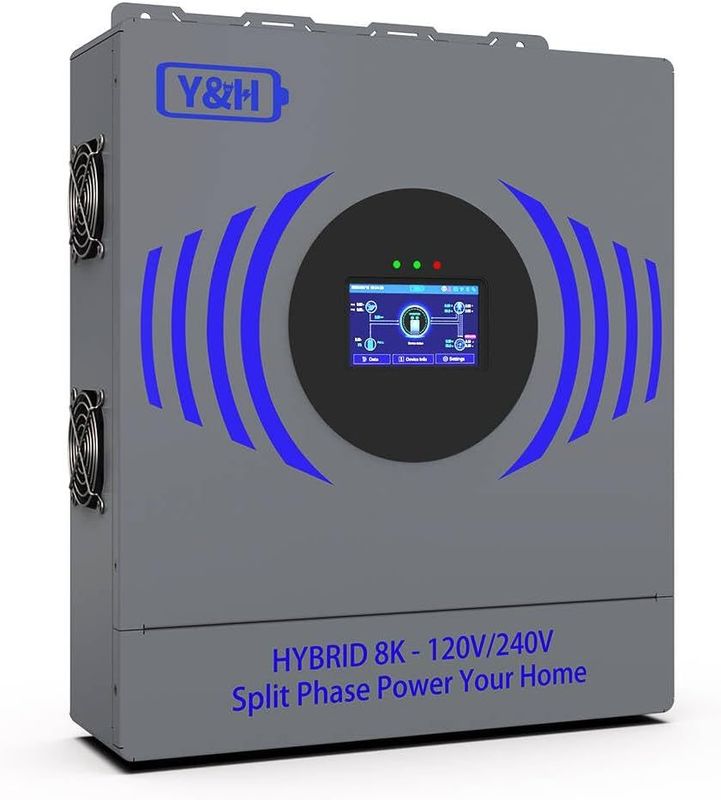
8,000 W 48 V split-phase hybrid solar inverter, 16,000 W surge, under 3% THD, UL1741 and FCC, 10,500 W PV (125–425 V), 10–15 ms UPS transfer, 6 units in parallel to 48 kW, Wi-Fi and Bluetooth, 40.7 lb, 2-year warranty
An 8,000 W split-phase hybrid inverter certified to UL1741, with a 10–15 ms transfer, 10,500 W of PV input and parallel stacking to 48 kW.
Best for: Permitted home installations that need a UL1741 inverter