The OUPES Mega 1 starts at 1,024 Wh of LiFePO4 and grows to 5,120 Wh with two B2 extra batteries. No other kit on this shelf can be expanded. The inverter delivers 2,000 W pure sine wave with a 4,500 W surge through four 120 V outlets, and the port panel adds two 100 W USB-C, four 18 W USB-A, two 12 V/10 A DC5521 sockets and a car socket.
The fastest refill on AC
OUPES claims 0–80% in 36 minutes from a wall outlet. That beats the one-hour emergency charge of the Jackery 1000 v2 kit. Solar input goes to 800 W, with 0–80% in 1.3 hours from three 240 W panels.
The panel is a starter
The kit ships with a 100 W panel. Against a 1,024 Wh battery and an 800 W input, that is an eighth of what the station accepts. Expect a sunny day to bring back a few hundred watt-hours, not a full charge. The kit is best read as a station with a sample panel.
Backup and longevity
The UPS switch kicks in within 20 ms. The cells are rated for 3,500+ cycles; the listing does not say to what capacity. The station weighs 27.8 lb, and OUPES gives a five-year warranty.
Price on Amazon.com
OUPES-US listed the kit at $649.00 on November 2, 2026.
Prices quoted in this text were read on November 2, 2026. The live price is at the top of the page.
What it gets right, and what it leaves out
Strengths
The fastest published 80% AC charge in this category, 36 minutes
Expandable to 5,120 Wh, the only kit here that grows with extra batteries
Thirteen ports, including four AC outlets and two 100 W USB-C
Compromises
The 100 W panel is small for 1,024 Wh; the 800 W input needs about three times the panels the kit includes
A 20 ms switchover is slower than the 10 ms class
No end capacity is given for the 3,500-cycle rating
Specifications
Station
Mega 1 (S1), 1,024 Wh, LiFePO4
Expansion
Up to 5,120 Wh with two B2 extra batteries
AC output
2,000 W pure sine wave, 4,500 W surge, four 120 V outlets
Other outputs
2 USB-C PD 100 W, 4 USB-A QC3.0 18 W, 2 DC5521 12 V/10 A, 1 car socket 12 V/10 A
AC recharge
0–80% in 36 minutes
Solar input
Up to 800 W; 0–80% in 1.3 hours with three 240 W panels
Panel in the box
100 W
UPS switchover
Under 20 ms
Cycle rating
3,500+ cycles
Weight
27.8 lb
Warranty
5 years
Amazon reference
B0FS71NRSZ
Questions owners ask about this one
Can I add batteries later?
Yes. OUPES says two B2 extra batteries take the system from 1,024 Wh to 5,120 Wh.
How much solar can it take?
Up to 800 W. OUPES quotes 0–80% in 1.3 hours with three 240 W panels; the kit includes one 100 W panel.
Will it protect a computer during an outage?
The UPS function switches within 20 ms. Most computers ride through that, but units with a 10 ms switchover leave more margin.
Our score
8.1/ 10
A fast-charging, expandable 1 kWh station sold with a starter panel. The station is the reason to buy it; the 100 W panel is a sample of what its 800 W input can take.
Set beside the neighboring portable power units
Same category, nearby prices, between portable power units. What remains is the specifications every one publishes — half empty, a column is no use.
Model
Price
Station
AC output
Panel in the box
OUPES Mega 1 with 100 W panel
$649
Mega 1 (S1), 1,024 Wh, LiFePO4
2,000 W pure sine wave, 4,500 W surge, four 120 V outlets
300 W rated, 375 W peak, pure sine wave; 2 outlets (two-prong and three-prong)
60 W foldable, 21.5–23.5% cell efficiency
Where the models are not equal, in portable power units
If price decides: MARBERO M823 237 Wh with 60 W panel, at $230.
Highest AC output in the table: this model (2,000 W pure sine wave, 4,500 W surge, four 120 V outlets).
Highest Panel in the box in the table: Jackery Solar Generator 1000 v2 with 200 W panel (200 W solar panel).
This model holds the table’s highest figure for AC output.
Who this one is for, among portable power units
A home backup station that may need more capacity later, bought with a starter panel
Sources
Specifications: the manufacturer sheet for portable power gear and the matching Amazon product page. Prices and availability: Keepa. Every figure on this page names its source.
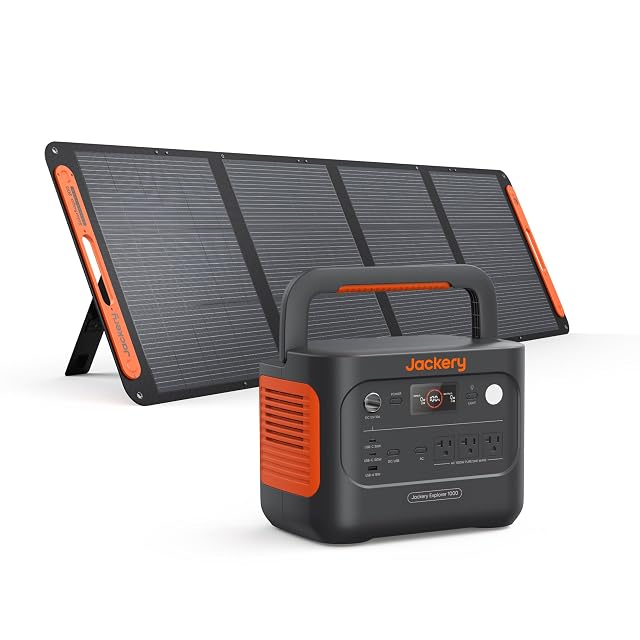
Solar generator kit: Explorer 1000 v2 LiFePO4 power station (1,070 Wh, 1,500 W, 3,000 W surge, 23.8 lb) with a 200 W solar panel; 1-hour emergency AC charging
The Explorer 1000 v2 (1,070 Wh, 1,500 W, 23.8 lb) bundled with a 200 W panel for $879, with a one-hour AC charge you enable in the app.
Best for: A home outage kit that can also go camping, with a panel big enough to matter
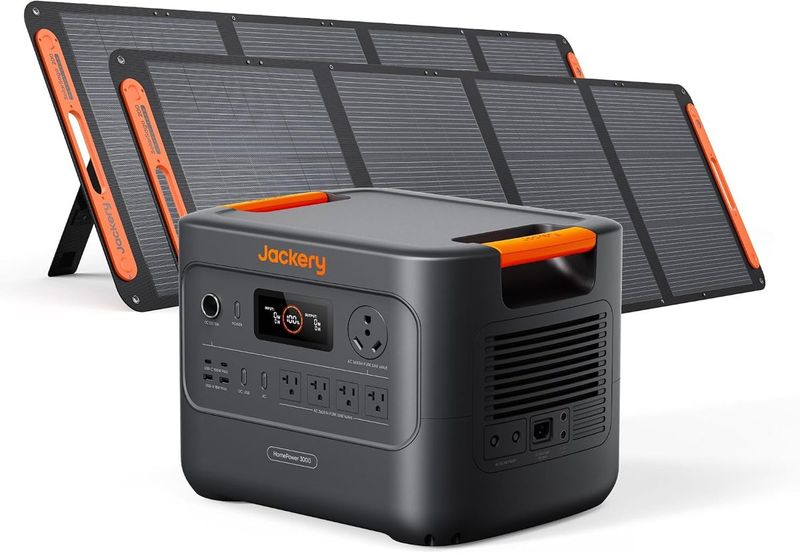
Solar generator kit: HomePower 3000 LiFePO4 station (3,072 Wh, 3,600 W, 7,200 W surge, UL-certified UPS ≤20 ms, TT-30 RV port, 59.5 lb) with two SolarSaga 200 W panels
A 3,072 Wh, 3,600 W home station with a UL-certified 20 ms UPS and a TT-30 RV port, sold with two 200 W panels; 80% from solar takes about 9 hours.
Best for: A household backup for a fridge, lights and Wi-Fi, or an RV hookup without a generator
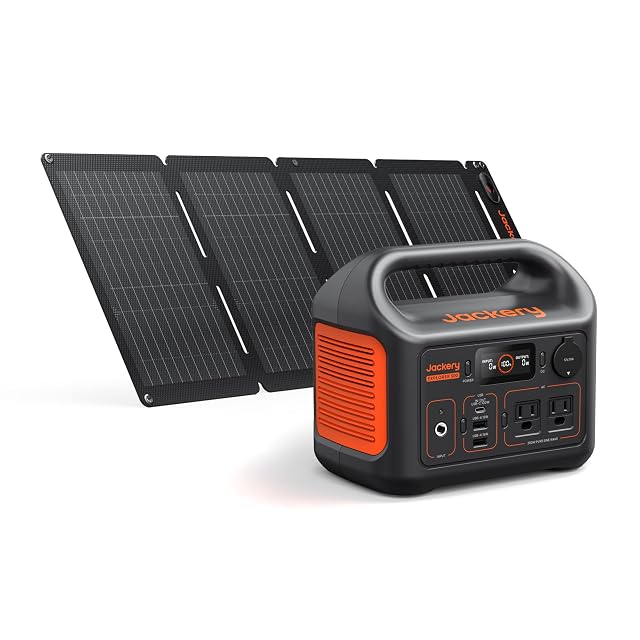
Solar generator kit: Explorer 300 LiFePO4 power station (292 Wh, 300 W, 600 W peak, 7.5 lb) with a 40 W Air solar panel; 80% from the panel in about 7.5 hours
The Explorer 300 (292 Wh, 300 W, 7.5 lb) with a 40 W Air panel that refills 80% in about 7.5 hours: a light kit sized for phones, cameras and drones.
Best for: Hiking, hunting and day trips where the station charges cameras and phones, not appliances