This is the 20 A version of Renogy’s second-generation DC-DC charger. It shares the alternator detection, the multi-stage profiles for flooded, gel, AGM and lithium, and the switchable LiFePO4 activation. The spec table lists UL, CE, FCC and IEC.
Sizing
A 20 A charger refills about 20 Ah per hour of driving. On a 100 Ah battery drawn down by half, that is two and a half hours. For daily short trips with a large bank, the 40 A version or the 60 A VEVOR fit better.
Price on Amazon.com
Amazon.com listed it at $140.99 on November 2, 2026, with a two-year warranty. It weighs 3.3 lb.
Prices quoted in this text were read on November 2, 2026. The live price is at the top of the page.
What it gets right, and what it leaves out
Strengths
Certifications listed: UL, CE, FCC, IEC
Alternator detection
Works with generators as well as vehicles, per the listing
Compromises
20 A for $140.99, about $7 per amp, the highest here after the OptiMATE
Bluetooth module extra
No solar input
Specifications
Charge current
20 A
System
12 V to 12 V
Engine detection
Charges only when the engine runs
Batteries
Flooded, gel, AGM, lithium
LiFePO4
Activation function, switchable
Certifications
UL, CE, FCC, IEC in the spec table
Monitoring
BT-2 module, sold separately
Weight
3.3 lb
Dimensions
2.3 × 9.31 × 5.17 in
Warranty
2 years
Amazon reference
B0DQP87ZRK
EAN
0840315221758
Questions owners ask about this one
Is 20 A enough?
For a 100 Ah lithium battery, 20 A refills it in about five hours of driving. For bigger banks or short drives, a 40 A charger fits better.
Can it charge from a generator?
The listing names smart and traditional generators as compatible sources.
Is it the same as the 40 A?
Same generation and features, half the current.
Our score
7.3/ 10
The small Renogy DC-DC, with listed certifications. At this price per amp, compare it with the 40 A Schumacher before buying.
Set beside the neighboring portable power units
Same category, nearby prices, between portable power units. What remains is the specifications every one publishes — half empty, a column is no use.
Where the models are not equal, in portable power units
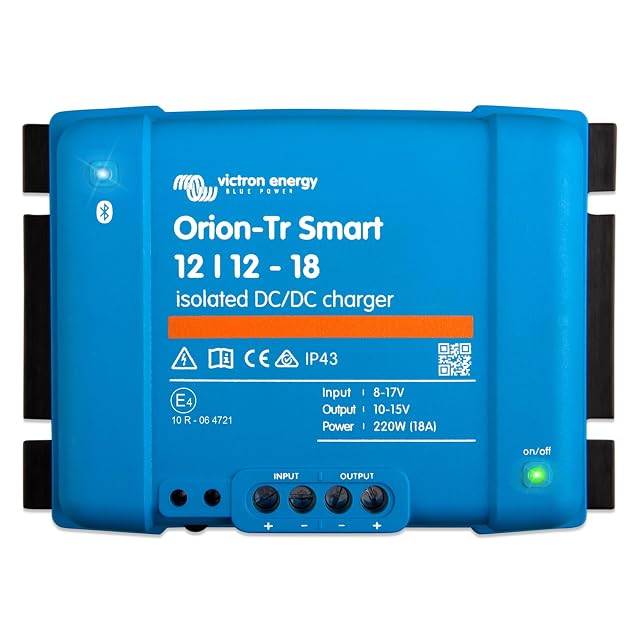
If price decides: Victron Energy Orion-Tr Smart 12/12-18 isolated, at $114.
Highest Charge current in the table: VEVOR 60 A DC-DC charger (60 A, 750 W).
Who this one is for, among portable power units
Smaller service batteries, 50 to 100 Ah, in trucks and boats
Sources
Specifications: the manufacturer sheet for portable power gear and the matching Amazon product page. Prices and availability: Keepa. Every figure on this page names its source.
Victron Energy Orion-Tr Smart 12/12-18 A, 220 W isolated DC-DC charger, 3-stage charging, built-in Bluetooth with VictronConnect, lead-acid and lithium, unlimited parallel connection, screw terminals, 1.2 kg
Victron’s isolated Orion-Tr Smart: 18 A with Bluetooth built in and unlimited parallel units for more current, rated 4.6 stars from 940.
Best for: Victron-based systems where two paralleled Orions give 36 A
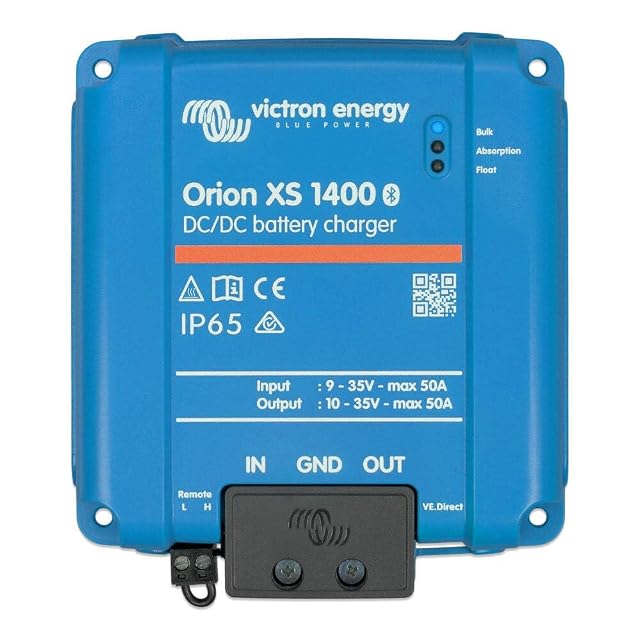
Victron Energy Orion XS 1400: 50 A, 1,400 W DC-DC charger at 98.5% efficiency, 12 V, 24 V or mixed systems, works with smart Euro 5/6 alternators, 4-stage adaptive charging, engine-running detection, Bluetooth, 0.52 kg
Victron’s Orion XS 1400: 50 A at 98.5% efficiency in a 0.52 kg case, working with smart alternators and mixed 12/24 V systems, for $255.
Best for: Modern vans with smart alternators and large lithium banks
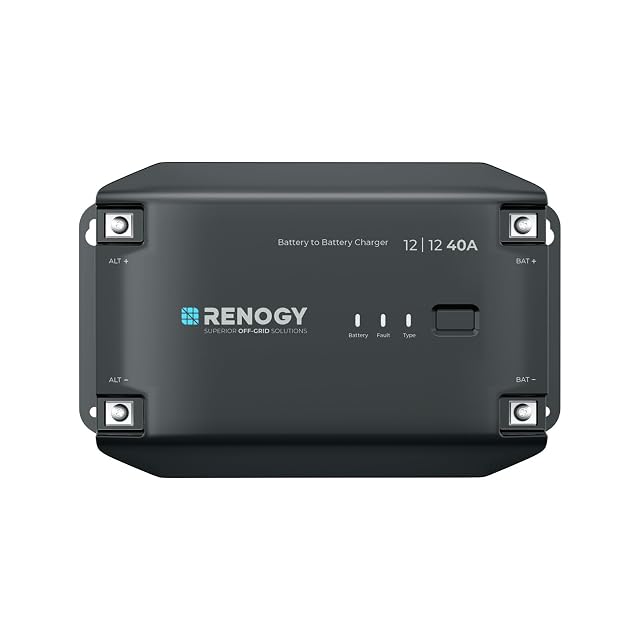
Renogy 40 A 12 V DC-DC battery charger, 2nd generation: alternator detection (charges only with the engine running), multi-stage charging for lithium, AGM and gel, LiFePO4 activation switch, wall-mount, Bluetooth with BT-2 module (sold separately), 2-year warranty
Renogy’s second-generation 40 A DC-DC charger only charges when the engine runs, with a LiFePO4 activation switch, sold by Amazon at $179.99.
Best for: Van and truck builds that need a known brand and Renogy app integration