The 150/100-Tr accepts up to 150 V from the panels and delivers up to 100 A of charge current to a 12, 24, 36 or 48 V bank. On a 48 V bank, that is more than 5 kW of array; on 12 V, about 1.4 kW. It is the highest-current controller on this shelf.
Stringing panels
At 150 V, three 12 V-class panels in series usually fit, with margin for cold-weather voltage rise. More strings in parallel add current within the 100 A limit.
The SmartSolar features
Victron sells the SmartSolar range with the same five bullets on every size: MPPT tracking, synchronized charging between several controllers, VictronConnect over Bluetooth with 30 days of history, and a configurable load output. The load output is a feature of the smaller models; on a large unit, check the datasheet rather than the listing.
Price on Amazon.com
BrandCentric was selling it on November 2, 2026, with 12 in stock and no buy-box price displayed when this page was written.
What it gets right, and what it leaves out
Strengths
100 A of charge current, the most on this shelf
150 V PV input, so three typical 12 V-class panels can go in series
36 V support, which few controllers offer
Compromises
Only 26 ratings at the time of reading
Sold by a third-party seller with no buy-box price shown
At 11.1 lb, a wall-mounted unit for a fixed installation
Specifications
PV input
150 V maximum
Charge current
100 A
Battery voltage
12, 24, 36 or 48 V
Terminals
Tr (screw terminals)
Connectivity
Built-in Bluetooth; VictronConnect app
Multi-unit
Synchronized charging between several SmartSolar units
Weight
5.05 kg (11.1 lb)
Amazon reference
B07C6MSW12
EAN
5060546230465
Questions owners ask about this one
How many panels does 100 A handle?
On a 48 V bank charging at about 57 V, 100 A is over 5 kW of panels; on 12 V about 1.4 kW. Within those limits, the PV string must stay under 150 V.
What does Tr mean?
Victron’s suffix for screw terminals, as opposed to MC4 connectors on other versions.
Is there a load output?
Victron’s generic bullets mention one, but large SmartSolar models usually do not have it. Check the datasheet.
Our score
8.1/ 10
The big Victron: 100 A and 150 V for serious arrays, with the same app as the small ones.
Who this one is for, among portable power units
Large van, boat and off-grid cabin arrays on 24 or 48 V banks
Sources
Specifications: the manufacturer sheet for portable power gear and the matching Amazon product page. Prices and availability: Keepa. Every figure on this page names its source.
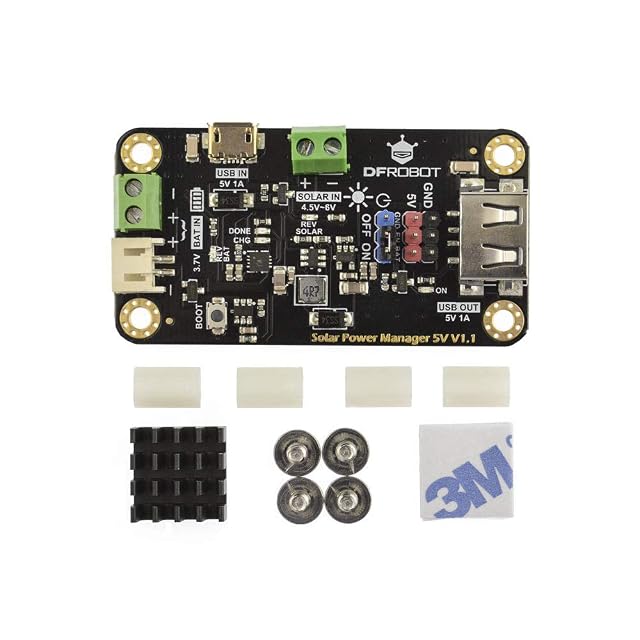
DFRobot DFR0559 solar power manager module: CN3165 MPPT for 5 V panels up to 10 W, 900 mA charging for 3.7 V Li-ion/LiPo, regulated 5 V 1 A output with switch, Micro-USB charging, under 1 mA standby, 33 × 63 mm
A 33 × 63 mm MPPT module for 5 V panels up to 10 W that charges a 3.7 V cell at 900 mA and outputs 5 V for Arduino and ESP32 projects, $13.90.
Best for: Solar-powered IoT nodes, weather stations and maker projects
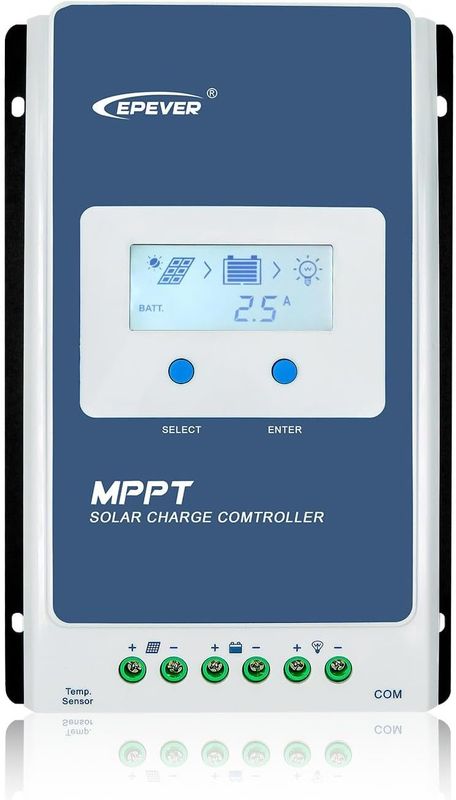
EPEVER Tracer4210AN G3 40 A MPPT controller: 12/24 V auto, 100 V PV, 520 W at 12 V or 1,040 W at 24 V, common negative ground, LiFePO4 and NCM profiles, temperature compensation, RS485 Modbus, over 99.5% tracking
EPEVER’s 40 A Tracer G3 states its panel limits outright, 520 W at 12 V and 1,040 W at 24 V, with common negative ground and RS485, for $118.99.
Best for: Solar builders who want a configurable controller with an open Modbus interface
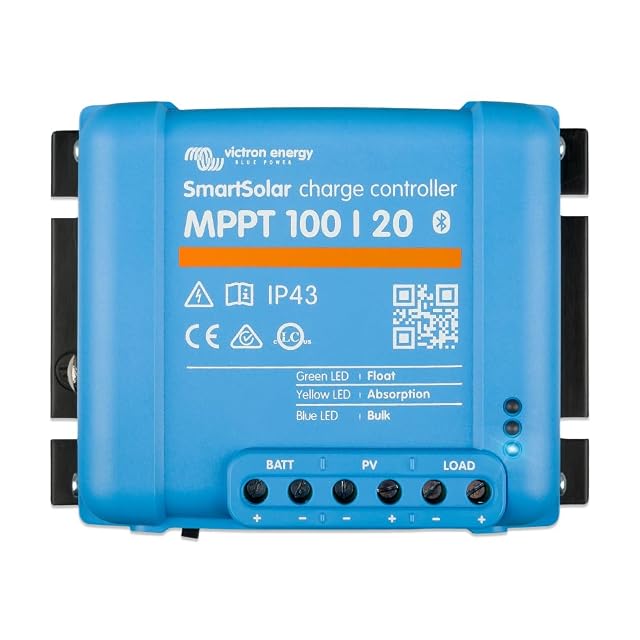
Victron SmartSolar MPPT 100/20 solar charge controller: 100 V PV input, 20 A charge current, 12/24/48 V batteries, built-in Bluetooth with VictronConnect, load output, certified to UL1741, 0.74 kg
Victron’s SmartSolar 100/20 for 12, 24 and 48 V banks: 100 V of PV, 20 A of charge, built-in Bluetooth and a load output, certified to UL1741.
Best for: Small 48 V systems and compact 12 or 24 V arrays where Victron’s app ecosystem matters
A price quoted in the text of a PowerVerdict page dates from the day that page was written; the live figure beside each product is fetched while you read and replaces it.