The Elite 200 V2 delivers 2,600 W continuous and 3,900 W in Power Lifting Mode from 2,073.6 Wh of LiFePO4. Among the stations here, only the EBL Acc2400 (2,400 W) and the Dabbsson 2000L (2,200 W) come close. At that rating, a refrigerator, a coffee maker and a hair dryer can share the battery, which is what BLUETTI shows in its listing.
The listing counts four AC outlets and up to nine devices in total, which is few for an inverter that size. Plan on a power strip for anything beyond four plugs.
Charging you can tune
Three modes are set in the BLUETTI app. Turbo charges at 1,800 W and reaches 80% in an hour. Standard draws up to 1,440 W and fills it in 1.6 hours, which BLUETTI presents as easier on the battery. Silent runs at 800 W from AC or solar for nights or campsites. AC and DC together reach 80% in 50 minutes.
Cycle life and standby
BLUETTI rates the cells for 6,000+ cycles and a 17-year life, the highest cycle figure among the stations here; the Anker C1000 Gen 2 and the Dabbsson 2000L both publish 4,000 to 80%. Standby consumption is 10 W, which BLUETTI says is a third of comparable stations. That still drains about 240 Wh a day if the station sits on with nothing plugged in.
Weight and price
At 53.4 lb it is among the two heaviest here, with the EBL Acc2400. The Dabbsson 2000L holds 2,048 Wh at 41 lb and costs $649.00, against $899.00 for the BLUETTI. The BLUETTI buys 400 W more inverter, the 6,000-cycle rating and the charging modes.
Price on Amazon.com
BLUETTI listed it at $899.00 on November 2, 2026. The box holds the station, an AC cable, a grounding screw and the manual.
Prices quoted in this text were read on November 2, 2026. The live price is at the top of the page.
What it gets right, and what it leaves out
Strengths
The highest continuous output here, 2,600 W, and the highest cycle figure, 6,000+
Three charging modes in the app, so you can trade speed for noise and battery wear
A published 10 W standby draw on a 2 kWh station
Compromises
At 53.4 lb it is a two-hand lift
Only four AC outlets for a 2,600 W inverter
The warranty term is not in the listing’s bullets
Specifications
Capacity
2,073.6 Wh, automotive-grade LiFePO4
Continuous AC output
2,600 W; 3,900 W in Power Lifting Mode
AC outlets
4, up to 9 devices at once
Cycle rating
6,000+ cycles, 17-year lifespan claimed
AC recharge
Turbo: 0–80% in 1 hour at 1,800 W; Standard: 1,440 W, full in 1.6 hours; Silent: 800 W
Dual charging
0–80% in 50 minutes with AC and DC together
Standby consumption
10 W
Weight
53.4 lb
Dimensions
13.78 × 9.84 × 12.74 in
Amazon reference
B0DCJV9LTB
Questions owners ask about this one
Can it run a refrigerator and a microwave together?
The listing names refrigerators, hair dryers and coffee makers. A fridge running at 150 W and a 1,000 W microwave come to well under the 2,600 W rating. Starting surges are the part to watch, and Power Lifting Mode does not apply to motors.
What do the three charging modes do?
Turbo charges at 1,800 W, 0–80% in an hour; Standard at up to 1,440 W, full in 1.6 hours, which BLUETTI calls battery-friendly; Silent at 800 W from AC or solar. They are chosen in the BLUETTI app.
What does a 17-year lifespan mean?
BLUETTI states 6,000+ cycles and a 17-year lifespan of everyday use. One cycle a day for 17 years is about 6,200 cycles, so the two figures agree. The listing does not state the capacity left at the end.
Our score
8.5/ 10
Two kilowatt-hours, a 2,600 W inverter and a 6,000-cycle rating, with charging modes that put noise and battery wear under your control. Heavy, and short on outlets.
Set beside the neighboring portable power units
Same category, nearby prices, between portable power units. What remains is the specifications every one publishes — half empty, a column is no use.
Where the models are not equal, in portable power units
If price decides: EBL Acc2400, at $700.
Highest Capacity in the table: this model (2,073.6 Wh, automotive-grade LiFePO4).
This model holds the table’s highest figure for Capacity.
Who this one is for, among portable power units
A refrigerator plus kitchen appliances through a long outage, or an RV without a generator
Sources
Specifications: the manufacturer sheet for portable power gear and the matching Amazon product page. Prices and availability: Keepa. Every figure on this page names its source.
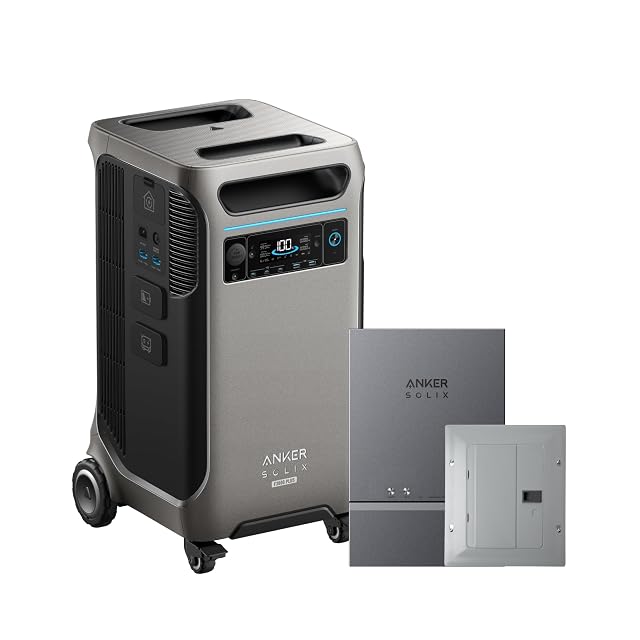
Anker SOLIX F3800 Plus: 3,840 Wh LFP power station with Home Power Panel, 6,000 W output, 120/240 V dual voltage, 3,200 W solar input, expandable to 26.9 kWh with six batteries, 5-year warranty
A 3,840 Wh LFP station with 6,000 W and 120/240 V output, sold with a Home Power Panel and expandable to 26.9 kWh with six add-on batteries.
Best for: A house that wants 240 V circuits on battery during an outage, with room to grow
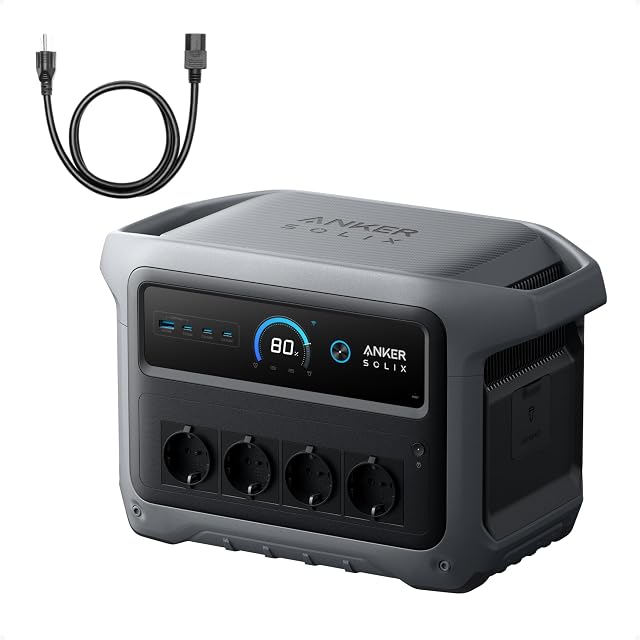
1,024 Wh LiFePO4 power station, 2,000 W continuous (3,000 W peak), 1,600 W wall recharge in 49 minutes, 600 W solar input, under 10 ms UPS switchover, 5-year warranty
A 1,024 Wh LiFePO4 station with a 2,000 W inverter, a 49-minute wall recharge at 1,600 W and a sub-10 ms UPS switch, at 24.9 lb.
Best for: Home outage backup and RV weekends where the station must refill fast between uses
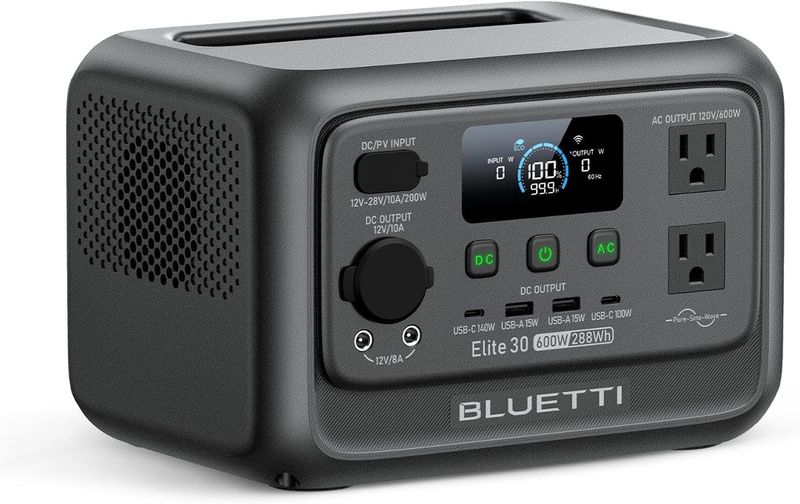
288 Wh LFP power station, 600 W continuous, 1,500 W Power Lifting mode, 380 W wall charging (0–80% in 45 minutes), 10 ms UPS, 4.5 W standby draw, 9.4 lb, 60-month warranty
A 288 Wh LFP station with a 600 W inverter, twice the class norm, a 1,500 W lifting mode, a 10 ms UPS and published standby draw, at 9.4 lb.
Best for: Small-load home backup and camping where a 300 W inverter would be too tight