The EBL Acc2400 is named after its inverter, not its battery. It delivers 2,400 W continuous through four AC outlets, and stores 1,843.2 Wh of LiFePO4. The difference matters when you compare it to the Dabbsson 2000L (2,048 Wh) or the BLUETTI Elite 200 V2 (2,073.6 Wh): it holds less energy than both, and costs $699.99.
Twelve outputs
No other station here has as many. Beside the four AC outlets come two USB-A, two fast-charging USB-C, a car socket, two DC ports and a wireless charging pad on top. A four-mode LED light covers camp lighting and SOS use.
The backup switch is slow
EBL describes an emergency power mode that switches to backup in 0.1 second. That is 100 ms, ten times the 10 ms published by the DELTA 3 Classic, the Anker SOLIX C1000 Gen 2 and the BLUETTI Elite 30 V2. Lights, fridges and laptops will not notice. A desktop computer or a NAS may reboot.
What the listing leaves out
The bullets give a 3,500-cycle rating without an end capacity, but no AC recharge time and no solar input figure. At 55 lb and 16.9 × 11.8 × 11 in, with handles on both sides, it is the heaviest station here.
Price on Amazon.com
EBL Pro Store listed it at $699.99 on November 2, 2026, with a two-year warranty, the shortest of the large stations on this shelf.
Prices quoted in this text were read on November 2, 2026. The live price is at the top of the page.
What it gets right, and what it leaves out
Strengths
The most outputs on this shelf, twelve, including a wireless charging pad
A 2,400 W inverter, second only to the BLUETTI Elite 200 V2 here
About 2.6 Wh per dollar, second-best value after the Dabbsson
Compromises
A 0.1-second switchover is ten times slower than the 10 ms units; a desktop PC may restart
The heaviest station here at 55 lb
No recharge time or solar input is published in the bullets
Specifications
Capacity
1,843.2 Wh, LiFePO4 cells
Continuous AC output
2,400 W across four AC outlets
Outputs
12: 4 AC, 2 USB-A, 2 USB-C, 1 car socket, 2 DC, 1 wireless charging pad
Backup switchover
0.1 second
Cycle rating
3,500 cycles (end capacity not stated)
Light
4-mode LED
Weight
55 lb (54 lb in the spec table)
Dimensions
16.9 × 11.8 × 11 in
Warranty
2 years
Amazon reference
B0DQZT4SP8
Questions owners ask about this one
Is the Acc2400 a 2,400 Wh battery?
No. 2,400 is the inverter output in watts. The battery holds 1,843.2 Wh.
Will it keep a computer running in an outage?
EBL quotes a switch to backup in 0.1 second, which is 100 ms. Many desktop power supplies cannot ride through that; a laptop on its own battery will. For a desktop, a unit with a 10 ms switchover is safer.
How fast does it recharge?
The listing does not publish an AC recharge time or a solar input rating in its bullets. Ask the seller or check the manual before relying on a fast refill.
Our score
8.0/ 10
The station with the most outputs here and a 2,400 W inverter on 1,843.2 Wh. Its 0.1-second backup switch is too slow for some computers, and the listing omits recharge times.
Set beside the neighboring portable power units
Same category, nearby prices, between portable power units. What remains is the specifications every one publishes — half empty, a column is no use.
Where the models are not equal, in portable power units
If price decides: Anker SOLIX C1000 Gen 2, at $530.
Highest Capacity in the table: EcoFlow DELTA 3 Max (2,048 Wh, LFP).
Who this one is for, among portable power units
Group camping and job sites, where many devices charge at once
Sources
Specifications: the manufacturer sheet for portable power gear and the matching Amazon product page. Prices and availability: Keepa. Every figure on this page names its source.
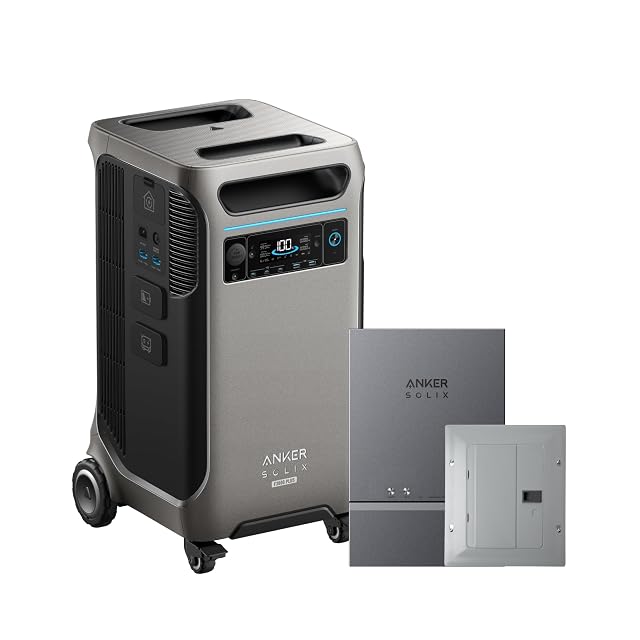
Anker SOLIX F3800 Plus: 3,840 Wh LFP power station with Home Power Panel, 6,000 W output, 120/240 V dual voltage, 3,200 W solar input, expandable to 26.9 kWh with six batteries, 5-year warranty
A 3,840 Wh LFP station with 6,000 W and 120/240 V output, sold with a Home Power Panel and expandable to 26.9 kWh with six add-on batteries.
Best for: A house that wants 240 V circuits on battery during an outage, with room to grow
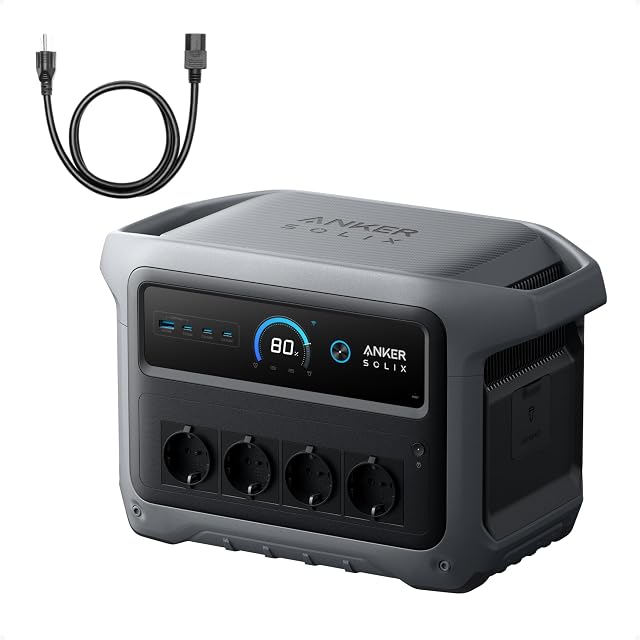
1,024 Wh LiFePO4 power station, 2,000 W continuous (3,000 W peak), 1,600 W wall recharge in 49 minutes, 600 W solar input, under 10 ms UPS switchover, 5-year warranty
A 1,024 Wh LiFePO4 station with a 2,000 W inverter, a 49-minute wall recharge at 1,600 W and a sub-10 ms UPS switch, at 24.9 lb.
Best for: Home outage backup and RV weekends where the station must refill fast between uses
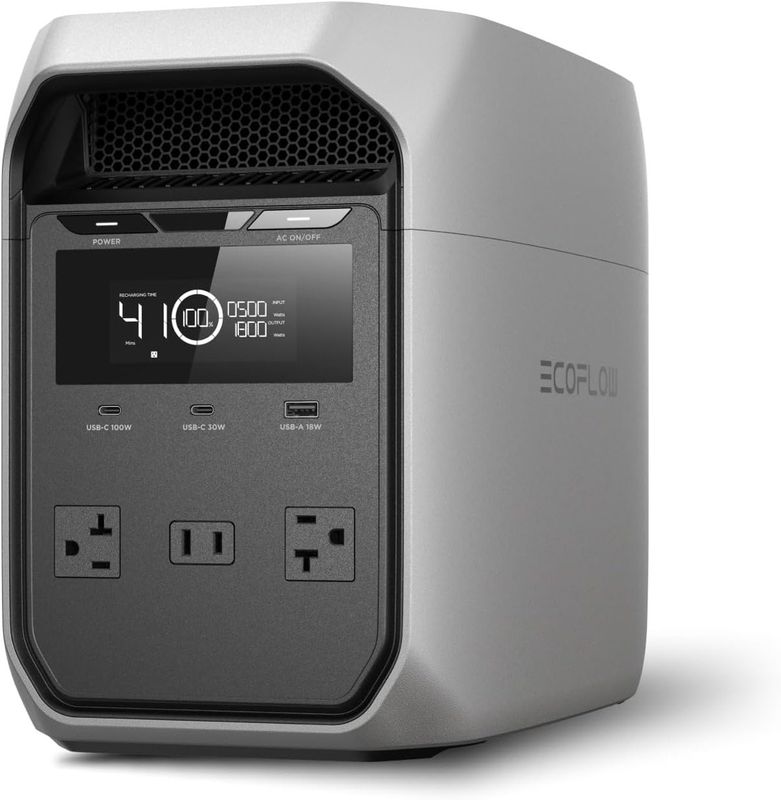
1,024 Wh LiFePO4 power station, 1,800 W continuous (3,600 W surge, X-Boost to 2,600 W), 0–80% in 45 minutes on AC, under 10 ms UPS, 500 W solar, 5-year warranty
A 1,024 Wh LiFePO4 station with an 1,800 W inverter, a 45-minute 0–80% wall charge and a sub-10 ms UPS switch, at $462 the cheapest 1 kWh unit here.
Best for: A first home backup unit for a fridge, a router and phones through a short outage