At $649.00 for 2,048 Wh, the Dabbsson 2000L works out to about 3.2 Wh per dollar, the best ratio on this shelf. The EBL Acc2400 comes next at about 2.6, and the BLUETTI Elite 200 V2 at 2.3. It also carries its energy lightly: 41 lb for 2,048 Wh, roughly 50 Wh per pound, against 38.8 for the BLUETTI and 33.5 for the EBL.
A real household inverter
Six AC outlets share 2,200 W continuous, with a 3,300 W Power Boost for heavy resistive loads. The listing names refrigerators, heaters, grills and power tools. The spec table adds a 4,400 W starting figure that the bullets do not mention, so treat 3,300 W as the published boost.
Charging
The wall charger fills it in one hour. Solar input goes up to 800 W through the MPPT controller, and AC and solar can charge together. A 12 V car cable is in the box.
Cells and housing
Dabbsson uses what it calls semi-solid LiFePO4 cells and rates them for 4,000+ deep cycles to 80% capacity, the same end point the Anker C1000 Gen 2 publishes. The housing is rated UL94-V0 for flame retardance. The switchover is listed as an EPS function under 15 ms, slower than the 10 ms units here but adequate for most electronics.
Price on Amazon.com
Dabbsson-US listed it at $649.00 on November 2, 2026. The warranty is described as three standard years plus a two-year extension.
Prices quoted in this text were read on November 2, 2026. The live price is at the top of the page.
What it gets right, and what it leaves out
Strengths
About 3.2 Wh per dollar, the best value on this shelf by a wide margin
About 50 Wh per pound, the best energy-to-weight ratio of the large stations here
A cycle rating stated with its end point, 4,000+ to 80%, and a UL94-V0 housing
Compromises
The 15 ms switchover is labeled EPS, not UPS; it is slower than the 10 ms units here
The five-year warranty is three standard years plus two extended
The spec table lists a 4,400 W starting figure that the bullets do not repeat
Specifications
Capacity
2,048 Wh, semi-solid LiFePO4 cells
Continuous AC output
2,200 W; 3,300 W Power Boost
AC outlets
6
AC recharge
Full in 1 hour
Solar input
Up to 800 W MPPT; AC and solar can charge together
Backup switchover
Under 15 ms (EPS)
Cycle rating
4,000+ cycles to 80%
Housing
UL94-V0 flame-retardant
Weight
41 lb
Dimensions
11.2 × 18.3 × 8.9 in
Warranty
3 years plus 2-year extension
Amazon reference
B0DTTVWHBG
Questions owners ask about this one
What is a semi-solid LiFePO4 cell?
Dabbsson describes its cells as semi-solid LiFePO4 and claims higher stability than standard LFP cells. The listing does not detail the electrolyte. The chemistry is still lithium iron phosphate, with a 4,000-cycle rating to 80%.
Is EPS the same as UPS?
Not quite. An EPS switches to battery when it detects an outage; Dabbsson quotes under 15 ms. That protects most routers, NAS units and computers, but the 10 ms units here switch faster.
Can it charge from AC and solar at once?
Yes. The listing describes hybrid dual input, AC plus up to 800 W of solar, alongside 12 V car charging.
Our score
8.0/ 10
Two kilowatt-hours for $649, six AC outlets and a 41 lb case. The value pick at this size, with a stated cycle end point and a slightly slower switchover.
Set beside the neighboring portable power units
Same category, nearby prices, between portable power units. What remains is the specifications every one publishes — half empty, a column is no use.
Where the models are not equal, in portable power units
If price decides: BLUETTI AC180, at $499.
Highest Capacity in the table: this model (2,048 Wh, semi-solid LiFePO4 cells).
Highest Warranty in the table: BLUETTI AC180 (5 years).
This model holds the table’s highest figure for Capacity.
Who this one is for, among portable power units
Whole-day home backup or RV use on a budget, where 2 kWh matters more than a brand name
Sources
Specifications: the manufacturer sheet for portable power gear and the matching Amazon product page. Prices and availability: Keepa. Every figure on this page names its source.
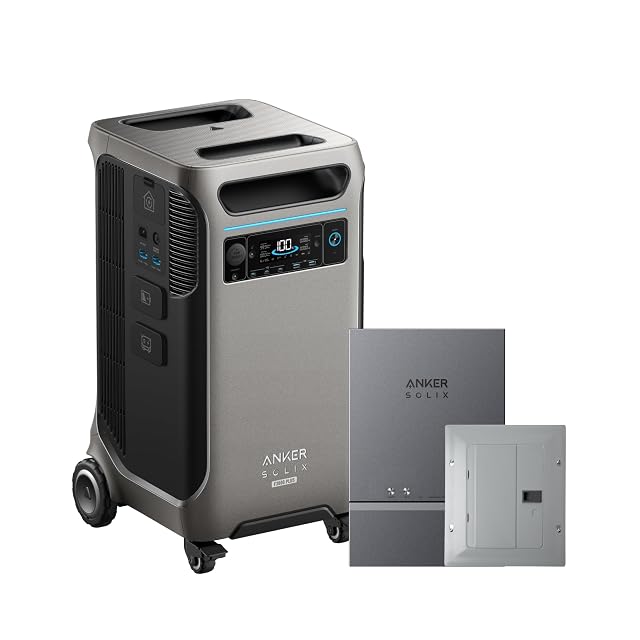
Anker SOLIX F3800 Plus: 3,840 Wh LFP power station with Home Power Panel, 6,000 W output, 120/240 V dual voltage, 3,200 W solar input, expandable to 26.9 kWh with six batteries, 5-year warranty
A 3,840 Wh LFP station with 6,000 W and 120/240 V output, sold with a Home Power Panel and expandable to 26.9 kWh with six add-on batteries.
Best for: A house that wants 240 V circuits on battery during an outage, with room to grow
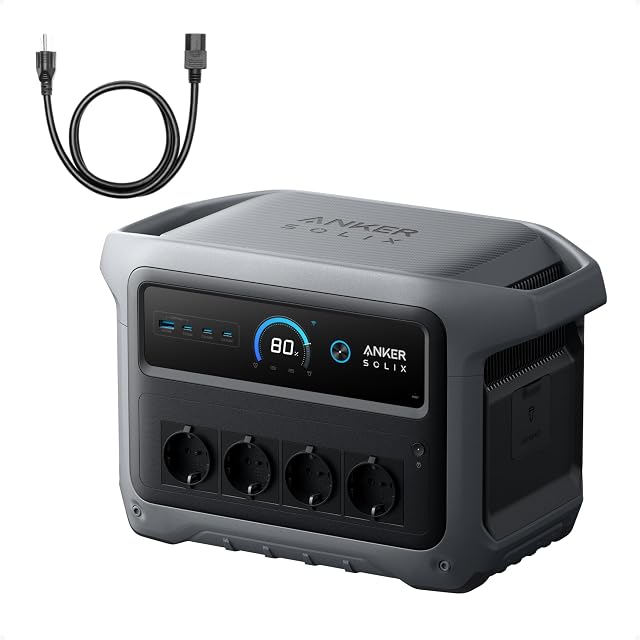
1,024 Wh LiFePO4 power station, 2,000 W continuous (3,000 W peak), 1,600 W wall recharge in 49 minutes, 600 W solar input, under 10 ms UPS switchover, 5-year warranty
A 1,024 Wh LiFePO4 station with a 2,000 W inverter, a 49-minute wall recharge at 1,600 W and a sub-10 ms UPS switch, at 24.9 lb.
Best for: Home outage backup and RV weekends where the station must refill fast between uses
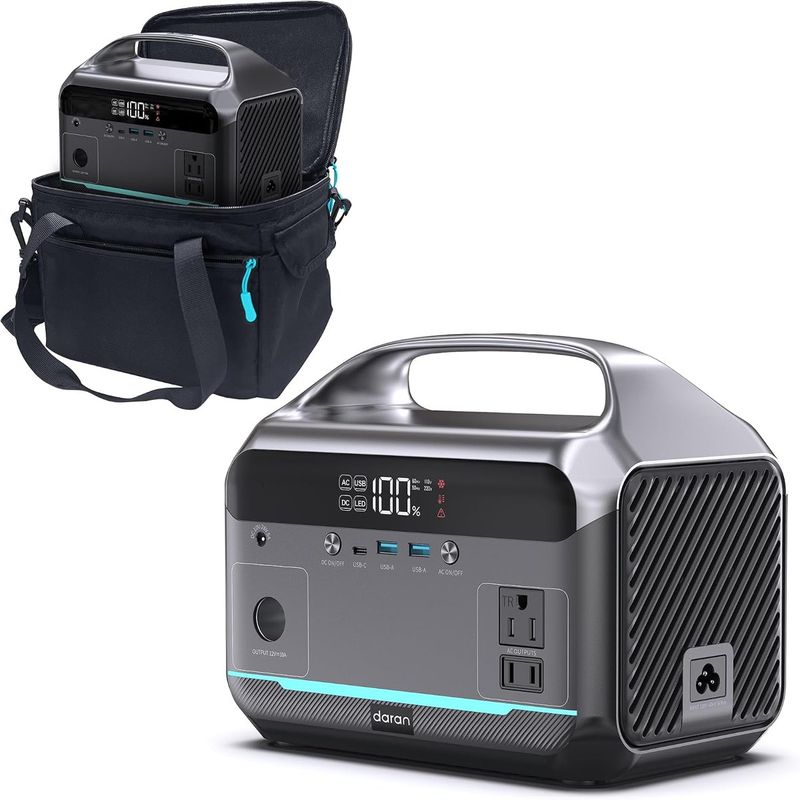
288 Wh LiFePO4 power station, 350 W continuous (600 W peak), two AC outlets, 60 W USB-C, 10–26 V DC input, 2.1-hour fast charge, 8.2 lb, 1-year warranty
A 288 Wh LiFePO4 station with a 350 W inverter for $139.99, the cheapest here, at 8.2 lb. The 300W on its back is a name, not its rating.
Best for: An inexpensive outage kit for a CPAP, phones and lights