At $139.99 for 288 Wh, the DARAN is the least expensive station here and costs half as much per watt-hour as the BLUETTI Elite 30 V2, which has the same capacity. Its inverter delivers 350 W continuous with a 600 W surge through two AC outlets. A 60 W PD USB-C port, two 18 W USB-A ports and a DC port complete the panel.
A listing that shows its arithmetic
DARAN publishes a 0.85 conversion rate and uses it: 288 Wh × 0.85 ÷ 30 W = 8.16 hours for a 30 W CPAP. That is the right way to estimate runtime, and it works for any load. A 60 W router and modem pair would get about four hours.
Names and numbers
The listing carries a candid note: the “300W” printed on the rear is a product name, the real rating is 350 W. The box label says NEO300L, the model number NEO350 and the title 288 Wh. They describe the same unit.
Charging and care
It recharges from the wall, from a car’s 12 V socket or from solar, through a 10–26 V, 5 A DC input, and DARAN quotes 2.1 hours for a fast charge. The BMS covers overcharge, over-discharge, short circuit, temperature and cell balancing. DARAN asks for two full cycles at first use and a top-up every one to two months in storage.
Price on Amazon.com
Voltzip listed it at $139.99 on November 2, 2026, with a one-year warranty and a storage bag in the box.
Prices quoted in this text were read on November 2, 2026. The live price is at the top of the page.
What it gets right, and what it leaves out
Strengths
The lowest price on this shelf, $139.99, about 2 Wh per dollar
A published conversion rate (0.85) and a worked CPAP example: 30 W for 8.16 hours
A storage bag in the box
Compromises
A one-year warranty, the shortest here
The back panel says 300W; the listing explains that is a product name and the real rating is 350 W
No cycle count and no UPS switchover figure
Specifications
Capacity
288 Wh, LiFePO4 cells
Continuous AC output
350 W, 600 W surge, two AC outlets
Other outputs
1 × 60 W PD USB-C, 2 × 18 W USB-A, 1 DC input/output
Recharge
2.1 hours fast charging; wall, car or solar
DC input
10–26 V, 5 A
Conversion rate
0.85 published
Light
Rear LED with steady, strobe and SOS modes
Weight
8.2 lb
Dimensions
10.0 × 6.6 × 8.2 in
Warranty
1 year
Amazon reference
B0DN9QHGG8
Questions owners ask about this one
How long will it run a CPAP?
DARAN works it out in the listing: 288 Wh times its 0.85 conversion rate, divided by a 30 W CPAP, gives 8.16 hours. A CPAP with a heated humidifier draws more, so its runtime will be shorter.
Why does the label say 300W?
The listing explains that “300W” printed on the back is a product name designation; the actual rated power is 350 W, with a 600 W surge.
Does it need special care?
DARAN recommends two full charge and discharge cycles at first use, and a full charge every one to two months in storage.
Our score
7.8/ 10
The cheapest station here: 288 Wh and 350 W for $139.99, with an honest worked runtime example. One year of warranty and no cycle rating.
Set beside the neighboring portable power units
Same category, nearby prices, between portable power units. What remains is the specifications every one publishes — half empty, a column is no use.
Where the models are not equal, in portable power units
If price decides: this model, at $140.
Highest Capacity in the table: EcoFlow RIVER 2 Max 500 (499 Wh, LiFePO4 cells).
Highest Weight in the table: EcoFlow RIVER 2 Max 500 (13.3 lb).
Who this one is for, among portable power units
An inexpensive outage kit for a CPAP, phones and lights
Sources
Specifications: the manufacturer sheet for portable power gear and the matching Amazon product page. Prices and availability: Keepa. Every figure on this page names its source.
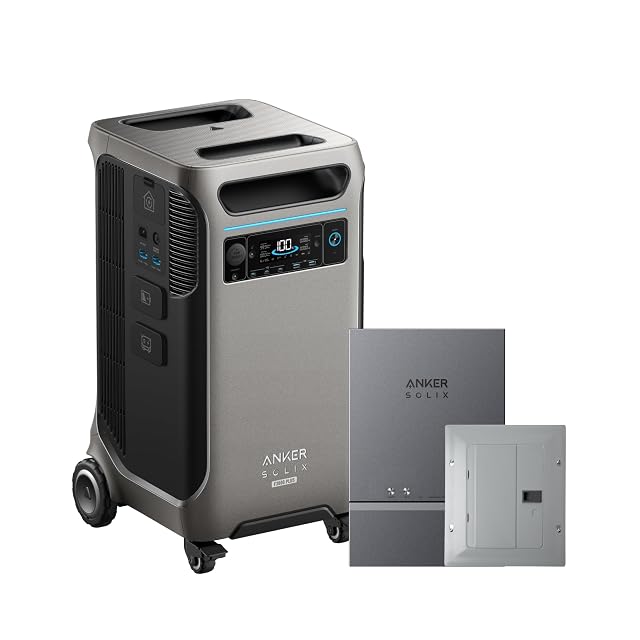
Anker SOLIX F3800 Plus: 3,840 Wh LFP power station with Home Power Panel, 6,000 W output, 120/240 V dual voltage, 3,200 W solar input, expandable to 26.9 kWh with six batteries, 5-year warranty
A 3,840 Wh LFP station with 6,000 W and 120/240 V output, sold with a Home Power Panel and expandable to 26.9 kWh with six add-on batteries.
Best for: A house that wants 240 V circuits on battery during an outage, with room to grow
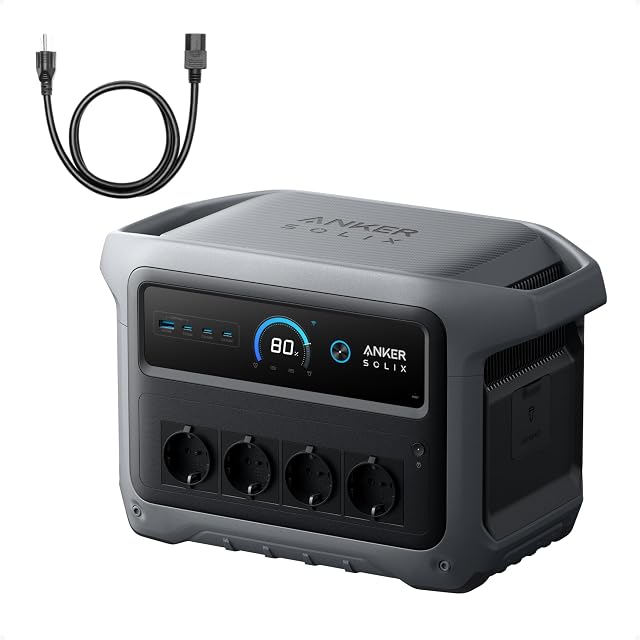
1,024 Wh LiFePO4 power station, 2,000 W continuous (3,000 W peak), 1,600 W wall recharge in 49 minutes, 600 W solar input, under 10 ms UPS switchover, 5-year warranty
A 1,024 Wh LiFePO4 station with a 2,000 W inverter, a 49-minute wall recharge at 1,600 W and a sub-10 ms UPS switch, at 24.9 lb.
Best for: Home outage backup and RV weekends where the station must refill fast between uses
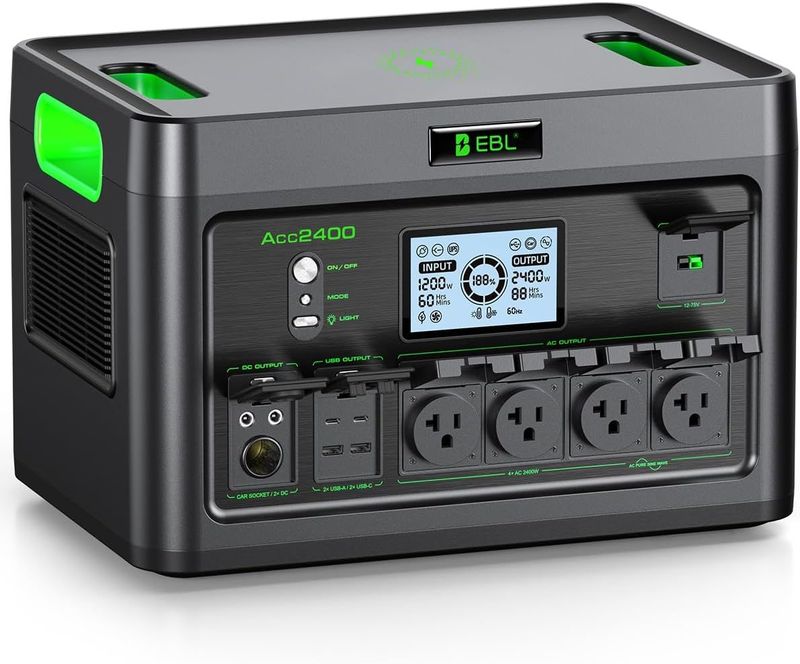
1,843.2 Wh LiFePO4 power station, 2,400 W continuous, 12 outputs including four AC outlets and a wireless charging pad, 0.1-second backup switch, 3,500 cycles, 55 lb, 2-year warranty
A 1,843.2 Wh LiFePO4 station with a 2,400 W inverter and twelve outputs, including a wireless pad. The 2400 in its name is watts, not watt-hours.
Best for: Group camping and job sites, where many devices charge at once