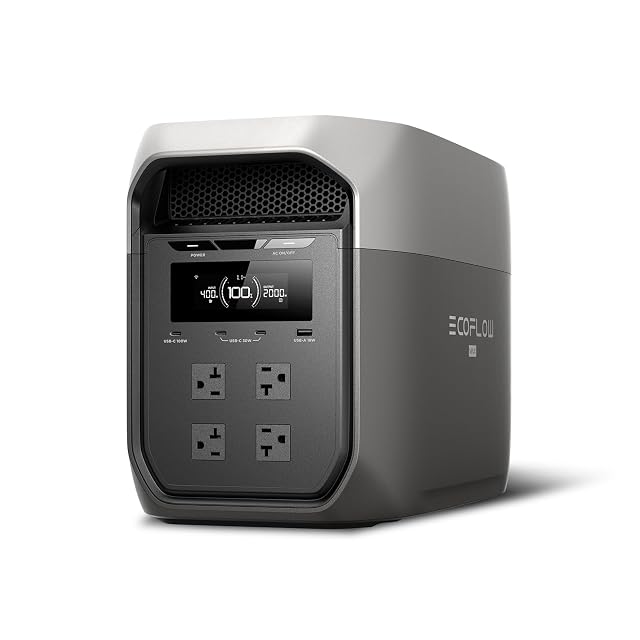
The DELTA 3 Classic is EcoFlow’s 1,024 Wh LiFePO4 station, and at $462.00 on November 2, 2026 it was the least expensive way to buy a full kilowatt-hour on this shelf. It delivers 1,800 W continuous with a 3,600 W surge at 120 V, and recharges from 0 to 80% in 45 minutes on a wall outlet.
The Anker SOLIX C1000 Gen 2 holds the same 1,024 Wh for $529.99 and adds a 2,000 W inverter, a stated cycle rating and a faster full recharge. Whether the extra $68 is worth it depends on whether 200 W more inverter matters to you.
Switchover and app control
EcoFlow publishes a switchover under 10 ms, meant for PCs, servers and medical devices. The app can schedule charging and run backup modes, including Storm Alert, which the listing describes as preparing the battery ahead of severe weather, and Self-Powered Mode.
The limit that is printed in the listing
One sentence is worth reading before buying: the DELTA 3 Classic is not compatible with the DELTA 2 Smart Extra Battery or the DELTA 3 Series Smart Extra Battery. Many 1 kWh stations sell themselves on expansion. This one does not expand at all, so 1,024 Wh is what you will always have.
Solar and longevity
With a 500 W panel, which is not included, EcoFlow quotes a full solar recharge in 2.5 hours. The cells are LiFePO4 and the listing promises “10+ years of daily use” without a cycle count or an end capacity. The BLUETTI Elite 200 V2 (6,000+ cycles) and the Anker (4,000 cycles to 80%) give more comparable figures.
At 26.7 lb and 7.9 × 11.1 × 15.7 in, it is slightly heavier than the Anker, which weighs 24.9 lb.
Price on Amazon.com
EcoFlow Inc. listed it at $462.00 on November 2, 2026, with a five-year warranty.
Prices quoted in this text were read on November 2, 2026. The live price is at the top of the page.
What it gets right, and what it leaves out
Strengths
The cheapest 1 kWh station on this shelf at $462.00, about 2.2 Wh per dollar
A sub-10 ms UPS switchover, the fastest class published here
App modes for outages, including Storm Alert and Self-Powered Mode
Compromises
The listing states plainly that no extra battery fits it, so 1,024 Wh is the ceiling
No cycle count is given; the listing says “10+ years of daily use” instead
At 26.7 lb it is the heaviest of the two 1 kWh stations here
Specifications
Capacity
1,024 Wh, LiFePO4 cells
Continuous AC output
1,800 W, 3,600 W surge, 120 V
X-Boost
Runs resistive loads up to 2,600 W at reduced voltage
AC recharge
0–80% in 45 minutes (X-Stream)
Solar input
Full in 2.5 hours with a 500 W panel (sold separately)
UPS switchover
Under 10 ms
Expansion
Not compatible with the DELTA 2 or DELTA 3 Series Smart Extra Battery
Weight
26.7 lb
Dimensions
7.9 × 11.1 × 15.7 in
Warranty
5 years
Amazon reference
B0FQVC4RF5
Questions owners ask about this one
What is X-Boost?
EcoFlow’s mode for running a resistive appliance rated above the inverter, up to 2,600 W here, by lowering the voltage it receives. A heater or a kettle then runs at reduced power. It does not help motors or electronics, which need the full voltage.
Can I add a second battery later?
No. The listing says the DELTA 3 Classic is not compatible with the DELTA 2 Smart Extra Battery or the DELTA 3 Series Smart Extra Battery. If expansion matters, this is the wrong model.
How long will it run a refrigerator?
The listing names refrigerators among the loads. A kitchen fridge averages roughly 50 to 150 W over a day with its compressor cycling, so 1,024 Wh covers many hours, but the fridge’s own consumption is what decides.
Our score
8.5/ 10
A 1,024 Wh station that undercuts the Anker C1000 Gen 2 by about $68 with a 1,800 W inverter and the same under-10 ms switchover. It cannot be expanded, and the listing gives years, not cycles.
Set beside the neighboring portable power units
Same category, nearby prices, between portable power units. What remains is the specifications every one publishes — half empty, a column is no use.
Model
Price
Capacity
AC recharge
Solar input
EcoFlow DELTA 3 Classic
$462
1,024 Wh, LiFePO4 cells
0–80% in 45 minutes (X-Stream)
Full in 2.5 hours with a 500 W panel (sold separately)
Specifications: the manufacturer sheet for portable power gear and the matching Amazon product page. Prices and availability: Keepa. Every figure on this page names its source.
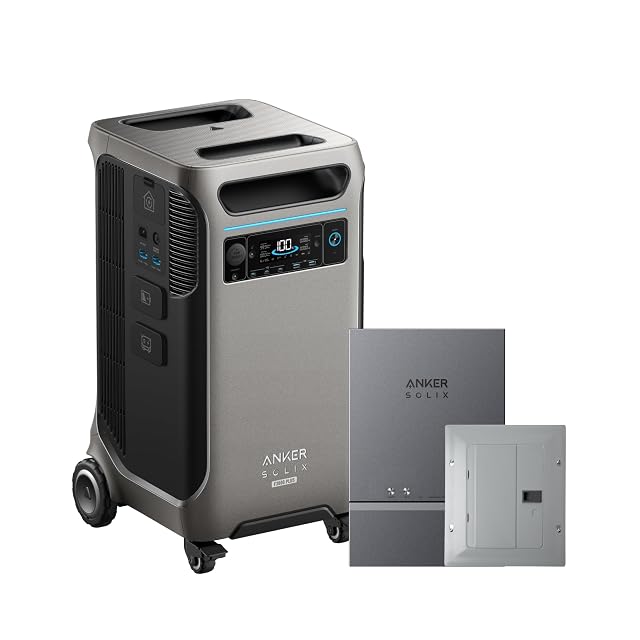
Anker SOLIX F3800 Plus: 3,840 Wh LFP power station with Home Power Panel, 6,000 W output, 120/240 V dual voltage, 3,200 W solar input, expandable to 26.9 kWh with six batteries, 5-year warranty
A 3,840 Wh LFP station with 6,000 W and 120/240 V output, sold with a Home Power Panel and expandable to 26.9 kWh with six add-on batteries.
Best for: A house that wants 240 V circuits on battery during an outage, with room to grow
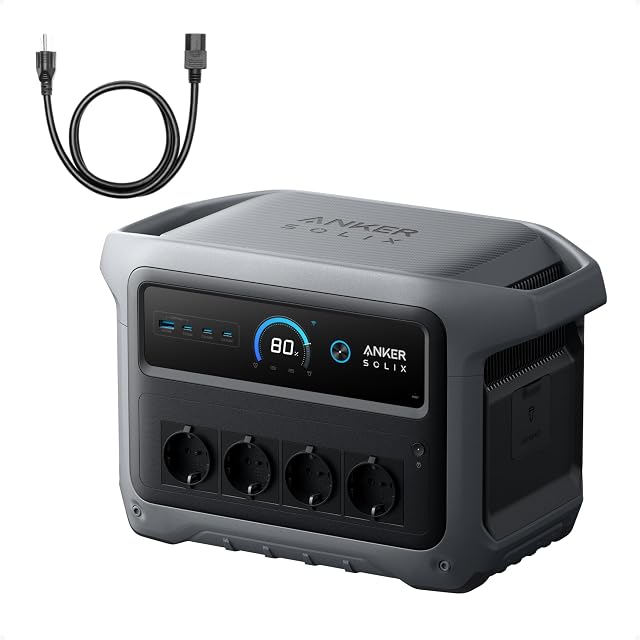
1,024 Wh LiFePO4 power station, 2,000 W continuous (3,000 W peak), 1,600 W wall recharge in 49 minutes, 600 W solar input, under 10 ms UPS switchover, 5-year warranty
A 1,024 Wh LiFePO4 station with a 2,000 W inverter, a 49-minute wall recharge at 1,600 W and a sub-10 ms UPS switch, at 24.9 lb.
Best for: Home outage backup and RV weekends where the station must refill fast between uses