Skip to content

The best portable power station, by size

There is no single best power station, only the best one for a size. Pick the watt-hours for how long you need power, then the inverter watts for what you will plug in.

How to choose

Watt-hours decide how long. Continuous watts decide what. A 300 W station cannot start a 1,000 W microwave however big its battery; a 2,000 W station empties a 1 kWh battery in half an hour.

SizeWhat it runsPicks
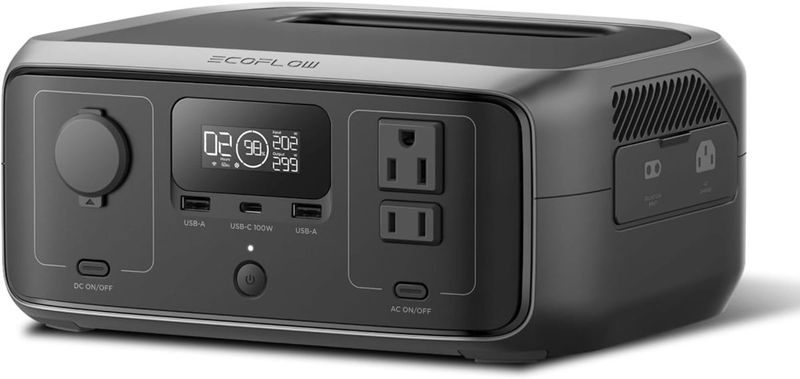
~250 WhPhones, a laptop, lights, a CPAP for a nightEcoFlow RIVER 3
~1 kWhA fridge for a day, a microwave brieflyEcoFlow DELTA 3 Classic, Anker SOLIX C1000 Gen 2
~2 kWhFridge, internet and a computer through an outageJackery Explorer 2000 v2, EcoFlow DELTA 3 Max
~3 kWh+Home essentials for a dayAnker SOLIX F3000

The 1 kWh class

The DELTA 3 Classic stores 1,024 Wh with an 1,800 W inverter and goes 0–80% in 45 minutes. The C1000 Gen 2 stores the same 1,024 Wh with a stronger 2,000 W inverter and recharges in 49 minutes at 1,600 W. Both switch over in under 10 ms. See the comparison.

The 2 kWh class

The Explorer 2000 v2 is the light one at 39.5 lb for 2,042 Wh. The DELTA 3 Max has the stronger inverter, 2,400 W with 3,400 W X-Boost, and the quicker switchover.

Beyond 3 kWh

The SOLIX F3000 stores 3,072 Wh, passes 3,600 W through from a generator and pairs for 240 V. Above that, see the best 3000Wh power station.

More by use: home backup, camping and RVs, CPAP and under $500.

Prices quoted in this text were read on November 11, 2026. The live price is at the top of the page.

The picks, and why each one is here

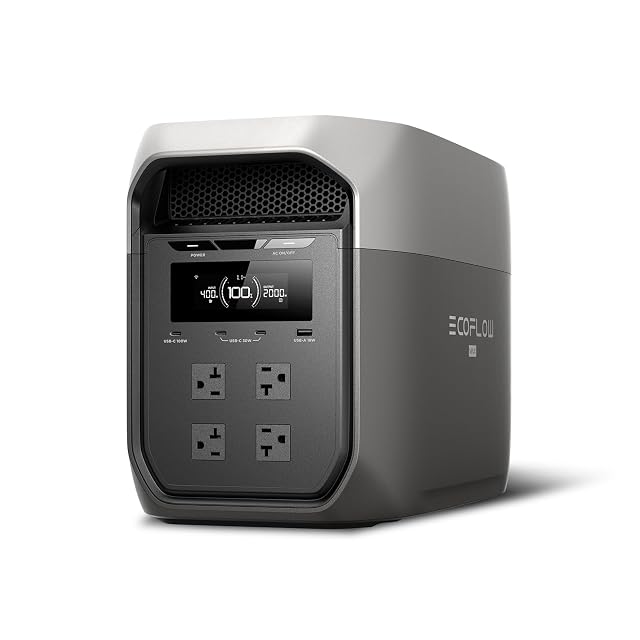
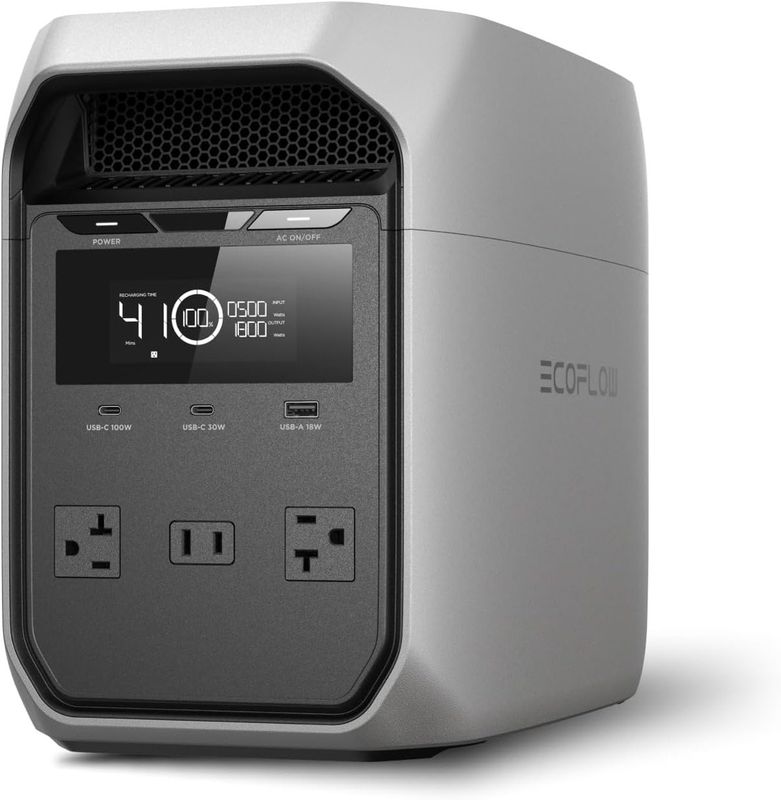
  1. EcoFlow DELTA 3 Classic

    1,024 Wh LiFePO4 power station, 1,800 W continuous (3,600 W surge, X-Boost to 2,600 W), 0–80% in 45 minutes on AC, under 10 ms UPS, 500 W solar, 5-year warranty

    A 1,024 Wh LiFePO4 station with an 1,800 W inverter, a 45-minute 0–80% wall charge and a sub-10 ms UPS switch, at $462 the cheapest 1 kWh unit here.

    Best for: A first home backup unit for a fridge, a router and phones through a short outage

    8.5/10

    ≈ $462

  2. Anker SOLIX C1000 Gen 2

    1,024 Wh LiFePO4 power station, 2,000 W continuous (3,000 W peak), 1,600 W wall recharge in 49 minutes, 600 W solar input, under 10 ms UPS switchover, 5-year warranty

    A 1,024 Wh LiFePO4 station with a 2,000 W inverter, a 49-minute wall recharge at 1,600 W and a sub-10 ms UPS switch, at 24.9 lb.

    Best for: Home outage backup and RV weekends where the station must refill fast between uses

    8.5/10

    ≈ $530

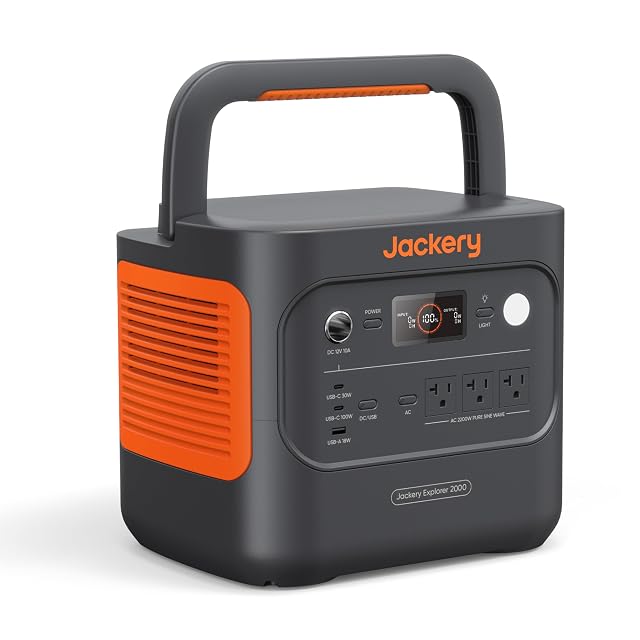
  3. Jackery Explorer 2000 v2

    Jackery Explorer 2000 v2: 2,042 Wh LiFePO4 power station, 2,200 W across three AC outlets, 100 W USB-C, 39.5 lb, 0–80% in 66 minutes, 20 ms UPS switching (UL1778 tested)

    A 2,042 Wh LiFePO4 station at 39.5 lb with 2,200 W of AC, a 66-minute fast charge, a quiet charge mode and 20 ms UPS switching.

    Best for: Someone who must lift a 2 kWh station into a car or up stairs

    8.4/10

    ≈ $999

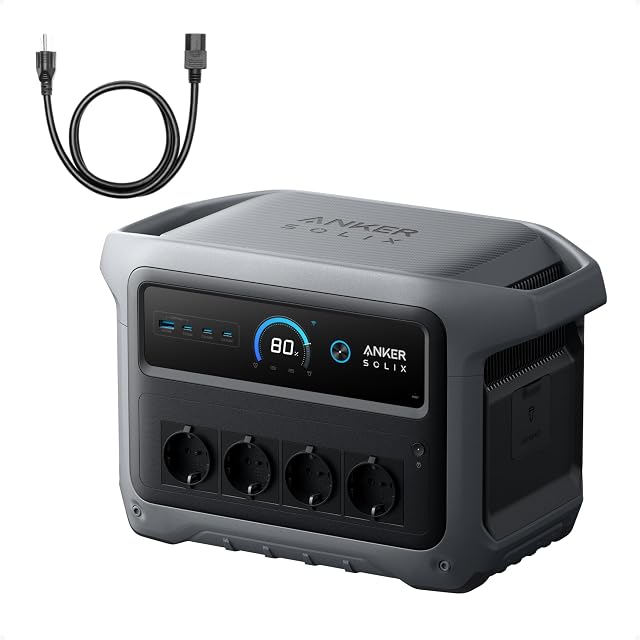
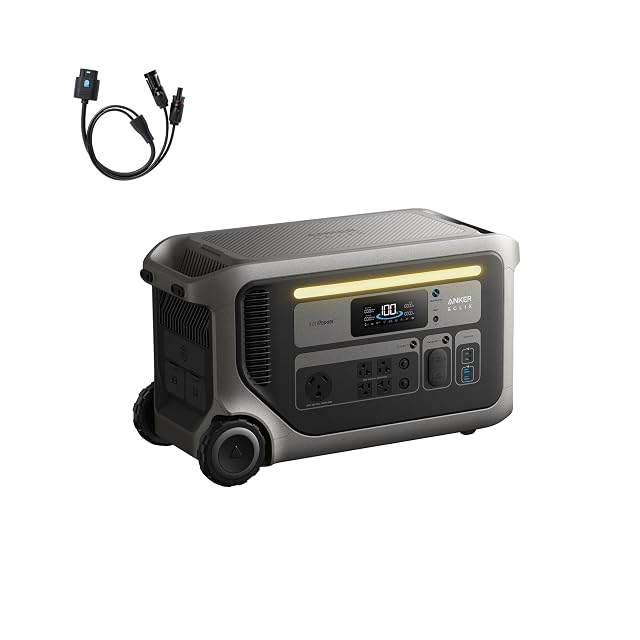
  4. Anker SOLIX F3000

    Anker SOLIX F3000: 3,072 Wh power station, 6,000 W in the title, 3,600 W pass-through from a 120 V generator, 2,400 W solar on 165 V or 60 V ports, 240 V with two units, expandable to 24 kWh

    A 3,072 Wh station with 3,600 W pass-through from a generator, 2,400 W of solar input and 240 V when paired, expandable to 24 kWh.

    Best for: A 120 V home backup that will be recharged from a generator during long outages

    8.4/10

    ≈ $1700

  5. EcoFlow RIVER 3

    245 Wh LiFePO4 power station, 300 W AC (600 W X-Boost), GaN inverter, 0–100% in 1 hour on AC, 110 W solar, under 20 ms UPS, IP54 battery protection, 7.8 lb

    A 245 Wh LiFePO4 station at 7.8 lb, with a GaN inverter, a one-hour wall recharge, a 20 ms UPS switch and IP54 battery protection.

    Best for: A grab-and-go station for phones, a laptop, lights and a router through a short outage

    8.1/10

    ≈ $249

Questions this guide gets asked

What size power station do I need?

Add up the watts of what you will run and multiply by the hours. A 60 W fridge average for 10 hours is 600 Wh, so a 1 kWh station covers it with margin for losses.

What is the difference between Wh and W?

Watt-hours are the size of the tank; watts are how fast it can be emptied. A 1,024 Wh station with a 1,800 W inverter runs an 1,800 W kettle for about half an hour.

Is LiFePO4 better?

For a station you use often, yes: the ones here are rated for thousands of cycles. Every pick on this page uses LiFePO4 or LFP cells.

Can a power station replace a generator?

For hours, yes, silently and indoors. For days, only with solar or a generator to recharge it.

Do they work as a UPS?

Some do. The DELTA 3 Classic, the C1000 Gen 2 and the DELTA 3 Max state under 10 ms; the Explorer 2000 v2 states 20 ms.

Each station, and the load it was sized for

What each band of spending powers

What changes between bands here: Capacity — Entry level 288 · Mid range 1152 · Upper range 2073.6

One line, if that is all you want

Comparisons that settle it here

Station against station, where that comparison is already written.

How this order was worked out

The stations listed come from the catalog of this site. Specifications are those the manufacturer and the Amazon listing publish; prices are what Keepa recorded on the date below, and both move. The order follows declared specifications, stated strengths weighed against stated limits, and price. Nothing here has been charged or discharged by us, and no page claims it was.

Last checked on