Skip to content

Powering a van conversion

A van electrical system is built outward from the battery, and every part after it is sized by a number the battery does not publish. Here is the chain, in order.

Everything is sized by the battery

Not by its capacity — by its maximum current. That figure decides the cable, the fuse, the busbar and the isolator, and it is the one number a battery listing is least likely to publish clearly.

Find it first.

1. The battery

Capacity in amp-hours, chemistry, and the maximum continuous discharge current.

For lithium, one more: the low-temperature charging cut-off. Charging a lithium cell below freezing damages it permanently, and a battery that refuses is protecting itself. Not every listing says whether it does.

2. The DC-DC charger

Between the vehicle battery and the leisure battery, always. It takes whatever the alternator produces and makes a proper charging profile from it.

Sized by charge current, and constrained by what the vehicle wiring will carry. A 40 A charger on thin existing wiring is a 40 A charger in a smaller circuit.

3. The busbar

Where everything meets. Positive on one, negative on the other, and every load and source lands there instead of stacking six ring terminals on a battery post.

Sized by the total current, and the stud size decides which lugs fit. Copper conducts better than brass, which at high current stops being academic.

4. The isolator

One switch that kills the whole system. For maintenance, for storage, for the day something goes wrong.

Sized by continuous current, with a surge figure alongside it — and the two are different numbers. A switch published with only one leaves you guessing which it meant.

5. The inverter

Only if mains is genuinely needed. Everything a van actually uses runs on twelve volts, and each conversion loses something.

Pure sine or modified is the first question, and idle consumption is the second — an inverter left switched on draws its idle current continuously whether or not anything is plugged in.

6. The monitor

A shunt, not a voltmeter. Voltage tells you roughly where a battery is; a shunt counts what actually went in and out.

On a lithium battery, where voltage is nearly flat across most of the discharge, a voltmeter is close to useless and a shunt is the only honest answer.

The part this guide keeps returning to

Cable and fuses. Every step above needs both, sized to the current at that step, and nothing in a van electrical system fails as quietly as an undersized conductor.
The picks, and why each one is here

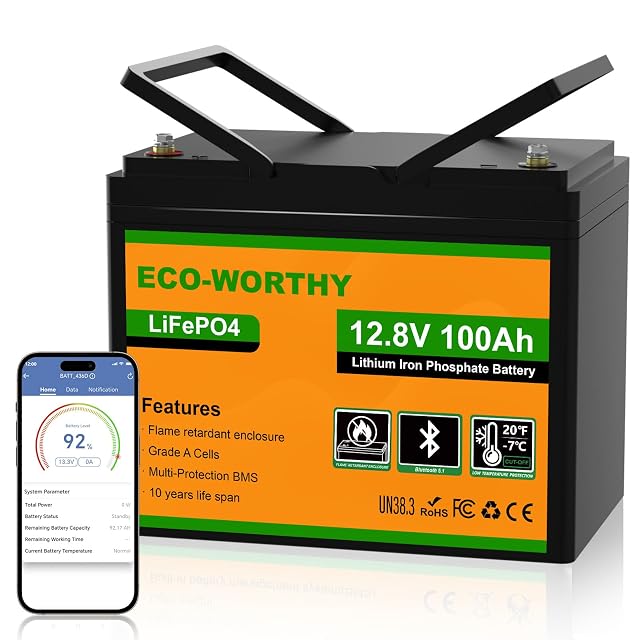
  1. ECO-WORTHY 12 V 100 Ah LiFePO4 with Bluetooth and low-temperature cut-off

    100 Ah at 12 V · 100 A BMS, 100 A continuous charge and discharge · charge stops at −7 °C, resumes at ≥0 °C, discharge stops below −20 °C · 15000 cycles · Bluetooth · 10.5 kg

    A 12 V 100 Ah LiFePO4 battery with a 100 A BMS, Bluetooth monitoring, and published low-temperature thresholds for both charging and discharging.

    Best for: A van or boat that will see freezing mornings, where the charging threshold is the specification that matters.

    ≈ €200

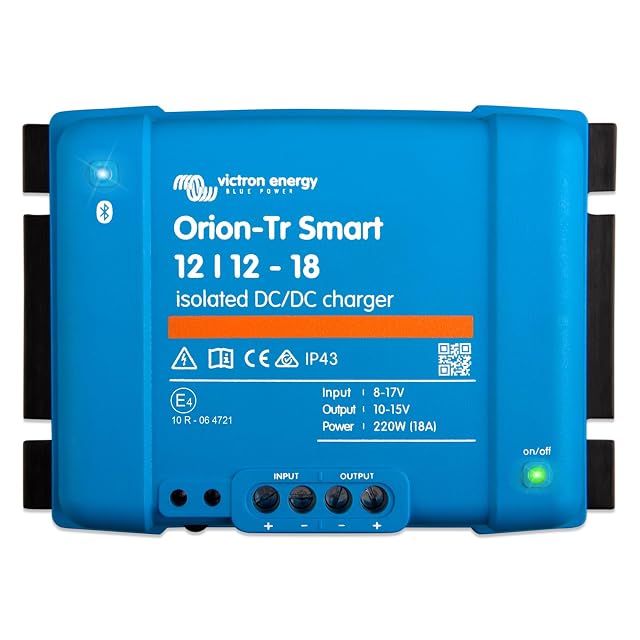
  2. Victron Energy Orion-Tr Smart 12/12 V 18 A 220 W, isolated

    18 A output, 220 W · 12 V to 12 V, isolated · engine detection not described · adaptive three-stage, lead-acid and lithium · no solar input · cable not specified · fuse requirements not published · unlimited parallel units

    An isolated 18 A DC-DC charger with an adaptive three-stage algorithm and integrated Bluetooth, which can be paralleled without limit to raise the output.

    Best for: A boat or a vehicle where the two circuits must be electrically separate.

    ≈ $138 / £120 / €127

  3. kidodI Pair, 400 A continuous, 12–48 V, 8 × M10, tinned copper

    400 A CONTINUOUS, 12–48 V · 8 × M10 studs · THICKENED TINNED COPPER plate, glass-fibre reinforced nylon housing · TINNED · a housing with removable side windows and a non-slip foam base · four fixings supplied · SUPPLIED AS A PAIR

    A pair of 400 A busbars for 12 V to 48 V with eight M10 studs each, in thickened tinned copper with a glass-fibre reinforced nylon housing and removable side windows.

    Best for: A large battery bank where eight heavy cables meet at each pole.

    ≈ €47

  4. Spurtar Terminal isolator, 125 A continuous / 500 A brief, 15–17 mm

    125 A CONTINUOUS · 500 A BRIEF · 12 V and 24 V · load-switching capability not published · clamps to a negative post of 15 to 17 mm · no mounting, it sits on the terminal · a green knob, turned by hand

    A battery terminal isolator in copper-zinc alloy rated 125 A continuous and 500 A for short periods, for negative posts of 15 to 17 mm.

    Best for: A vehicle or caravan battery isolated between uses, at a hundred amps or less.

    ≈ £7 / €9

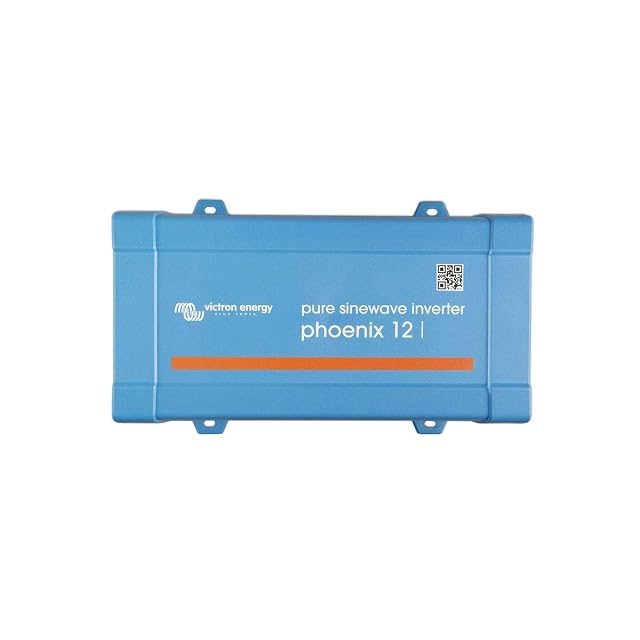
  5. Victron Energy 500 VA pure sine, 12 V to 230 V, 900 W peak

    pure sine · 500 VA continuous, 900 W peak, duration not stated · 1 W in zero-load ECO mode · high efficiency, figure not published · 12 V input · protections not listed · Hybrid HF technology, cooling not described

    A 500 VA pure sine inverter drawing a stated 1 W in zero-load ECO mode, with a VE.Direct communication port and a high starting capability for motor loads.

    Best for: A van or boat where the inverter stays switched on and the idle draw is the deciding specification.

    ≈ £134 / €120

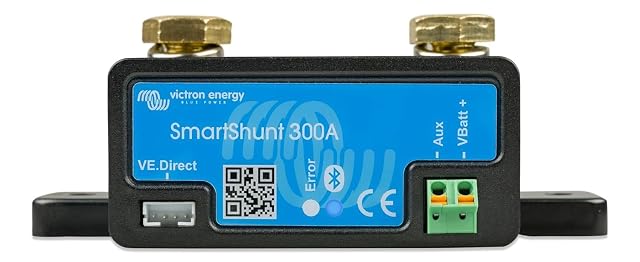
  6. Victron Energy SmartShunt 300 A 50 mV, Bluetooth, no display

    shunt-based counting · 300 A, 50 mV shunt · accuracy not published · chemistries not named · NO display — the phone is the display · VictronConnect over Bluetooth · alarms not described · self-consumption not published · VE.Direct plus a second connection for a second battery, midpoint or temperature sensor

    A 300 A shunt monitor with no display of its own, reading out over Bluetooth to VictronConnect, with a VE.Direct port and an input for a second battery or a temperature sensor.

    Best for: An installation already using Victron equipment, where one application covers everything.

    ≈ $70 / £60 / €67

Questions this guide gets asked

Why not just connect the leisure battery to the alternator?

Because a modern alternator is managed by the engine computer and does not hold a steady charging voltage. Connected directly, it undercharges a leisure battery for years and then the battery dies early. A battery-to-battery charger takes whatever the alternator gives and produces a proper profile from it.

Lithium or AGM?

Lithium is far lighter for the same usable energy, goes much deeper without damage, and lasts several times as many cycles. AGM is cheaper, and it can be charged below freezing without a heater. A van used in winter and parked cold has a real argument for AGM; one that cycles daily has a stronger one for lithium.

What gets forgotten?

The cable and the fuse. A 2000 W inverter at 12 V draws well over 150 A from the battery, and the conductor and protection to carry that are a separate purchase entirely. An installation with the right inverter on the wrong cable is the commonest fault on this shelf.

A price quoted in the text of a PowerVerdict page dates from the day that page was written; the live figure beside each product is fetched while you read and replaces it.

The tool we use ourselves

Decided which one? Then do not overpay for it.

Power stations and solar kits are discounted over and over through the year, and a struck-through figure on its own says nothing whatever about what the same model was charged at four weeks ago. UniverTrack holds a week-by-week record for every retailer, so a reduction is measured against a price somebody actually paid rather than one written for the sale — and it says when the moment to buy has genuinely arrived.

Real price historyBuy-now alertsAI buying assistant
Try free for 14 days →
No commitment · Cancel in one click · 5 languages