Skip to content

The best power station for camping and RVs

At camp the station is recharged by the sun, so solar input matters as much as capacity. Weight decides whether it leaves the car.

Three camping sizes

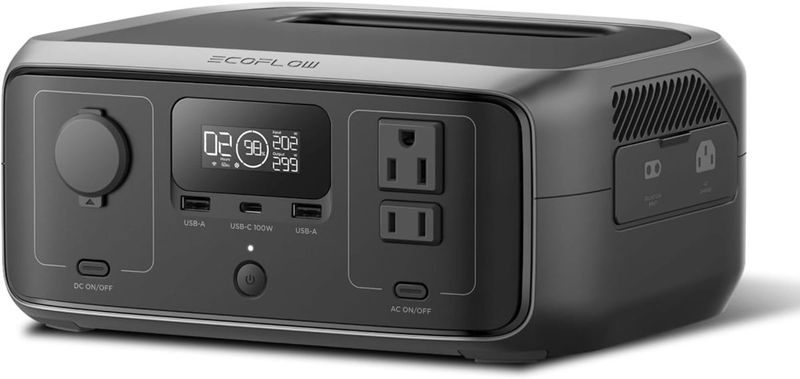
Tent and car camping: EcoFlow RIVER 3. 245 Wh, 7.8 lb, 110 W of solar and IP54 battery protection. Enough for phones, lights and a laptop.

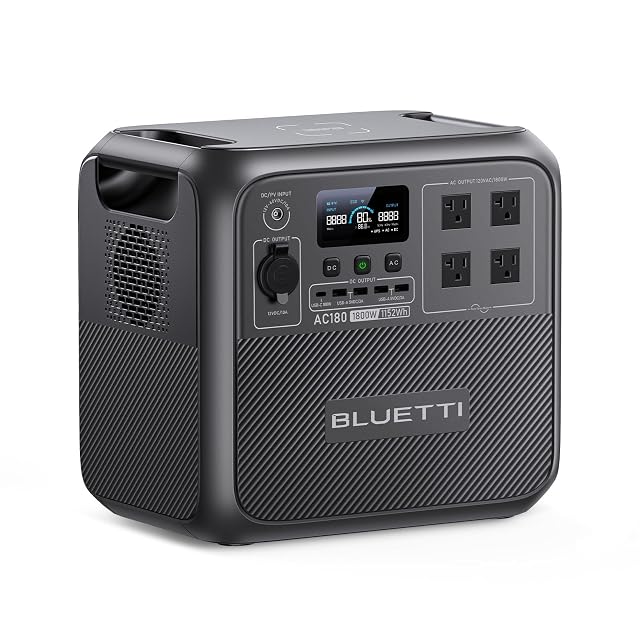
Weekend off the grid: BLUETTI AC180. 1,152 Wh with 500 W of solar input, which refills it in 2.8 to 3.3 hours of good sun. 1,800 W runs a camp kettle.

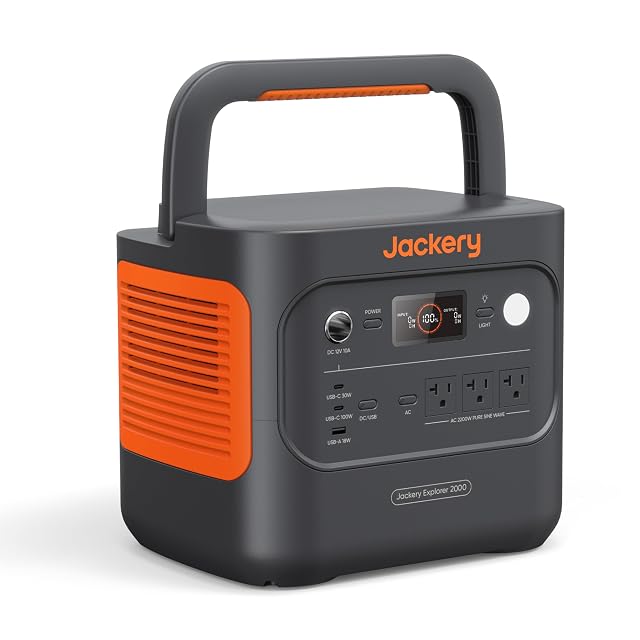
Van or RV: Jackery Explorer 2000 v2. 2,042 Wh at 39.5 lb, with a 30 dB silent charge mode for nights.

The RIVER 2 Max sits between the first two: 499 Wh at 13.3 lb. The Anker C1000 Gen 2 brings 2,000 W to the 1 kWh class.

Match the panel to the input

A panel larger than the station’s solar input wastes its surplus; a smaller one simply charges slower. The Ecosonique 400 W suits stations that take 400 W or more. See the best folding solar panel for a power station.

RV notes

A station does not replace an RV house battery wired to the coach’s 12 V system. For that, see the best LiFePO4 battery for RVs and the best inverter for an RV.

The picks, and why each one is here

  1. EcoFlow RIVER 3

    245 Wh LiFePO4 power station, 300 W AC (600 W X-Boost), GaN inverter, 0–100% in 1 hour on AC, 110 W solar, under 20 ms UPS, IP54 battery protection, 7.8 lb

    A 245 Wh LiFePO4 station at 7.8 lb, with a GaN inverter, a one-hour wall recharge, a 20 ms UPS switch and IP54 battery protection.

    Best for: A grab-and-go station for phones, a laptop, lights and a router through a short outage

    8.1/10

    ≈ $249

  2. BLUETTI AC180

    BLUETTI AC180: 1,152 Wh LiFePO4 power station, 1,800 W (2,700 W boost through the app), 8 outlets, full in 1 hour at 1,440 W AC, 500 W solar input, 20 ms UPS, 5-year warranty

    A 1,152 Wh LiFePO4 station with 1,800 W, eight outlets, a full AC charge in an hour at 1,440 W and 500 W of solar input.

    Best for: Camping and short outages where a 1 kWh station must refill from solar in an afternoon

    7.5/10

    ≈ $499

  3. Jackery Explorer 2000 v2

    Jackery Explorer 2000 v2: 2,042 Wh LiFePO4 power station, 2,200 W across three AC outlets, 100 W USB-C, 39.5 lb, 0–80% in 66 minutes, 20 ms UPS switching (UL1778 tested)

    A 2,042 Wh LiFePO4 station at 39.5 lb with 2,200 W of AC, a 66-minute fast charge, a quiet charge mode and 20 ms UPS switching.

    Best for: Someone who must lift a 2 kWh station into a car or up stairs

    8.4/10

    ≈ $999

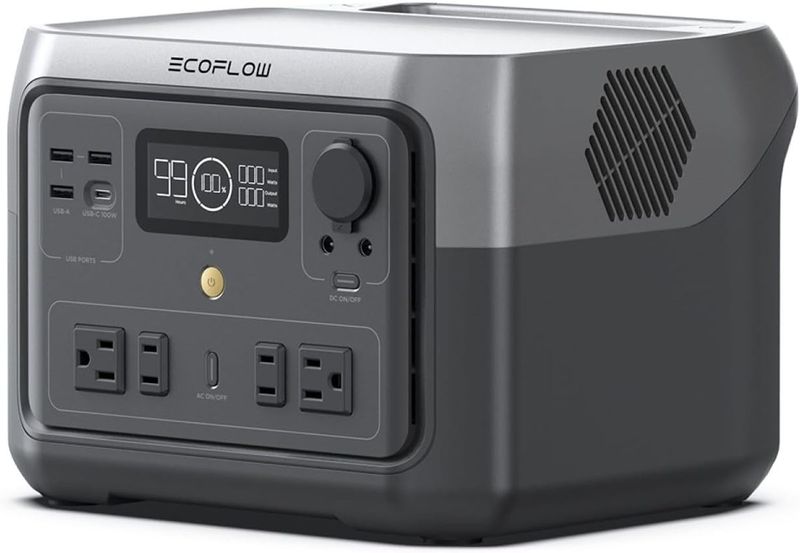
  4. EcoFlow RIVER 2 Max 500

    499 Wh LiFePO4 power station, “up to 1,000 W” output across 11 outputs, 1-hour AC recharge, 220 W solar input in 2.3 hours, 13.3 lb, 5-year service

    A 499 Wh LiFePO4 station with eleven outputs, a one-hour wall recharge and 220 W of solar input, at 13.3 lb and $309: the only 500 Wh unit here.

    Best for: Weekend camping with a cooler, lights and laptops, where 1 kWh would be more than you carry

    8.3/10

    ≈ $309

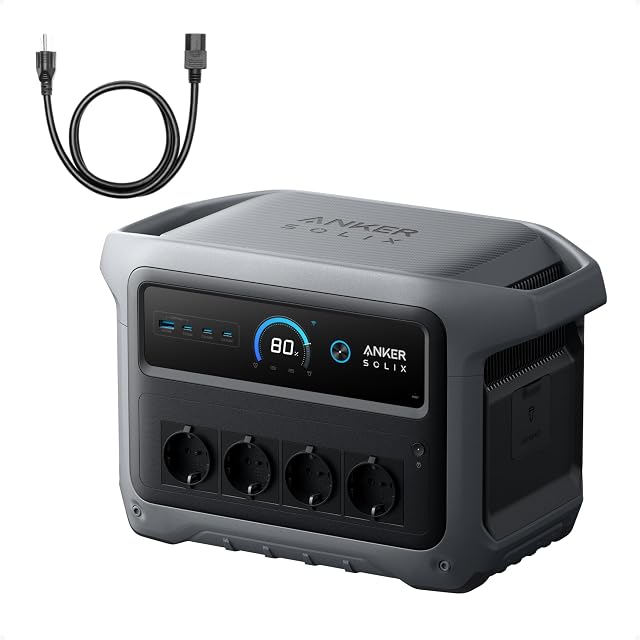
  5. Anker SOLIX C1000 Gen 2

    1,024 Wh LiFePO4 power station, 2,000 W continuous (3,000 W peak), 1,600 W wall recharge in 49 minutes, 600 W solar input, under 10 ms UPS switchover, 5-year warranty

    A 1,024 Wh LiFePO4 station with a 2,000 W inverter, a 49-minute wall recharge at 1,600 W and a sub-10 ms UPS switch, at 24.9 lb.

    Best for: Home outage backup and RV weekends where the station must refill fast between uses

    8.5/10

    ≈ $530

Questions this guide gets asked

How big a station for a weekend of camping?

Phones, lights and a fan fit in 250 to 500 Wh. A 12 V fridge adds roughly 400 to 700 Wh a day, so plan on 1 kWh or a solar panel.

Can it power an RV air conditioner?

Briefly, from a 2 kWh station with a strong inverter. For a night of air conditioning, plan on a generator.

How long does solar take?

BLUETTI states 2.8 to 3.3 hours for the AC180 on 500 W of solar; EcoFlow gives 2.3 hours for the RIVER 2 Max on 220 W.

Is it safe in a tent?

Yes: no fumes, unlike a generator. Keep it dry and out of direct sun.

Will it run a CPAP?

Yes, see the CPAP guide for runtimes and DC options.

Each station, and the load it was sized for

BLUETTI AC180 · $499

Sized for: Camping and short outages where a 1 kWh station must refill from solar in an afternoon

Its strongest figure: More capacity than the usual 1,024 Wh stations

Its weakest figure: 20 ms switchover

Read the full review: BLUETTI AC180 →

EcoFlow RIVER 2 Max 500 (EFR607) · $309

Sized for: Weekend camping with a cooler, lights and laptops, where 1 kWh would be more than you carry

Its strongest figure: Half a kilowatt-hour at 13.3 lb, the middle ground between the 300 Wh units and the 1 kWh stations

Its weakest figure: The listing never gives one clean continuous AC rating: it says “up to 1,000W” and mentions 300 W AC outlets

Read the full review: EcoFlow RIVER 2 Max 500 (EFR607) →

What each band of spending powers

What changes between bands here: Capacity — Entry level 288 · Mid range 1152 · Upper range 2073.6

One line, if that is all you want

Comparisons that settle it here

Station against station, where that comparison is already written.

How this order was worked out

The stations listed come from the catalog of this site. Specifications are those the manufacturer and the Amazon listing publish; prices are what Keepa recorded on the date below, and both move. The order follows declared specifications, stated strengths weighed against stated limits, and price. Nothing here has been charged or discharged by us, and no page claims it was.

Last checked on

A price quoted in the text of a PowerVerdict page dates from the day that page was written; the live figure beside each product is fetched while you read and replaces it.