Stored kilowatt-hours only pay back if the house uses them at night · review
Hoymiles HiBattery AC, 1.92 kWh, expandable to 11.52 kWh review
An AC-coupled 1.92 kWh battery expandable to 11.52 kWh whose listing publishes both a conversion efficiency and a round-trip efficiency — the only one in this family that does.
The bottom line The sparest sheet in this family and, on one line, the most useful: it publishes a round-trip efficiency, which is the figure that decides whether a tariff-driven battery pays for itself. Everything else about the pack — chemistry, cycles, power — is absent.
A 1.92 kWh AC-coupled module with six bullets, four of them a phrase long, and one of them more informative than most whole listings here.
The line worth the page
A bidirectional DC/AC efficiency of 96.5 % and an AC round-trip efficiency of 86 %. Nothing else in this family publishes the second figure. It is what a stored kilowatt-hour costs: charge from the mains and take it back out, and roughly one unit in seven has gone.
Why that matters more than capacity here
This class of product is bought to move energy in time — from midday to evening, or from a cheap hour to an expensive one. Whether that pays depends on the round trip, not on the size of the pack. A maker that publishes it is inviting the comparison; most do not.
What is not here
The chemistry. The cycle count. Any power rating in either direction. Three of the six specification lines on this page say the same thing: absent from the listing.
What is in the box
The battery and the mounting accessories, listed in the last bullet. That is worth noting on a product class where brackets are frequently a separate purchase.
Availability
German Amazon store quoted about 545 € when this page was compiled.
American, British, French, Italian and Spanish Amazon catalogues carry an entry for it, with nobody selling.
These figures are what Keepa reported on the day this page was last updated. Availability and pricing move without notice.
Prices quoted in this text were read on 16 September 2026. The live price is at the top of the page.
What it gets right, and what it leaves out
Strengths
The only listing in this family to publish a round-trip efficiency, which is what a stored kilowatt-hour actually costs
Both the conversion and the round-trip figure are given, so the difference between them is visible
Mounting hardware is included and listed in the package contents
Compromises
No chemistry, no cycle count and no power rating — three of the six lines are blank
The bullets are unusually terse, four of them a single clause long
Expansion is quoted as a maximum without stating how many modules that is
Specifications
Usable capacity
Nowhere in the listing — 1.92 kWh is published as capacity, expandable to 11.52 kWh
Charge and discharge power
Nowhere in the listing — no wattage is published
Chemistry
Nowhere in the listing — not named in any bullet
Cycle life
Nowhere in the listing
Inverter compatibility
AC-coupled, first bullet; no specific inverter is named
Published metering
App control is named, third bullet; the fifth bullet publishes a bidirectional DC/AC efficiency of 96.5 % and an AC round-trip efficiency of 86 %
Amazon reference
B0FSF3JMQP (same reference on 6 Amazon marketplaces)
EAN
6975514333729
Questions owners ask about this one
What is the difference between 96.5 % and 86 %?
The first is the conversion stage alone, in one direction. The second is the full round trip: mains in, stored, mains out. The gap between them is what storing a kilowatt-hour actually costs, and publishing both is what makes it visible.
Why does round-trip efficiency matter on a tariff-driven battery?
Because the arithmetic of charging cheaply and discharging at a peak only works if the round trip does not eat the difference. An 86 % round trip means roughly one unit in seven is lost between the two prices.
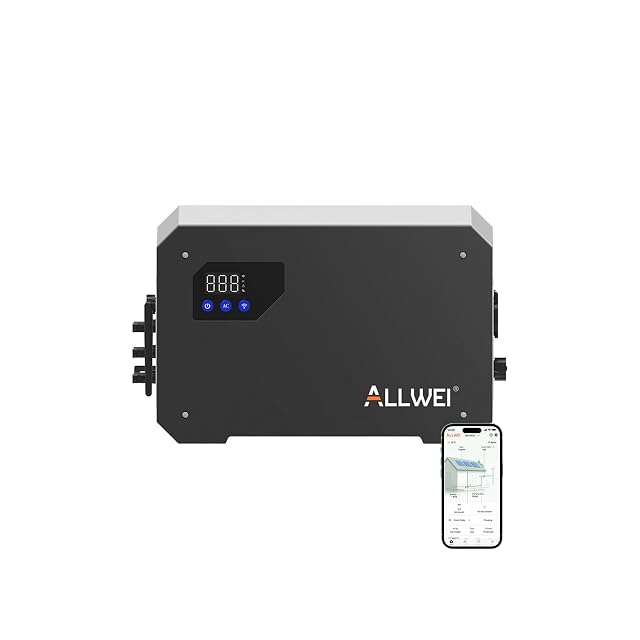
1600 Wh base, up to 8 kWh · 1600 W output · 3 MPPT, 2700 Wp solar · LiFePO4 · IP65 · AC-coupled · smart meter and tariff integration
An AC-coupled all-in-one balcony storage system with three MPPT trackers taking 2700 Wp, a 1600 W output, expansion to four packs, and integration with dynamic electricity pricing.
Best for: A household on a dynamic electricity tariff that already has roof PV and wants to stop exporting surplus.
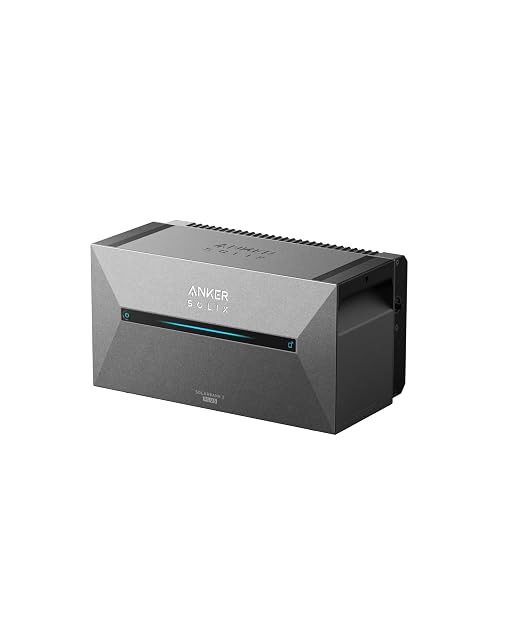
1.92 kWh nominal · 2800 W solar across 4 MPPT · 1200–2300 W on two AC ports · LFP, 6000 cycles · IP65 · down to −20 °C · 26 cm wide
An AC-coupled 1.92 kWh LFP unit with four MPPT trackers taking 2800 W of solar, two mains ports rated 1200 to 2300 W, IP65 and stated operation to −20 °C.
Best for: A narrow indoor space beside an existing balcony installation, where four panel groups need managing separately.
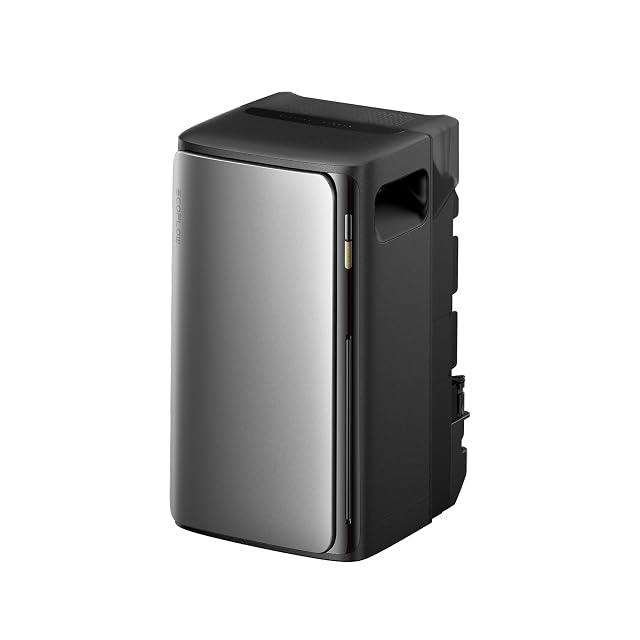
1600 Wh base, expandable to 9.6 kWh · 2 MPPT, 1200 W solar (600 W per tracker) · 6000 cycles · IP65 · down to −20 °C · 10-year warranty
A balcony storage unit with two MPPT trackers taking 1200 W of solar, expandable to 9.6 kWh with five further packs, rated IP65 and stated to operate down to −20 °C.
Best for: A balcony with panels facing two different directions, where per-tracker limits matter more than total capacity.