Voltage guesses the state of charge; a shunt counts it
The best battery monitors for 2026
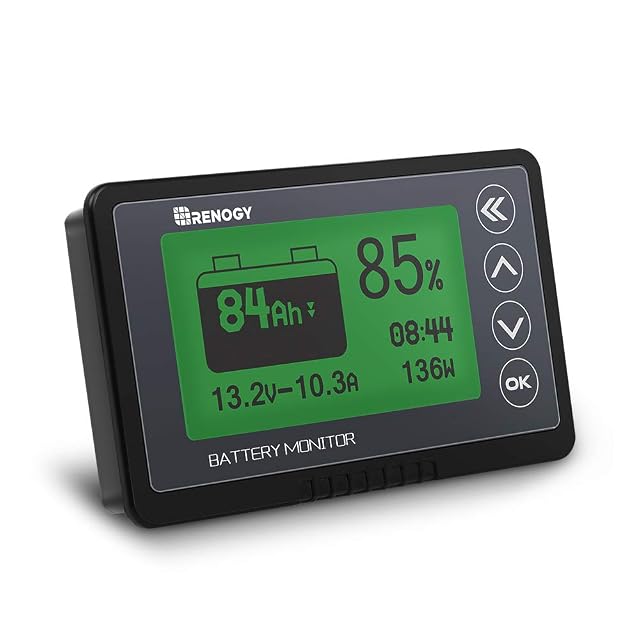
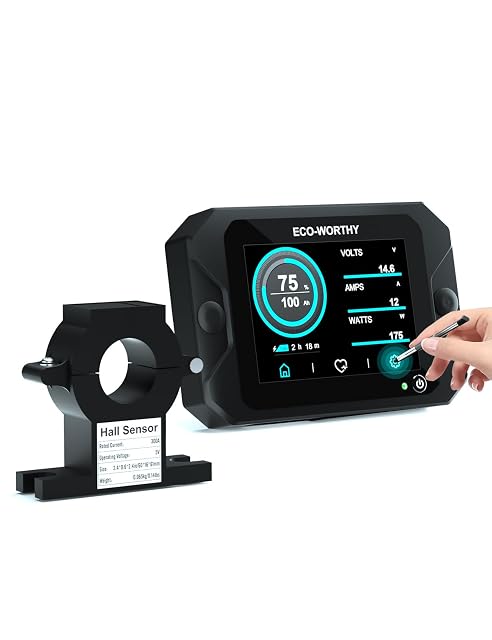
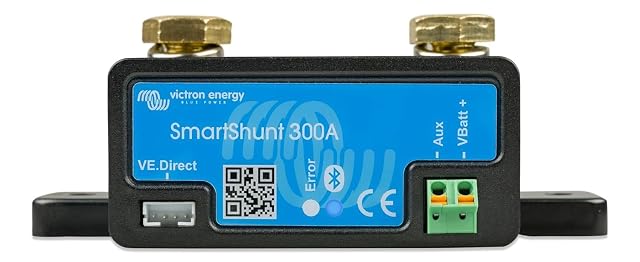
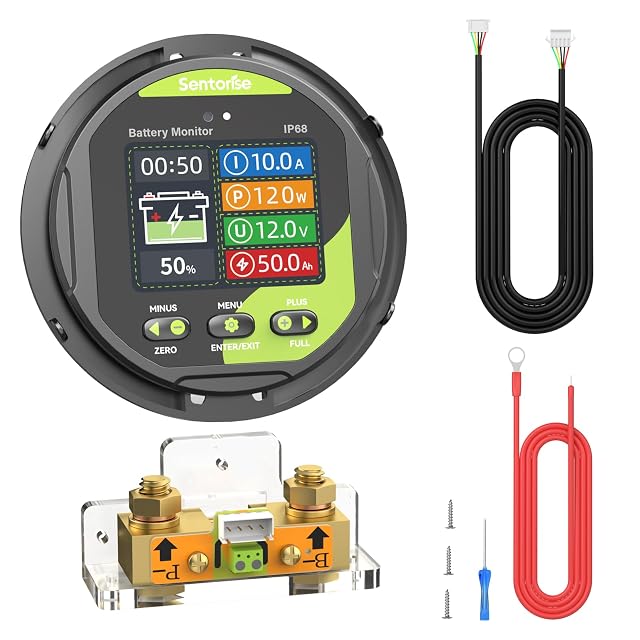
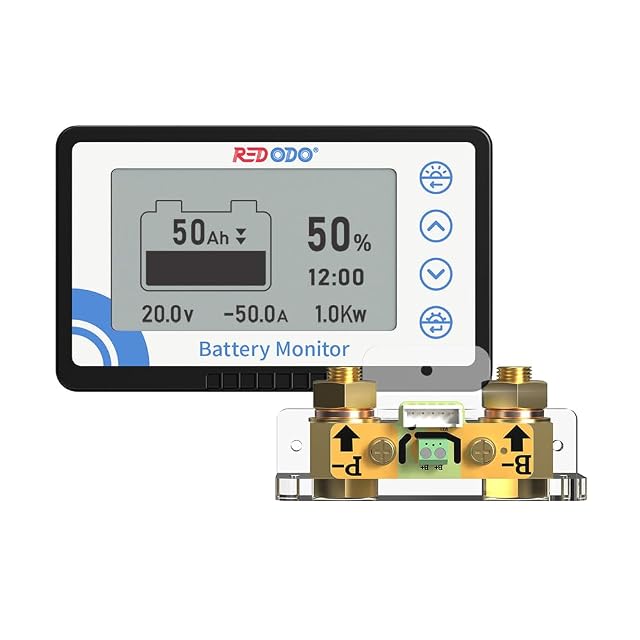
A battery monitor answers one question — how much is left — and the two ways it can answer differ in kind. A voltage-only meter infers the state of charge from the terminal voltage, which is a fair guess for a rested lead-acid battery and a poor one for lithium, whose voltage barely moves between eighty and twenty percent. A shunt-based monitor puts a calibrated resistor in the negative lead and counts every amp in and out, which is arithmetic rather than inference, and it is what makes a lithium bank legible. The shunt rating in amps must exceed the largest current the installation can draw, inverter surge included. Accuracy is published as a percentage, and it depends on the battery capacity being entered correctly — a monitor is only as right as the capacity it was told. Supported chemistries and the Peukert setting decide whether the count is corrected for the way lead-acid batteries lose capacity under load. Then the display or app, the alarms and relay outputs that can shed a load automatically, the monitor’s own consumption — it runs all year — and what the installation requires: all negatives through the shunt, without exception, or the count is wrong from the first day. We compare measurement method, shunt rating, accuracy, chemistries, display and app, alarms, self-consumption and installation requirements.