A van charges from three sources, and they rarely agree
The best motorhome batteries for 2026
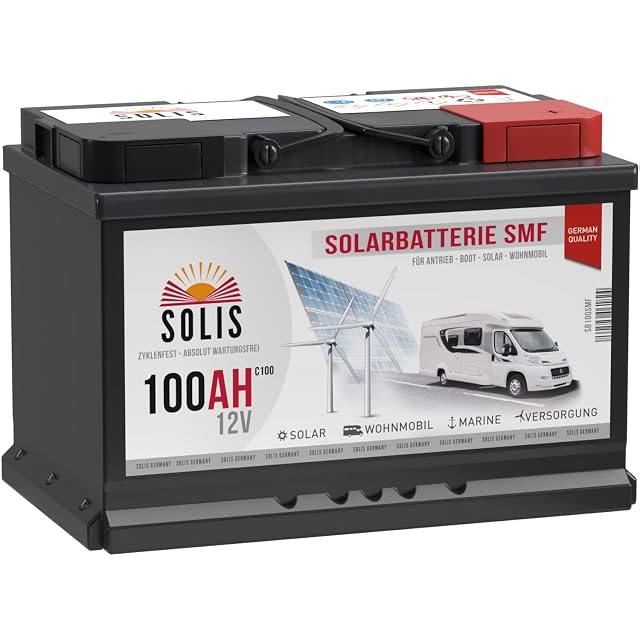
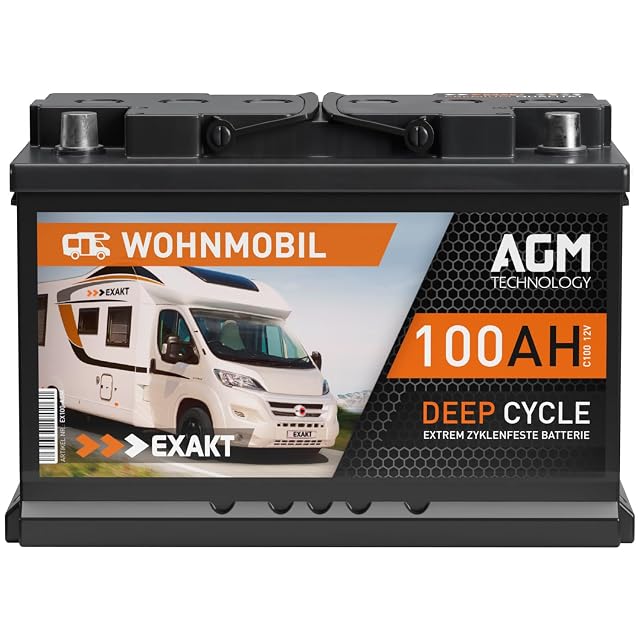
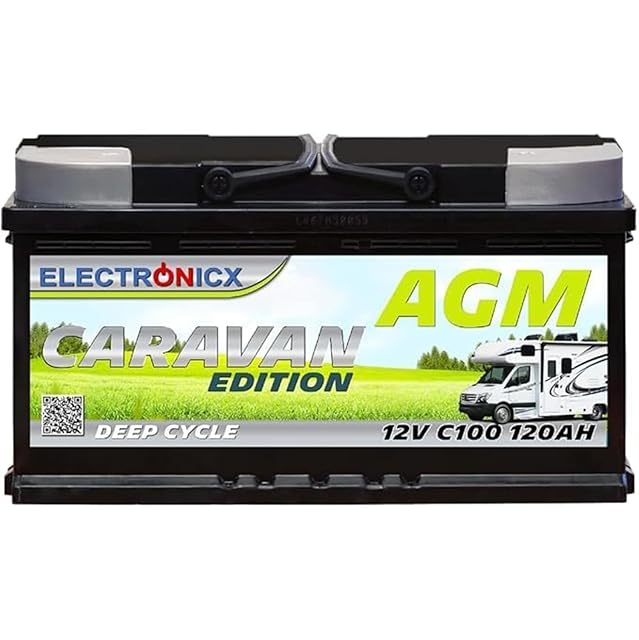
A motorhome battery lives a harder life than a garage battery: it is charged from the alternator while driving, from a hookup when parked, and from a roof panel whenever the sun is out, and those three sources have three different voltage profiles. That is why charging compatibility comes before capacity on this shelf. A modern vehicle with a smart alternator varies its output and will not reliably fill a battery wired straight to it, which is what the DC-DC charger on the neighbouring shelf exists for; a listing that says the battery charges from the alternator is describing a possibility, not a guarantee. Chemistry then decides weight and usable capacity: lithium iron phosphate gives more of its amp-hours back and weighs roughly half of an AGM of the same rating, at a price that only pays back over several seasons. Low-temperature protection matters in a vehicle that sits outside in February, and it is either in the BMS, in a heating pad, or absent. Mounting is a real specification here: the case dimensions, the terminal orientation and whether the battery may be laid on its side are published for a reason, and a van floor has a fixed hole. We compare capacity, chemistry, alternator and shore charging, low-temperature protection, mounting constraints and dimensions.