Stored kilowatt-hours only pay back if the house uses them at night · review
MARSTEK B2500-D, 2240 Wh, IP65 review
A 2240 Wh LiFePO4 balcony storage unit rated IP65, coupled through a micro-inverter, expandable, and installed without an electrician according to its listing.
The bottom line An expandable balcony battery with a published enclosure rating and a clear description of how it works across a day. What it never publishes is a power figure, which leaves the most practical question — what it can actually run — unanswerable from the sheet.
A 2240 Wh balcony storage unit, sold as a plug-and-play addition to an existing micro-inverter.
How the listing says it works
By day, solar passes through the unit to the micro-inverter and on to the household; with a smart meter fitted, surplus is stored rather than exported. By night, the stored energy is fed back through the micro-inverter. That is a clear description of an AC-coupled arrangement, and it is more than most listings on this shelf provide.
What is published
2240 Wh, LiFePO4, 6000 cycles, IP65, and expandability. The enclosure rating matters here: this is a product sold to stand on a balcony.
What is not
Any power figure at all. Neither a charge rate nor a discharge rate appears in any bullet, and without them the unit cannot be matched to a load or to an inverter. The cycle count carries neither of its two qualifiers.
A note on the listing itself
Amazon’s catalogue entry for this product carries a broken character in place of an umlaut in the title. It is a fault in the source rather than in the product, and this page reports it rather than reproducing it.
Availability
German Amazon store quoted about 311 € when this page was compiled.
French, Italian and Spanish Amazon stores wanted more than 1.6× what the cheapest country wanted. A margin that wide usually means stock shipped in from elsewhere rather than a seller on the ground, so those quotes stay out of the range above.
British Amazon catalogue carries an entry for it, with nobody selling.
American Amazon store returned nothing at all, so the buy button there runs a search instead of landing on an empty page.
These figures are what Keepa reported on the day this page was last updated. Availability and pricing move without notice.
Prices quoted in this text were read on 16 September 2026. The live price is at the top of the page.
What it gets right, and what it leaves out
Strengths
IP65 is published, which matters on a unit sold for a balcony
Expandable capacity is stated rather than implied
The day and night operating description is written out, which makes the role of the smart meter clear
Compromises
No charge or discharge power anywhere in the listing — the figure that decides what it can actually supply
The 6000-cycle count has neither a depth of discharge nor a capacity percentage
The listing title carries a broken character where an umlaut should be, in Amazon’s own catalogue
Specifications
Usable capacity
Nowhere in the listing — 2240 Wh is published as capacity, with no usable figure beside it
Charge and discharge power
Nowhere in the listing — no wattage is published in any bullet
Chemistry
LiFePO4, stated in the listing title
Cycle life
6000 charge cycles, from the title; no capacity percentage and no depth of discharge accompany the count
Inverter compatibility
AC-coupled through a micro-inverter, third and fourth bullets; no specific inverter is named
Published metering
A smart meter is described as storing surplus rather than exporting it, third bullet; the meter is not part of the unit
Amazon reference
B0F94849NF (same reference on 5 Amazon marketplaces)
EAN
6951525703652
Questions owners ask about this one
Why does a missing power rating matter on a storage battery?
Because capacity says how much energy is held and power says how fast it can leave. A 2240 Wh unit that can only discharge slowly covers a fridge overnight; one that can discharge quickly covers a kettle for a few minutes. Neither figure is published here.
Does “installed in 15 minutes without an electrician” apply where I live?
That is a claim about the product, not about your local rules. Whether a plug-in storage unit may be connected at all, and under what conditions, is decided by the regulations in force where you are and by your grid operator.
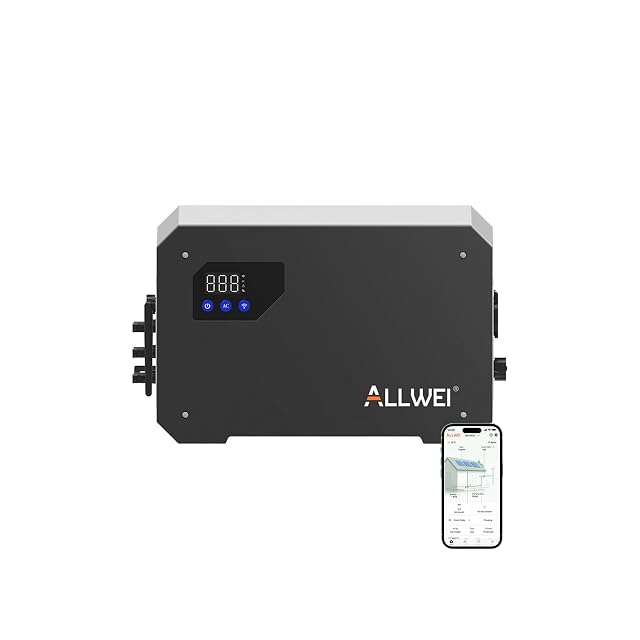
1600 Wh base, up to 8 kWh · 1600 W output · 3 MPPT, 2700 Wp solar · LiFePO4 · IP65 · AC-coupled · smart meter and tariff integration
An AC-coupled all-in-one balcony storage system with three MPPT trackers taking 2700 Wp, a 1600 W output, expansion to four packs, and integration with dynamic electricity pricing.
Best for: A household on a dynamic electricity tariff that already has roof PV and wants to stop exporting surplus.
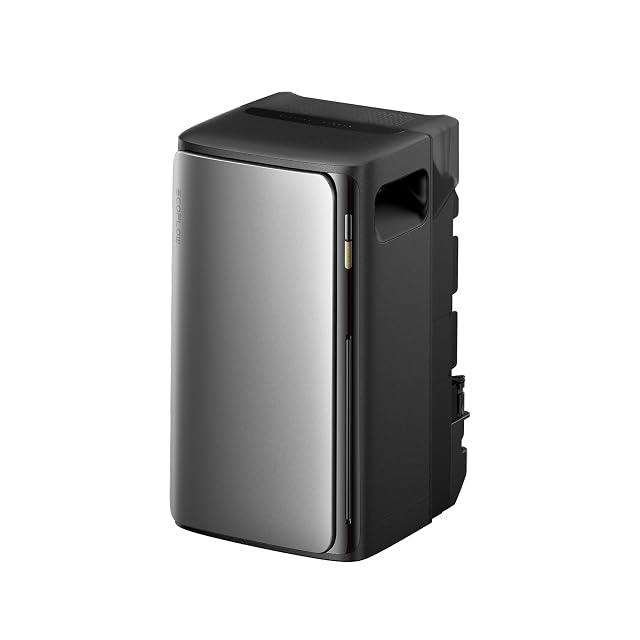
1.92 kWh nominal · 2800 W solar across 4 MPPT · 1200–2300 W on two AC ports · LFP, 6000 cycles · IP65 · down to −20 °C · 26 cm wide
An AC-coupled 1.92 kWh LFP unit with four MPPT trackers taking 2800 W of solar, two mains ports rated 1200 to 2300 W, IP65 and stated operation to −20 °C.
Best for: A narrow indoor space beside an existing balcony installation, where four panel groups need managing separately.
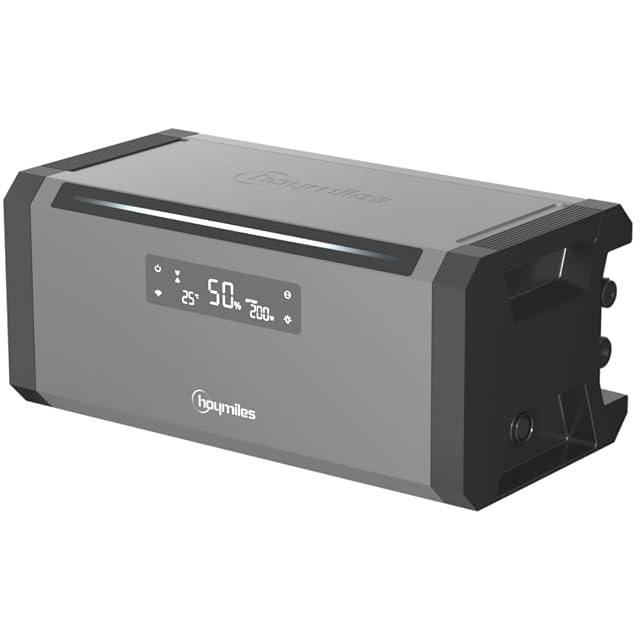
1.92 kWh nominal, up to 11.52 kWh · AC-coupled · bidirectional DC/AC efficiency 96.5 % · AC round-trip efficiency 86 % · app control
An AC-coupled 1.92 kWh battery expandable to 11.52 kWh whose listing publishes both a conversion efficiency and a round-trip efficiency — the only one in this family that does.
Best for: Someone comparing storage on what a stored kilowatt-hour costs rather than on headline capacity.