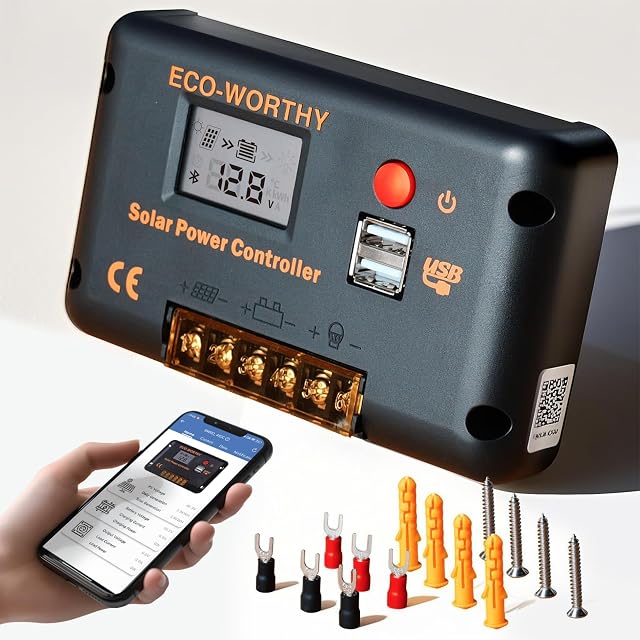
The bottom line The only controller in this catalogue to publish a rated and an operating current separately, with a PV ceiling stated twice and a connection order given. It never names its application, and says nothing about what happens when the phone is away.
A 30 A PWM controller with two wireless protocols and an unusually careful first bullet.
Two currents, published
30 A rated, 20 A operating. Everything else in this catalogue publishes one number. The distinction matters: the rated figure describes the hardware and the operating figure describes what it should be asked to do continuously. An array sized against the first will run the controller at its limit permanently.
The ceiling, stated twice
80 V maximum PV input, in the first bullet and again in the installation instructions. Repetition is not a specification, but a figure that appears twice is one the maker considers important — and it is the figure seven controllers in this catalogue omit entirely.
The connection order
Battery, then photovoltaic module, then load and USB device. Stated in the second bullet. It is standard practice and most listings assume it; saying it out loud prevents a specific commissioning error.
The unnamed application
Bluetooth and WiFi both, with remote monitoring from a mobile application that is never named. An unnamed application cannot be looked up, reviewed or checked for whether it still exists.
What PWM at 80 V means
The ceiling is high and the technology does not convert. A panel string near 80 V feeding a 12 V battery through a PWM controller discards most of the difference. The ceiling protects the input; it does not extract the energy.
Availability
German, French, Italian and Spanish Amazon stores quoted 30 € to 33 € when this page was compiled.
British Amazon store carries it too, priced in its own currency, which the euro range above deliberately omits.
American Amazon store returned nothing at all, so the buy button there runs a search instead of landing on an empty page.
These figures are what Keepa reported on the day this page was last updated. Availability and pricing move without notice.
Prices quoted in this text were read on 16 September 2026. The live price is at the top of the page.
What it gets right, and what it leaves out
Strengths
Rated and operating currents are published separately — 30 A and 20 A — which is the honest form
The 80 V PV ceiling is published and repeated in the installation instructions
The connection order is given: battery first, then panels, then load
Compromises
The application is not named, so it cannot be checked before buying
Nothing about behaviour when the phone is absent
PWM at 12, 24 and 36 V with an 80 V ceiling means most of the surplus voltage is discarded
Specifications
Charge current
30 A rated with a 20 A operating current, first bullet — two figures, which no other controller here distinguishes
PV voltage
Maximum 80 V, first and second bullets — published, and repeated in the installation guidance
Wireless protocol
Bluetooth and WiFi both, third bullet
App features
Remote monitoring of the controller’s functions from a mobile application, third bullet; no application is named
Offline behaviour
Nowhere in the listing
Accessories
USB output at 5 V/1 A, first bullet; no accessories are supplied
Stated firmware support
Nowhere in the listing
Amazon reference
B0FYG67CZV (same reference on 5 Amazon marketplaces)
EAN
0704334441743
Questions owners ask about this one
Why publish both 30 A and 20 A?
Rated current is what the hardware is built for; operating current is what it is intended to run at continuously. Publishing the second is unusual and honest — it is the figure an array should actually be sized against.
What does the connection order prevent?
Connecting panels before the battery can leave the controller without a reference voltage, which some designs do not tolerate. Battery first, then panels, then load is standard practice, and stating it is the kind of instruction most listings assume you know.
30 A charge · PV voltage not published · Bluetooth to a stated 30 m · app monitoring and control · shuts down below 8 V · dual USB 5 V/2.5 A · two weeks of stored data · firmware support not stated
A 30 A PWM controller with Bluetooth to a stated 30 metres, three-stage charge management, a low-voltage shutdown at 8 V and two weeks of stored performance data.
Best for: A garden or shed installation where the controller is out of reach and the stored data replaces a visit.
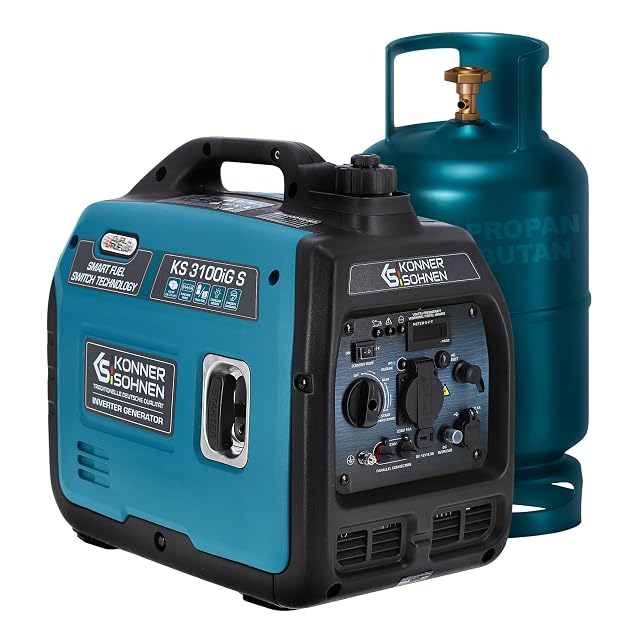
tank not published · 3100 W, 230 V 50 Hz sine from a microprocessor-controlled inverter module · transfer time not applicable · 16 A socket, 2 USB at 5 V/1 A and 5 V/2.1 A · petrol or LPG, everything for gas supplied · 63 dB Lpa at 7 m, distance STATED · outdoor machine, manual governs
A 3100 W dual-fuel inverter generator supplied with everything needed to run on LPG, quoted at 63 dB Lpa at 7 metres, with parallel cables included and an eco mode saving up to 50 % of fuel.
Best for: A household backup kept for years between uses, where bottled gas avoids stale petrol.
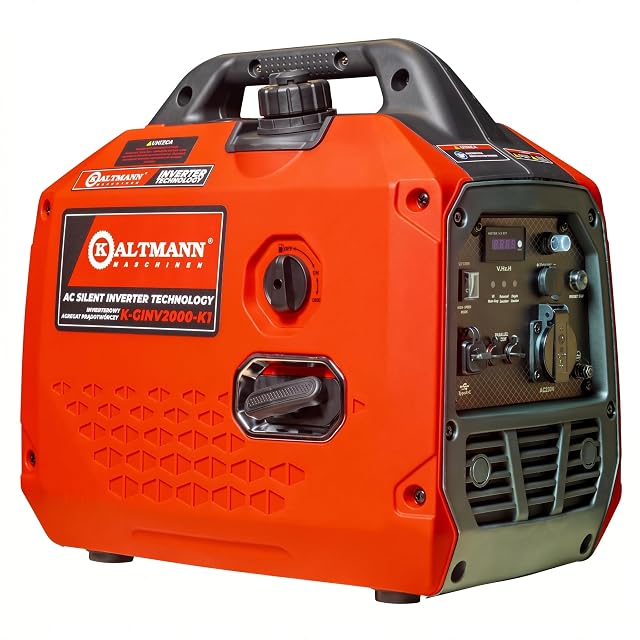
tank 5.6 l · 1800 W continuous, 2000 W peak, pure sine · transfer time not applicable — a generator, not a UPS · 230 V socket, USB-A, USB-C, 12 V DC · petrol, parallel operation with a second unit · 45–50 dB at about 7 m, distance STATED · outdoor machine, manual governs
A 2000 W peak inverter generator with a 5.6 litre tank, up to six hours in eco mode, parallel operation with a second unit, and a noise figure published with its distance.
Best for: A camping pitch or a garden where noise at the boundary is the constraint.