One inverter per panel, and one shaded panel stops costing the others · review
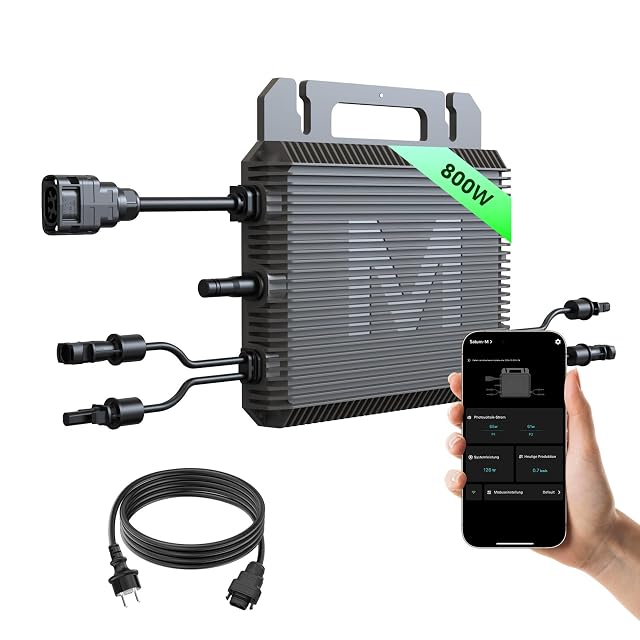
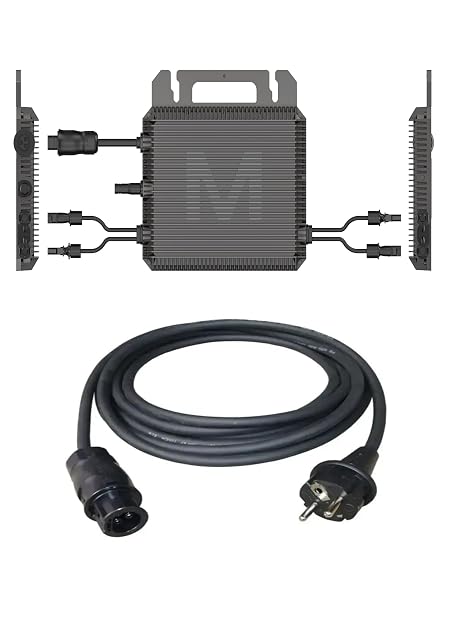
CNCOB 800 W grid-tied micro-inverter, 2 × 400 W MPPT review
An 800 W grid-tied micro-inverter with two 400 W MPPT channels, VDE and EMC certification, lightning protection and an 800 V supercapacitor, at a stated 96 % conversion efficiency.
The bottom line The only micro-inverter here that publishes a per-channel MPPT limit, and one of three to name a certification. It also leads its listing with a troubleshooting procedure, which is an unusual first impression.
An 800 W grid-tied micro-inverter specified by channel rather than by total.
The figure that distinguishes it
400 W per MPPT channel, two channels. Every other micro-inverter here publishes 800 W and leaves the split unstated. Two 500 W modules on a 2 × 400 W inverter exceed their channels; two 400 W modules do not. That is the calculation this listing makes possible.
The protections, named individually
Lightning protection. An 800 V supercapacitor. Over-temperature protection. A safety relay. VDE and EMC certification. Naming them separately is more informative than “multiple protections”, which is what four of its neighbours offer.
The first bullet
It explains how to restore the application connection after an interruption, and what a red indicator means, referring to a linked product video. That is support content in the first position of a product listing. It is reported here because it is published, and because it says something about what buyers ask.
What is absent
The input voltage window. A warranty. And, at the time of writing, a recorded price on the German store.
Availability
Not one of the stores queried had a live offer when this page was compiled.
German, French, Italian and Spanish Amazon catalogues carry an entry for it, with nobody selling.
American and British Amazon stores returned nothing at all, so the buy button there runs a search instead of landing on an empty page.
These figures are what Keepa reported on the day this page was last updated. Availability and pricing move without notice.
What it gets right, and what it leaves out
Strengths
A per-channel MPPT limit is published — 400 W each — which decides how panels can be split
VDE and EMC certification both named
Lightning protection, an 800 V supercapacitor and over-temperature protection are named individually
Compromises
The first bullet is about what to do when the application disconnects and the indicator turns red, which is an odd thing to lead with
No input voltage window
No price recorded on the German store at the time of writing
Specifications
Rated output
800 W, second bullet, described as grid-tied for domestic use
Inputs
Two independent MPPT channels at 400 W each, third bullet — the only unit here to publish a per-channel limit
Limits
400 W per MPPT channel, third bullet; no voltage window or current limit is published
MPPT channels
Two, described as compatible with most photovoltaic modules, third bullet
Certified grid standards
VDE and EMC certification named, second bullet
Monitoring
Application monitoring, second bullet; the first bullet describes a reconnection procedure by video
Ingress rating
IP67, second bullet
Warranty
Nowhere in the listing
Amazon reference
B0DNF3PD2C (same reference on 4 Amazon marketplaces)
EAN
6970736991757
Questions owners ask about this one
Why does a 400 W per-channel limit matter?
Because 800 W total says nothing about how it splits. Two 500 W panels on a 2 × 400 W inverter each exceed their channel; two 400 W panels do not. Publishing the per-channel figure is what turns a total into a panel-matching specification.
What should be made of the troubleshooting bullet?
It describes recovering the application connection after an interruption, with a red indicator, referred to a product video. Leading with a recovery procedure suggests it is a question the seller is asked often, and it is reported here as published.
800 W maximum output · 2 input channels · 16–60 V operating, 60 V maximum, 2 × 20 A maximum input · 2 independent MPPT · VDE certified with an integrated relay · WiFi and Bluetooth · ingress rating not published · warranty not stated
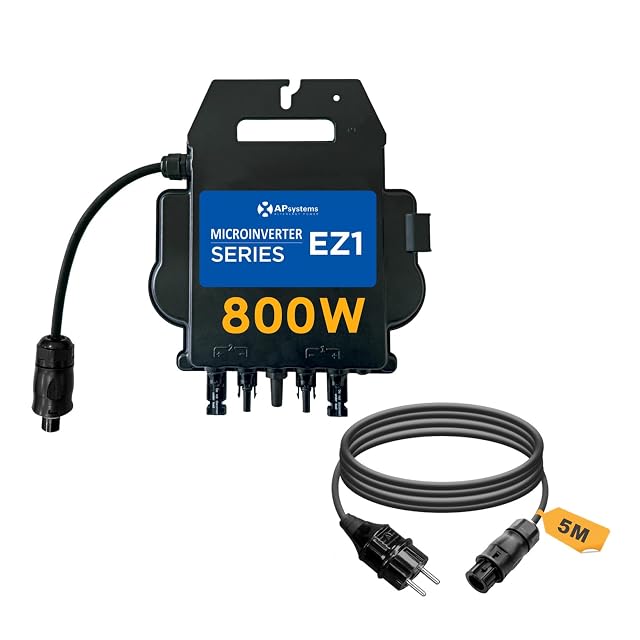
An 800 W APsystems micro-inverter and the only one in this family to publish its input window: 28 to 45 V at the maximum power point, 16 to 60 V operating, 60 V maximum.
Best for: Anyone who wants to check their panels against the inverter before buying either.
800 W · 2 MPPT inputs · limits not published · MPPT efficiency 99.8 %, peak 96.5 % · grid standard not named · monitoring not described · IP67 · MC4 plug and play
An 800 W micro-inverter with two independent MPPT channels quoted at 99.8 % tracking efficiency and 96.5 % peak conversion, with MC4 connectors and IP67 protection.
Best for: A straightforward two-panel balcony where monitoring is not wanted and MC4 is what the panels have.
A price quoted in the text of a PowerVerdict page dates from the day that page was written; the live figure beside each product is fetched while you read and replaces it.