Watt-hours say how long, watts say what you can plug in · review
Anker SOLIX C1000 Gen 2, 1024 Wh, 2000 W with a 3000 W peak review
A 1024 Wh station rated 2000 W continuous and 3000 W peak, charged in a stated 49 minutes at 1600 W, with a 600 W solar input capped at 60 V and a 10 ms switchover.
The bottom line The only station of the nine that publishes a solar input VOLTAGE as well as a wattage, which makes it the one whose panel pairing can actually be checked before buying. It never names its cell chemistry, and its fastest charge depends on an application.
A 1 kWh station with the best-documented solar input in this family and the least-documented cell.
The number nobody else publishes
Up to 600 W of solar at a maximum of 60 V. Wattage alone is the figure most makers give, and it settles nothing: a panel string is refused or damaged on voltage, not on watts. Publishing the ceiling is what lets a buyer check a string against the cold case before ordering panels.
Output and charging
2000 W continuous, 3000 W peak without a duration, and a full mains charge in 49 minutes at 1600 W — though that rate has to be switched on through the application. Solar alone is quoted at 1.8 hours.
What the sheet withholds
The cell chemistry. Four thousand cycles to 80 % is published, which is a good figure properly qualified, but the pack itself is described only by a marketing name. Nine ports are counted and never listed.
The mode worth knowing about
A time-of-use setting for scheduling consumption. On a station that lives at home rather than in a van, that is a running-cost feature rather than a convenience, and it is published plainly.
Availability
German, French, Italian and Spanish Amazon stores quoted 600 € to 699 € when this page was compiled.
American and British Amazon stores carry it too, priced in their own currency, which the euro range above deliberately omits.
These figures are what Keepa reported on the day this page was last updated. Availability and pricing move without notice.
Prices quoted in this text were read on 16 September 2026. The live price is at the top of the page.
What it gets right, and what it leaves out
Strengths
The solar input publishes a voltage ceiling (60 V) as well as a wattage, which is the figure that decides whether a panel string will charge at all
The cycle count carries its percentage
A time-of-use mode is published for scheduling consumption away from expensive periods
Compromises
The cell chemistry is never named in the listing
The fastest charge has to be enabled through the application, which makes a phone part of the specification
Nine ports are counted but not listed by type
Specifications
Capacity
1024 Wh, second bullet; no usable figure is published
Continuous and surge output
2000 W continuous and 3000 W peak, second bullet; the peak carries no duration
Chemistry
Not named in the bullets; the fourth bullet describes the pack only as “InfiniPower”
Cycle life
4000 cycles with at least 80 % capacity remaining, fourth bullet — the count carries its percentage
Recharge time
Full in 49 minutes at 1600 W, activated through the application, first bullet; solar 1.8 hours at up to 600 W and 60 V maximum, fifth bullet
Output sockets
Nine ports serving up to nine devices at once, second bullet; the individual types are not enumerated
Published thermal limits
Nowhere in the listing
Amazon reference
B0FN7MSY4L (same reference on 6 Amazon marketplaces)
EAN
0194644251307
Questions owners ask about this one
Why does the 60 V solar limit matter more than the 600 W?
Because a string above the voltage ceiling is the one mistake on this shelf with no warning stage. Open-circuit voltage rises as cells get colder, so a string comfortably inside the limit in August can exceed it on a clear January morning. Publishing the ceiling is what makes the panel choice checkable.
Does the app-activated fast charge work without a phone?
The first bullet states that HyperFlash is activated through the Anker application. What the unit does without it is not published, and this page does not assume the standard rate.
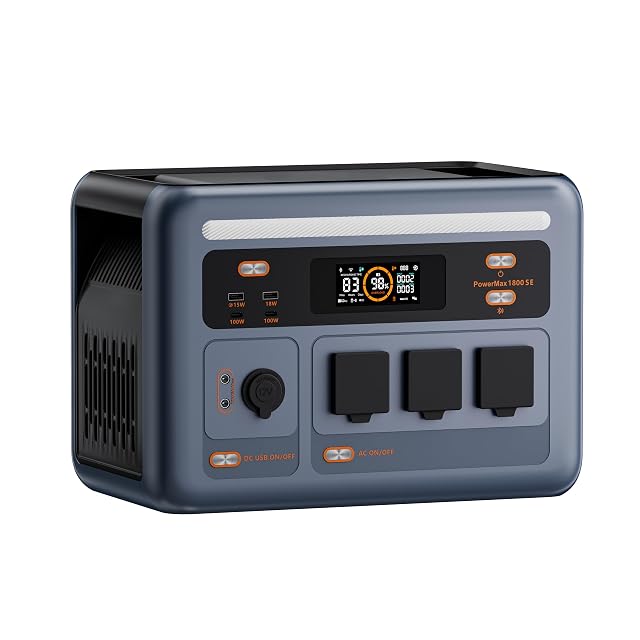
1024 Wh nominal · 1800 W · LiFePO4, 3500+ cycles · 0–80 % in 1 h at 800 W · 11 outputs · 14 kg · app control
A 1024 Wh LiFePO4 station rated 1800 W with eleven outputs, charged from 0 to 80 % in a stated hour at 800 W, and controllable from a phone application.
Best for: A household that wants three mains sockets and app monitoring rather than the lightest unit on the shelf.
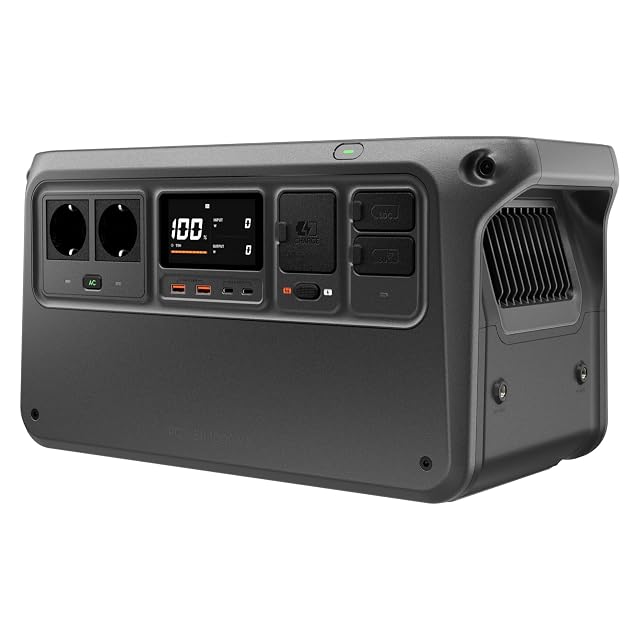
1024 Wh nominal LFP · 2600 W · 0–80 % in 37 min · 10 ms UPS switchover · 26 dB stated · 2× 140 W USB-C · 5-year warranty
A 1024 Wh LFP station rated 2600 W that reaches 80 % in a stated 37 minutes, switches to battery in 10 ms, and carries two 140 W USB-C ports and a five-year warranty.
Best for: Someone already inside the DJI ecosystem, or anyone who needs the shortest recharge and a documented switchover time.
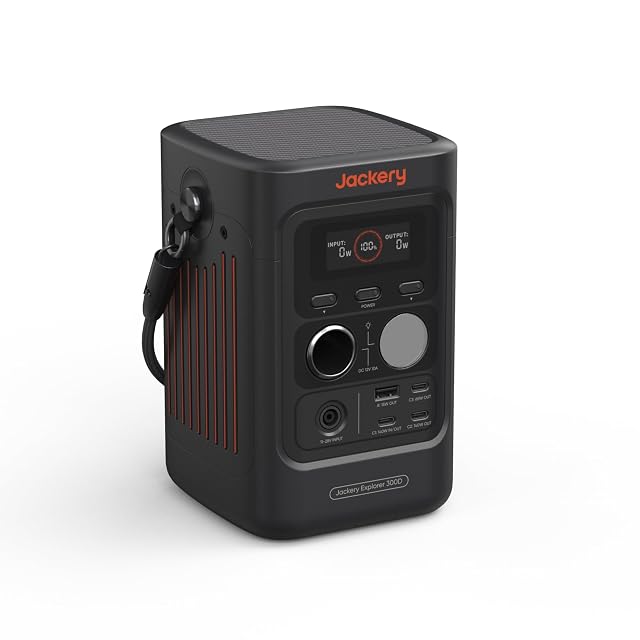
288 Wh nominal · 300 W DC · LiFePO4, 4000 cycles · 80 % in about 70 min on USB-C plus solar · 5 outputs · about 2.5 kg
A 288 Wh LiFePO4 station rated 300 W, charged over USB-C, solar or a car socket, with three USB-C ports of which two are rated 140 W and an integrated cable that doubles as the handle.
Best for: Someone charging laptops and cameras rather than running mains appliances, who wants a published temperature range.