Watt-hours say how long, watts say what you can plug in · review
ECOGREAT PowerMax 1800SE, 1024 Wh, 1800 W review
A 1024 Wh LiFePO4 station rated 1800 W with eleven outputs, charged from 0 to 80 % in a stated hour at 800 W, and controllable from a phone application.
The bottom line The most generously connected station of the nine, with three mains sockets, an 800 W solar input and a seven-year warranty. It is also the one that sells itself on appliances while publishing no surge rating and no temperature range — the two figures those appliances actually turn on.
A 1 kWh class station sold on output count and on charging speed.
What it publishes
1024 Wh, 1800 W rated, and eleven outputs of which three are mains sockets. Charging is quoted from 0 to 80 % in an hour at 800 W from the mains, and a full solar charge in 1.5 hours at an 800 W input — a substantial solar ceiling.
What it sells and what it omits
The listing names heated blankets, hair dryers, kettles and microwaves. Every one of those is a motor or a heating element, and neither a surge rating nor its duration appears anywhere on the sheet. Nor does an operating temperature range.
The cycle figure
Over 3500 cycles, described as fifteen years, with no capacity percentage. That is the commonest form of this claim on the shelf and the least comparable.
What comes with it
An application for monitoring input, output and remaining charge, and a stated seven-year warranty. The package contents are listed bullet by bullet, which makes the second-purchase question — what else is needed before it works — easy to answer here.
Availability
German Amazon store quoted about 439 € when this page was compiled.
British and Spanish Amazon catalogues carry an entry for it, with nobody selling.
American, French and Italian Amazon stores returned nothing at all, so the buy button there runs a search instead of landing on an empty page.
These figures are what Keepa reported on the day this page was last updated. Availability and pricing move without notice.
Prices quoted in this text were read on 16 September 2026. The live price is at the top of the page.
What it gets right, and what it leaves out
Strengths
Eleven outputs including three mains sockets, which is the largest provision in this family
An 800 W solar input is published with a voltage-independent wattage, and a 1.5 hour solar charge is quoted
A seven-year warranty is stated in the last bullet
Compromises
No surge rating at all, on a unit sold for appliances including kettles and microwaves
The 3500-cycle figure carries no capacity percentage
No operating temperature range is published
Specifications
Capacity
1024 Wh, second bullet; no usable figure is published
Continuous and surge output
1800 W rated, second and fourth bullets; no surge figure is published
Chemistry
LiFePO4, third bullet, with a battery management system and a control unit named as monitoring cell voltage and temperature
Cycle life
Over 3500 charge and discharge cycles, third bullet, stated as 15 years; no capacity percentage accompanies the count
Recharge time
0 to 80 % in 1 hour at an 800 W mains input; full solar charge at 800 W maximum in 1.5 hours, first bullet
Output sockets
3× mains, 2× USB-A, 2× USB-C PD, 2× DC5521, 1× vehicle socket, fourth bullet — eleven in total
Published thermal limits
Nowhere in the listing
Amazon reference
B0GQGF1F5J (same reference on 3 Amazon marketplaces)
EAN
0734376937836
Questions owners ask about this one
Can it really run a kettle and a microwave?
The second bullet names both among 1800 W appliances. Electrically that is a continuous-rating question and the answer is yes; in practice a heating appliance drawing near 1800 W empties 1024 Wh in well under an hour, which the listing does not mention.
Why does a missing surge rating matter here?
Because a microwave and a fridge both draw far more at the instant they start than while they run. Without a published peak and its duration, there is no way to tell from the sheet whether a given motor will start.
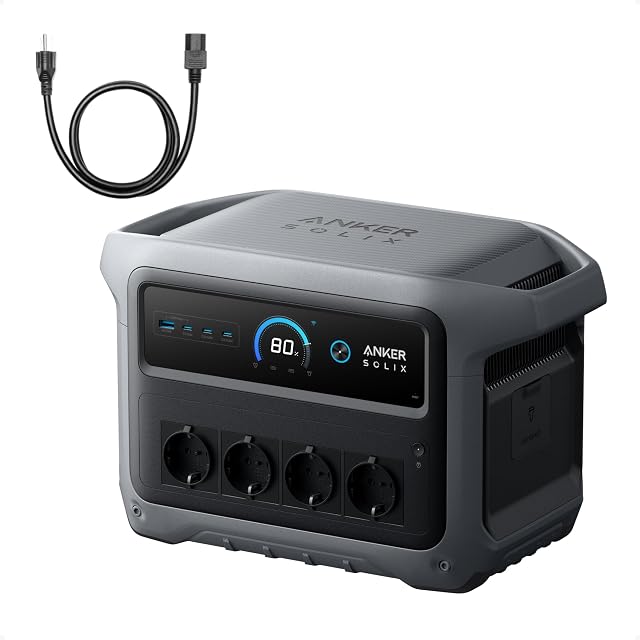
1024 Wh nominal · 2000 W continuous, 3000 W peak · 4000 cycles to 80 % · full in 49 min at 1600 W · 600 W solar at 60 V max · 10 ms UPS · 9 ports
A 1024 Wh station rated 2000 W continuous and 3000 W peak, charged in a stated 49 minutes at 1600 W, with a 600 W solar input capped at 60 V and a 10 ms switchover.
Best for: A household that will pair the station with panels and wants the input window published rather than guessed.
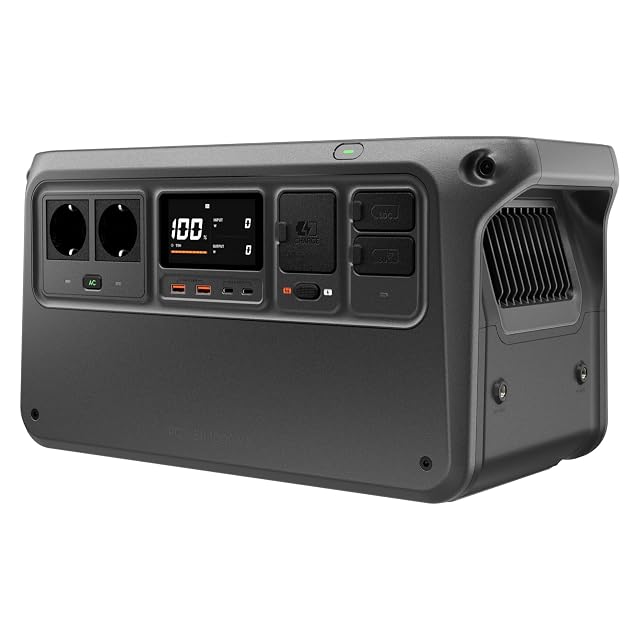
1024 Wh nominal LFP · 2600 W · 0–80 % in 37 min · 10 ms UPS switchover · 26 dB stated · 2× 140 W USB-C · 5-year warranty
A 1024 Wh LFP station rated 2600 W that reaches 80 % in a stated 37 minutes, switches to battery in 10 ms, and carries two 140 W USB-C ports and a five-year warranty.
Best for: Someone already inside the DJI ecosystem, or anyone who needs the shortest recharge and a documented switchover time.
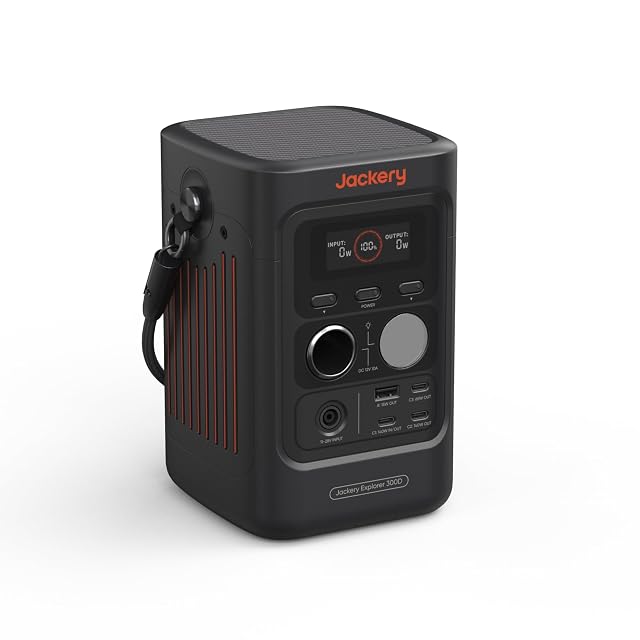
288 Wh nominal · 300 W DC · LiFePO4, 4000 cycles · 80 % in about 70 min on USB-C plus solar · 5 outputs · about 2.5 kg
A 288 Wh LiFePO4 station rated 300 W, charged over USB-C, solar or a car socket, with three USB-C ports of which two are rated 140 W and an integrated cable that doubles as the handle.
Best for: Someone charging laptops and cameras rather than running mains appliances, who wants a published temperature range.