Watt-hours say how long, watts say what you can plug in · review
DJI Power 1000 V2, 1024 Wh, 2600 W review
A 1024 Wh LFP station rated 2600 W that reaches 80 % in a stated 37 minutes, switches to battery in 10 ms, and carries two 140 W USB-C ports and a five-year warranty.
The bottom line The fastest-charging station on this page and the one with the clearest switchover figure, wrapped in a sheet full of footnote markers whose conditions never appear. It publishes a ten-year claim and no cycle count — the one figure that would let the claim be checked.
A 1 kWh station from a drone maker, and the sheet reads like it: dense with claims, thin on the conditions behind them.
Where it is genuinely ahead
80 % in 37 minutes is the shortest quoted charge in this family. A 10 ms switchover is published plainly. Two 140 W USB-C ports total 280 W, which covers a laptop and a camera together without the inverter.
The footnotes
Eight of the ten bullets carry bracketed reference markers — on the 99 % of devices claim, on the charge time, on the ten-year life, on the noise figure, on the switchover, on the drone charging. None of the referenced conditions appears in the listing. Each figure is reported here as published, with that caveat standing.
No cycle count anywhere on the page
No cycle count. Every other station in this family publishes one, qualified or not. Here the ten-year claim stands on its own, and there is nothing on the sheet against which to test it.
What the listing does say clearly
That the product must be returned in its original packaging because of battery transport rules. That is a genuinely useful line, and it is the kind of thing most listings on this shelf leave out.
Availability
German, French, Italian and Spanish Amazon stores quoted 539 € to 649 € when this page was compiled.
British Amazon catalogue carries an entry for it, with nobody selling.
American Amazon store returned nothing at all, so the buy button there runs a search instead of landing on an empty page.
These figures are what Keepa reported on the day this page was last updated. Availability and pricing move without notice.
Prices quoted in this text were read on 16 September 2026. The live price is at the top of the page.
What it gets right, and what it leaves out
Strengths
The fastest quoted charge in this family at 80 % in 37 minutes
10 ms switchover is published, which is the figure that decides whether equipment restarts
A five-year warranty is stated, and the return conditions for a battery product are spelled out
Compromises
No cycle count at all — the ten-year claim stands without the figure that would support it
The socket list is not enumerated, so what is actually on the panel has to be found elsewhere
Several claims carry footnote markers whose conditions are not in the listing
Specifications
Capacity
1024 Wh LFP, third bullet; no usable figure is published
Continuous and surge output
2600 W stated output, in the title; no surge figure and no duration are published
Chemistry
LFP, third bullet, with an intelligent BMS and a flame-retardant housing named
Cycle life
Absent as a count — the listing states “up to 10 years” with a footnote reference and no cycle figure
Recharge time
0 to 80 % in 37 minutes, second bullet; no full-charge time is published
Output sockets
Two 140 W USB-C ports totalling 280 W, fifth bullet; the full socket list is not enumerated in the bullets
Published thermal limits
Absent as a figure; 26 dB operation is stated in the fourth bullet with a footnote and no distance
Amazon reference
B0FC67CQJH (same reference on 5 Amazon marketplaces)
EAN
6937224115156
Questions owners ask about this one
What is SDC fast charging?
The seventh bullet describes it as a fast-charge path for selected DJI drone batteries, quoted as enabling a flight after 30 minutes. It is a feature of that ecosystem rather than a general capability, and which batteries qualify is a footnote the listing does not expand.
Why does the absence of a cycle count matter?
Because “up to 10 years” is a conclusion, not a measurement. A cycle count with a capacity percentage is the evidence behind such a claim, and here only the conclusion is published.
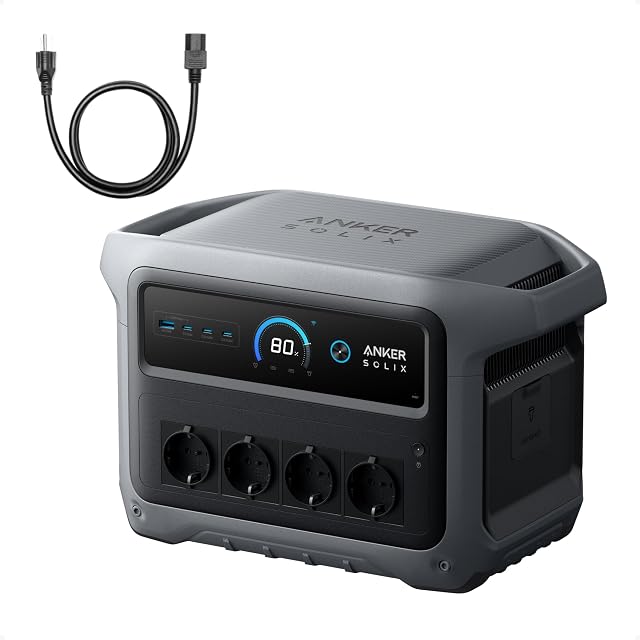
1024 Wh nominal · 2000 W continuous, 3000 W peak · 4000 cycles to 80 % · full in 49 min at 1600 W · 600 W solar at 60 V max · 10 ms UPS · 9 ports
A 1024 Wh station rated 2000 W continuous and 3000 W peak, charged in a stated 49 minutes at 1600 W, with a 600 W solar input capped at 60 V and a 10 ms switchover.
Best for: A household that will pair the station with panels and wants the input window published rather than guessed.
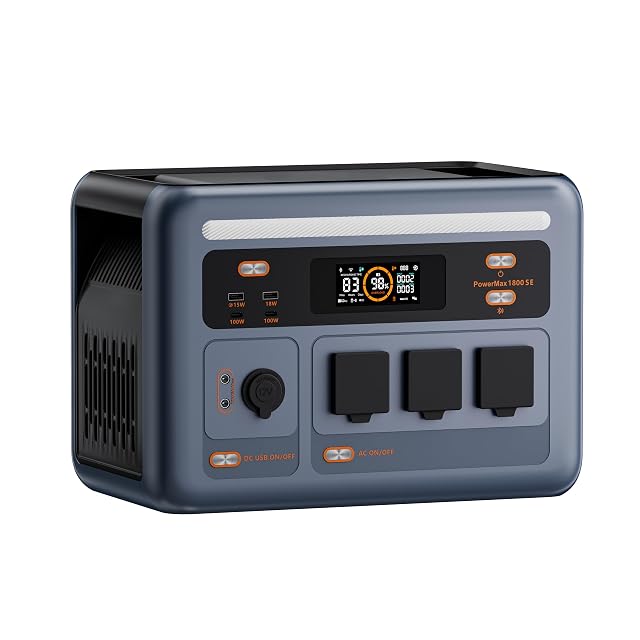
1024 Wh nominal · 1800 W · LiFePO4, 3500+ cycles · 0–80 % in 1 h at 800 W · 11 outputs · 14 kg · app control
A 1024 Wh LiFePO4 station rated 1800 W with eleven outputs, charged from 0 to 80 % in a stated hour at 800 W, and controllable from a phone application.
Best for: A household that wants three mains sockets and app monitoring rather than the lightest unit on the shelf.
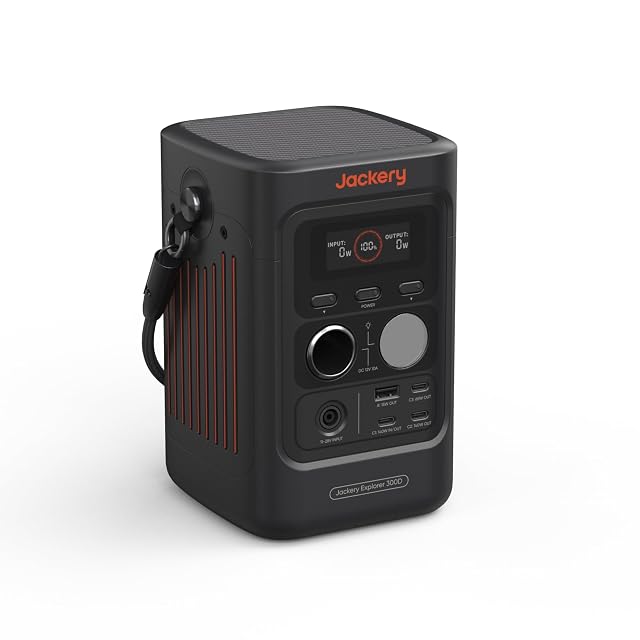
288 Wh nominal · 300 W DC · LiFePO4, 4000 cycles · 80 % in about 70 min on USB-C plus solar · 5 outputs · about 2.5 kg
A 288 Wh LiFePO4 station rated 300 W, charged over USB-C, solar or a car socket, with three USB-C ports of which two are rated 140 W and an integrated cable that doubles as the handle.
Best for: Someone charging laptops and cameras rather than running mains appliances, who wants a published temperature range.