A kit is a station and a panel that agree on volts and amps · review
Anker SOLIX C1000 Gen 2 with a 100 W folding panel review
The SOLIX C1000 Gen 2 sold with a 100 W folding panel: 1024 Wh, 2000 W continuous, a 600 W solar ceiling capped at 60 V, and 4000 cycles to 80 % capacity.
The bottom line The station is the best-documented solar input in this family, published in volts as well as watts. The bundle around it is the opposite: a panel named in a title and described nowhere, whose contribution is a sixth of the charging figure quoted beside it.
The SOLIX C1000 Gen 2 again, this time bundled with a 100 W folding panel.
What makes the station worth the bundle
A solar ceiling published as 600 W at a maximum of 60 V. That second figure is the one that decides whether a panel string starts the charger or damages the input, and almost nothing else on this shelf publishes it. It also means the bundle can be extended sensibly: the arithmetic for adding panels is available rather than guessed.
The panel in the box
100 W, named in the title. Nothing else: no test conditions, no dimensions, no weight, no connector. The bullets describe the station alone.
Reading the charging figures
49 minutes to full from the mains at 1600 W, activated through the application. 1.8 hours on solar at up to 600 W — which is not what the supplied panel provides. Both are accurate; only one describes this purchase.
The pack
4000 cycles with at least 80 % capacity remaining, which is the properly qualified form. The chemistry itself is never named, and that omission runs through every Anker listing on this page.
Availability
German Amazon store quoted about 870 € when this page was compiled.
American, British, French, Italian and Spanish Amazon catalogues carry an entry for it, with nobody selling.
These figures are what Keepa reported on the day this page was last updated. Availability and pricing move without notice.
Prices quoted in this text were read on 16 September 2026. The live price is at the top of the page.
What it gets right, and what it leaves out
Strengths
The solar ceiling is published in volts as well as watts, which is what decides whether a string charges at all
4000 cycles to 80 % capacity — count and percentage together
A 10 ms switchover is published for use as backup supply
Compromises
The bundled panel appears only in the title; nothing about it is published in the bullets
The 1.8 hour solar charge assumes 600 W, six times the panel supplied
The cell chemistry is never named
Specifications
Station capacity
1024 Wh, second bullet; no usable figure is published
Panel rating and test conditions
100 W folding panel, named in the title; no test conditions, dimensions or weight are published for it
Input window
Up to 600 W of solar at a maximum of 60 V, fifth bullet — the ceiling is published in volts as well as watts
Connectors
Not named in the bullets
Recharge time
Full in 49 minutes at 1600 W from the mains, first bullet; 1.8 hours on solar at up to 600 W, fifth bullet
Bundle contents
Station and 100 W folding panel, from the title; the bullets list only the station
Amazon reference
B0GXW75HPG (same reference on 6 Amazon marketplaces)
EAN
0194644332532
Questions owners ask about this one
Can more panels be added to the 100 W supplied?
Up to the published ceiling of 600 W and 60 V, yes — and it is precisely because both figures are published that the calculation can be done. Open-circuit voltage rises in cold weather, so the check is against the coldest clear morning rather than against a summer figure.
Is the bundled panel the same as Anker’s separate panels?
The listing does not say. It names a 100 W folding panel in the title and describes none of its characteristics, so this page reports the wattage and nothing else.
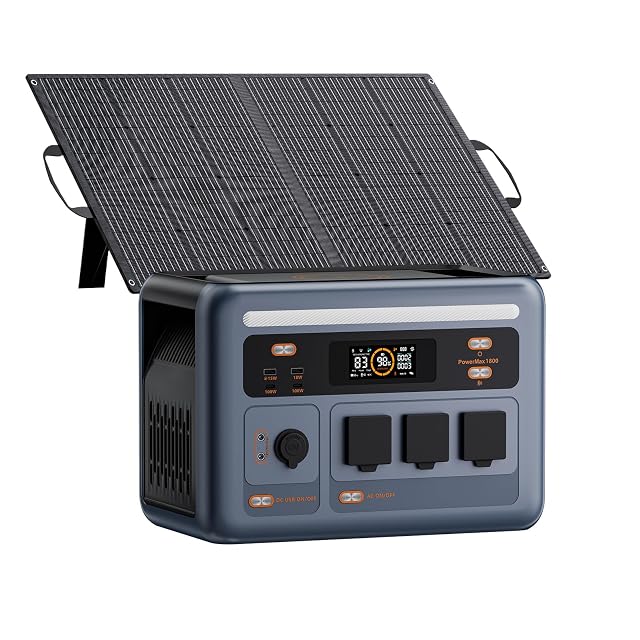
1024 Wh station · 100 W panel, no test conditions stated · 1800 W rated · 800 W solar input, full in 1.5 h · 11 outputs · 14 kg · 7-year warranty
A 1024 Wh LiFePO4 station bundled with a 100 W panel, rated 1800 W across eleven outputs, with an 800 W solar input ceiling and a stated seven-year warranty.
Best for: A household backup where the 100 W panel is a starting point and more panels will follow.
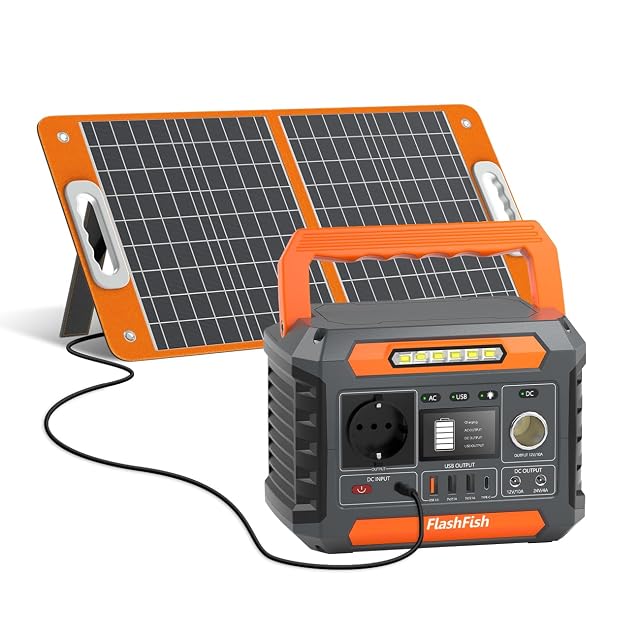
144.3 Wh station · 60 W monocrystalline panel, 21.5–23.5 % IPCE · 200 W continuous, 400 W peak · 4–5 h solar charge · −10 °C to 45 °C · 3.9 kg total
A 144.3 Wh station bundled with a 60 W monocrystalline panel quoted at 21.5 to 23.5 % efficiency, rated 200 W continuous with a 400 W peak and a published operating range.
Best for: A camping setup where the station is charged during the day and used in the evening, never both at once.
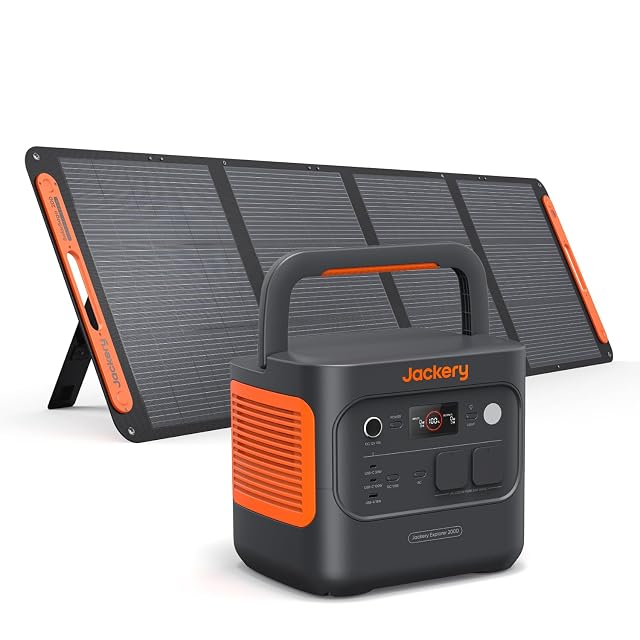
2042 Wh station · 200 W panel, no test conditions stated · 2200 W across 2 AC outlets · 80 % in 52 min · 5.5 h solar at 400 W · 20 ms UPS · 17.5 kg · under 30 dB
A 2042 Wh LiFePO4 station bundled with a 200 W panel, rated 2200 W across two mains outlets, reaching 80 % in a stated 52 minutes and offering a 20 ms uninterruptible switchover.
Best for: A household that wants 2 kWh of backup and expects to add a second panel before the first winter.