A kit is a station and a panel that agree on volts and amps · review
Jackery Explorer 2000 v2, 2042 Wh, with a 200 W panel review
A 2042 Wh LiFePO4 station bundled with a 200 W panel, rated 2200 W across two mains outlets, reaching 80 % in a stated 52 minutes and offering a 20 ms uninterruptible switchover.
The bottom line The largest bundle here, and the only listing on this page that tells you which connector to use and which to remove. It publishes no cycle count and no solar voltage ceiling, which are the two figures that would let its life and its expansion be planned.
A 2 kWh station bundled with a 200 W panel, sold on weight and quietness as much as on capacity.
The detail that saves a return
The closing note states that the L-shaped DC7909 plug must be removed from the cable and the straight DC8020 used instead. Connector mismatches are among the commonest reasons a solar bundle does not work on arrival, and this is the only listing on this page that addresses one directly.
Capacity and charging
2042 Wh, 2200 W across two mains outlets, 80 % in 52 minutes on mains or full in 1.7 hours in an app-activated emergency mode. Solar is quoted at 5.5 hours using 400 W of panels — twice what the bundle contains.
Quiet, and it says how quiet
Under 30 dB in a silent charging mode, with fan speed described as following ambient and component temperature. The figure carries no distance, as usual, but the mechanism behind it is at least described.
What is missing
No cycle count anywhere, on a unit whose listing claims up to ten years. And no solar input voltage ceiling, which means a second panel cannot be checked against the input before it is bought.
Availability
German, French and Spanish Amazon stores quoted 1099 € to 1448 € when this page was compiled.
Italian Amazon store wanted more than 1.6× what the cheapest country wanted. A margin that wide usually means stock shipped in from elsewhere rather than a seller on the ground, so that quote stays out of the range above.
American Amazon catalogue carries an entry for it, with nobody selling.
British Amazon store returned nothing at all, so the buy button there runs a search instead of landing on an empty page.
These figures are what Keepa reported on the day this page was last updated. Availability and pricing move without notice.
Prices quoted in this text were read on 16 September 2026. The live price is at the top of the page.
What it gets right, and what it leaves out
Strengths
The connector procedure is published in detail, down to which plug to remove — rare and genuinely useful
Under 30 dB is stated in a silent charging mode, with fan speed described as temperature-controlled
A 20 ms switchover is published for backup use
Compromises
The 5.5 hour solar charge assumes 400 W, twice the panel supplied
No cycle count at all — the listing states up to 10 years without one
No solar input voltage ceiling is published, so extending the array cannot be checked
Specifications
Station capacity
2042 Wh, first bullet; no usable figure is published
Panel rating and test conditions
200 W, named in the title; no test conditions are published, and the solar charging time is quoted at 400 W
Input window
Absent as a voltage range; a 400 W solar figure is given without a voltage ceiling
Connectors
DC7909 and DC8020 named in the closing note — the L-shaped plug must be removed and the straight one used, which is unusually specific
Recharge time
80 % in 52 minutes on mains, or full in 1.7 hours in an app-activated emergency mode; 5.5 hours on 400 W of solar, third bullet
Bundle contents
Station and 200 W panel, from the title; the closing note covers the connection procedure
Amazon reference
B0DSK9YGY7 (same reference on 5 Amazon marketplaces)
EAN
0810105528497
Questions owners ask about this one
Why does the listing explain which plug to use?
Because the station accepts a DC8020 straight plug and the supplied cable carries an L-shaped DC7909 that must be removed first. It is the kind of detail that turns a working bundle into a returned one, and publishing it is a point in the listing’s favour.
How long will the supplied 200 W panel take?
Longer than the quoted 5.5 hours, which assumes 400 W. The listing does not give a figure for 200 W, and this page does not compute one — solar yield depends on conditions the sheet does not state.
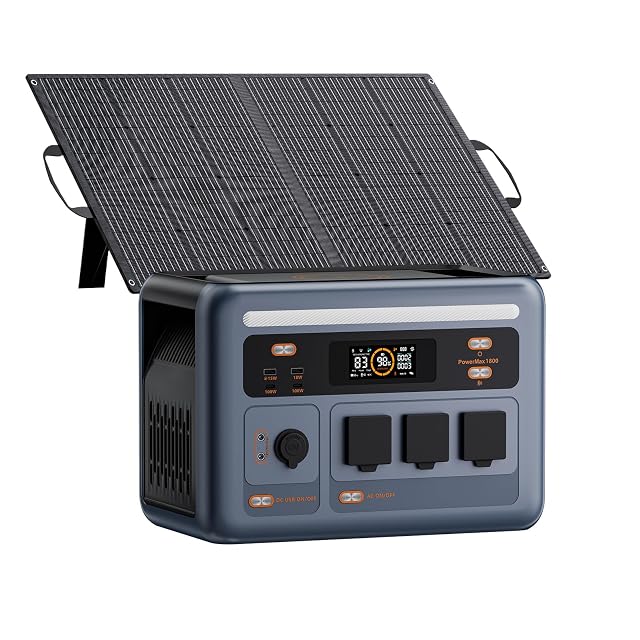
1024 Wh station · 100 W panel, no test conditions stated · 1800 W rated · 800 W solar input, full in 1.5 h · 11 outputs · 14 kg · 7-year warranty
A 1024 Wh LiFePO4 station bundled with a 100 W panel, rated 1800 W across eleven outputs, with an 800 W solar input ceiling and a stated seven-year warranty.
Best for: A household backup where the 100 W panel is a starting point and more panels will follow.
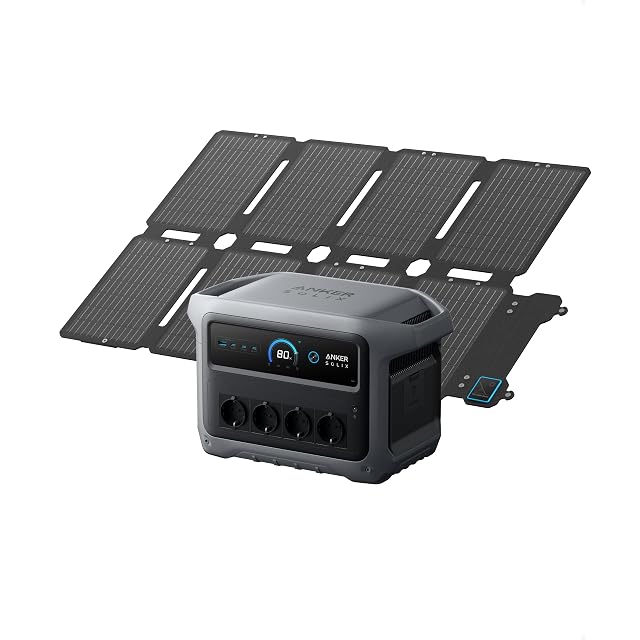
1024 Wh station · 100 W folding panel, no test conditions stated · 2000 W continuous, 3000 W peak · 600 W solar at 60 V max · 4000 cycles to 80 % · 10 ms UPS
The SOLIX C1000 Gen 2 sold with a 100 W folding panel: 1024 Wh, 2000 W continuous, a 600 W solar ceiling capped at 60 V, and 4000 cycles to 80 % capacity.
Best for: Someone buying the station for household backup who wants one panel now and the option of five more later.
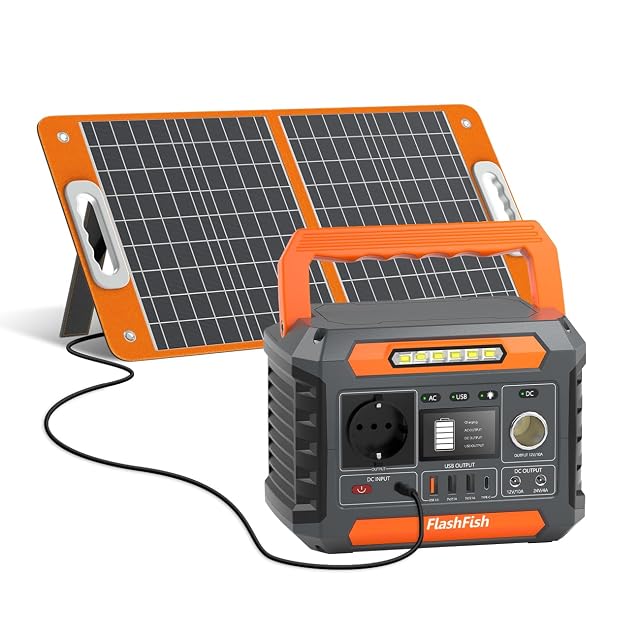
144.3 Wh station · 60 W monocrystalline panel, 21.5–23.5 % IPCE · 200 W continuous, 400 W peak · 4–5 h solar charge · −10 °C to 45 °C · 3.9 kg total
A 144.3 Wh station bundled with a 60 W monocrystalline panel quoted at 21.5 to 23.5 % efficiency, rated 200 W continuous with a 400 W peak and a published operating range.
Best for: A camping setup where the station is charged during the day and used in the evening, never both at once.