The car, the cable and the supply each cap the charge speed · review
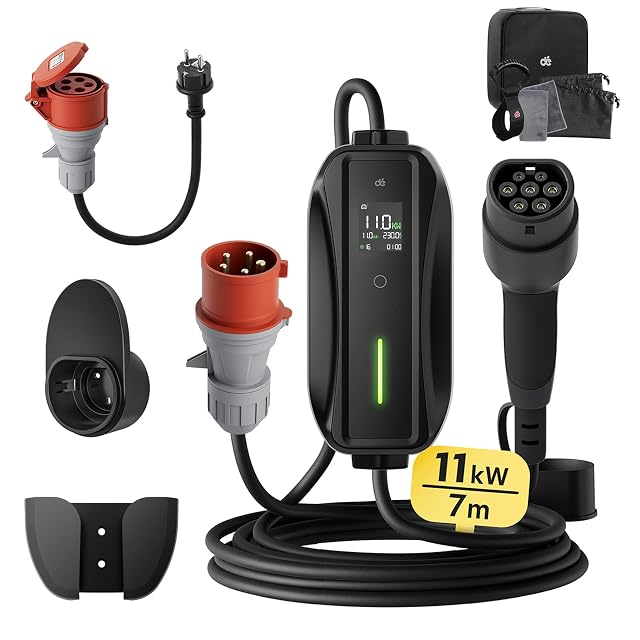
AIMILER Mobile 11 kW with app, 8–16 A in four steps, 7.6 m, IP66, OLED review
A portable or wall-mountable 11 kW charger with app control, four current steps, an OLED display and published protection thresholds for voltage, overload and temperature.
The bottom line The only charger in this family to publish its protection thresholds as numbers, with thermal behaviour described rather than named. It calls a connector standard a certification, and offers no solar surplus charging.
An 11 kW charger with numbers where its neighbours have adjectives.
The thresholds
Over-voltage above 120 %. Under-voltage below 80 %. Overload above 32 A. Over-temperature, handled by reducing power rather than stopping. Four figures, in the fourth bullet. Seven other chargers on this shelf describe protection and publish no threshold at all.
The thermal behaviour
Power reduction rather than cut-off. That is the correct design for a charge that must finish, and it is described rather than implied.
The cable
7.6 metres, the longest here, with the charger usable portable or mounted on a wall. That second option is unusual in this family, where most units are purely portable.
The claim that misnames itself
The third bullet refers to CEE certification. CEE describes the industrial connector standard, not a certifying body. The Tera and GONEO chargers on this shelf name TÜV, which is a body; this one names a plug.
Availability
German, French, Italian and Spanish Amazon stores quoted 184 € to 240 € when this page was compiled.
British Amazon catalogue carries an entry for it, with nobody selling.
American Amazon store returned nothing at all, so the buy button there runs a search instead of landing on an empty page.
These figures are what Keepa reported on the day this page was last updated. Availability and pricing move without notice.
Prices quoted in this text were read on 16 September 2026. The live price is at the top of the page.
What it gets right, and what it leaves out
Strengths
Protection thresholds are published as figures rather than named as features
Over-temperature is handled by reducing power rather than stopping, which the fourth bullet states
The longest cable in this family at 7.6 m
Compromises
CEE certification is named in the third bullet, which is a connector standard rather than a certification body
No solar surplus charging, unlike two chargers in this family
No consumption metering described despite the OLED display
Specifications
Charging power
11 kW at 400 V and 16 A, second bullet
Phases
Three-phase, second bullet
Cable or socket
7.6 m Type 2 cable with a CEE plug, usable portable or wall-mounted, from the title
Load management
Four current steps with app control, first and second bullets
Solar surplus charging
None
Metering
An OLED display, from the title; consumption data is not described
Stated protection requirements
Over-voltage above 120 %, under-voltage below 80 %, overload above 32 A and over-temperature with power reduction, fourth bullet — the only charger here to publish thresholds
Amazon reference
B0F66SBFVZ (same reference on 5 Amazon marketplaces)
EAN
0684514188531
Questions owners ask about this one
Why do voltage thresholds matter on a charger?
Because a car charging at 11 kW on a supply that sags or surges is exposed to whatever the supply does. Thresholds at 120 % and 80 % define when the charger stops, and publishing them is the difference between a claim of protection and a specification.
What does power reduction on over-temperature mean?
Rather than cutting off, the charger reduces its current until it cools. On a long charge in summer that is the difference between arriving to a full car and arriving to a stopped one, and only this listing describes the behaviour.
11 kW · three-phase · 7 m Type 2 cable with a CEE plug, not a fixed installation · load management not described · no solar surplus charging · metering not described · protection requirements not stated
A portable 11 kW charger plugging into an existing CEE socket with a 7 metre Type 2 cable and an adjustable current from 6 to 16 A, supplied with a Schuko adapter.
Best for: A driveway with an existing three-phase CEE socket and no appetite for an installation.
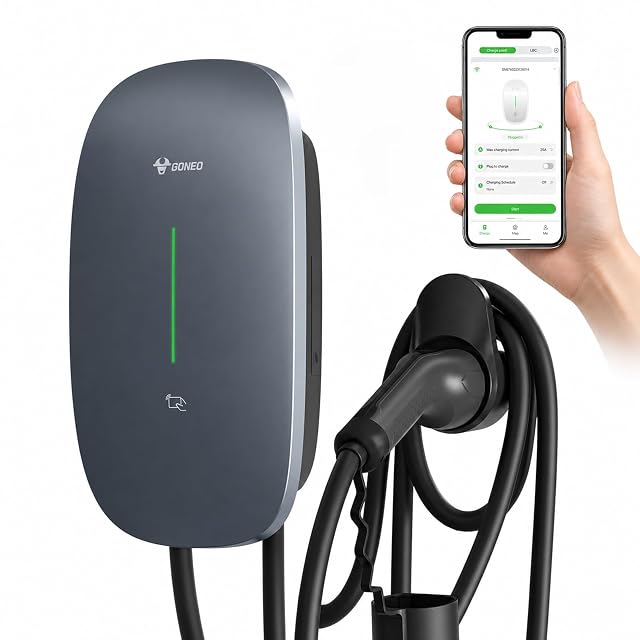
11 kW at 400 V, 16 A · single and three-phase supported · 7 m Type 2 cable · adjustable current with tariff scheduling · no solar surplus charging · app monitoring · CE and German TÜV, IP65
An 11 kW charger supporting single and three-phase charging, compatible with all Type 2 vehicles under IEC 62196-2, with app control, RFID, a 7 metre cable and IP65.
Best for: A property with only single-phase supply now and three phases later.
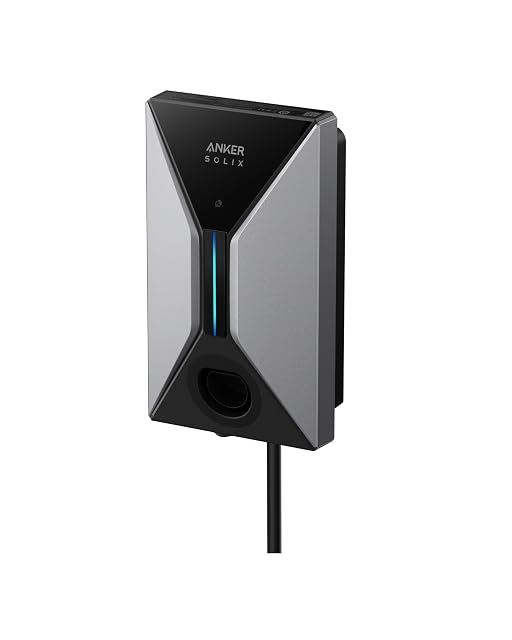
11 kW · phases not stated · cable or socket not specified · AI scheduling against prices and solar surplus · solar surplus charging, stated · app consumption data · IP65 and IK10, −30 °C to +50 °C
An 11 kW smart charger that schedules against electricity prices and solar surplus, rated IP65 and IK10, and specified from −30 °C to +50 °C.
Best for: A household with its own solar generation and a dynamic tariff.