Solar, battery and grid in one box, with one set of priorities · review
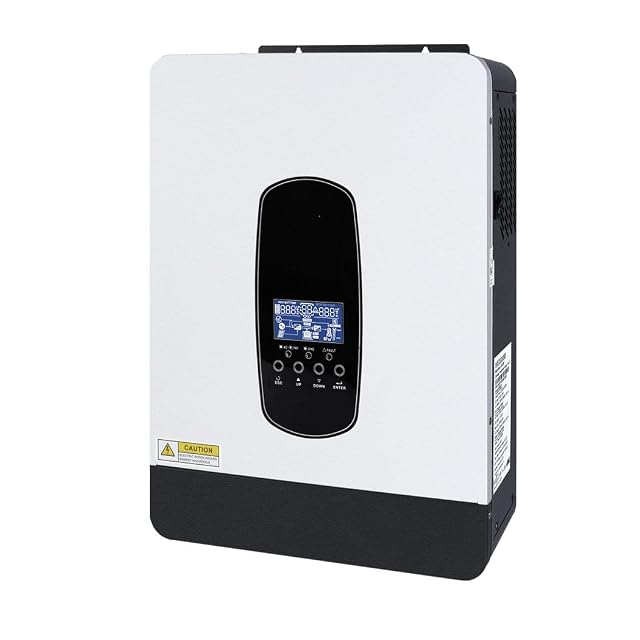
VEVOR 6 kW hybrid, 48 V, 120 A MPPT review
A 6000 W two-in-one hybrid inverter and controller for 48 V systems, charging at up to 120 A and supporting lithium, lead-acid and other battery types, with WiFi monitoring.
The bottom line A large, capable-looking hybrid whose listing publishes a wattage, a charge current and a battery voltage — and nothing about the solar input it exists to manage. The datasheet is not optional with this one.
A 6 kW all-in-one for 48 V systems, described in five bullets that avoid the array.
What it publishes
6000 W of pure sine output. 120 A of battery charging through the built-in MPPT controller. 48 V battery systems, with lithium, lead-acid and other chemistries named. A WiFi module for remote monitoring.
What it does not
Any PV input specification. No maximum voltage, no minimum, no start voltage, no array wattage ceiling. On a unit whose entire purpose is converting solar into usable power, that is the omission that matters, and three of the four hybrids here publish at least part of it.
The efficiency, described rather than stated
The second bullet says the MPPT technology increases conversion efficiency. No percentage follows. Efficiency on a 6 kW unit is the difference between a warm cupboard and a hot one, and it is a number every maker measures.
The chemistry support
Lithium, lead-acid and others, named. That is a real distinction — it means charging profiles exist for each — though which settings apply to a specific battery is a commissioning question the listing does not enter.
Availability
German, French, Italian and Spanish Amazon stores quoted about 279 € when this page was compiled.
American and British Amazon stores carry it too, priced in their own currency, which the euro range above deliberately omits.
These figures are what Keepa reported on the day this page was last updated. Availability and pricing move without notice.
Prices quoted in this text were read on 16 September 2026. The live price is at the top of the page.
What it gets right, and what it leaves out
Strengths
Battery chemistries are named individually rather than left as “compatible”
A WiFi module is integrated rather than an accessory
The two-in-one nature is described plainly — inverter and controller in one unit
Compromises
No PV input window at all, which is the specification a solar array is designed against
No transfer time and no efficiency figure
No surge rating, on a 6 kW unit offered for household loads
Specifications
Continuous and surge output
6000 W pure sine output, first bullet; no surge figure is published
MPPT range
Nowhere in the listing — no PV voltage window or array ceiling is published
Current
Up to 120 A battery charging through the MPPT controller, second bullet
Supported battery voltages
48 V systems, supporting lithium, lead-acid and other types, third bullet
Transfer time
Nowhere in the listing
Protocols
Nowhere in the listing; a WiFi module for remote monitoring is named in the fourth bullet
Published efficiency
Absent as a figure — the second bullet describes improved conversion efficiency without a number
Amazon reference
B0F1D4QGSY (same reference on 6 Amazon marketplaces)
EAN
0197988506683
Questions owners ask about this one
Can an array be designed without the input window?
No. The maximum PV voltage is what a string is checked against for the cold case, and the minimum is what decides whether it starts at all. Neither is here, so the array has to be designed from the maker’s datasheet rather than from this page.
What does supporting several chemistries require?
Different charging profiles — voltages and currents that suit lead or lithium. An inverter that supports both has settings for both, and which profile applies to a given battery is set at commissioning rather than automatically.
6200 W continuous, surge not stated · PV up to 500 V, 6500 W array · 120 A MPPT · 48 V lithium · transfer time not published · BMS compatibility named without protocol · efficiency not published
A 6200 W pure sine hybrid inverter for 48 V lithium banks with a 120 A MPPT controller, a 6500 W PV ceiling, grid feed-in and eight named protections.
Best for: A 48 V lithium bank where the inverter must also work on days the battery is disconnected.
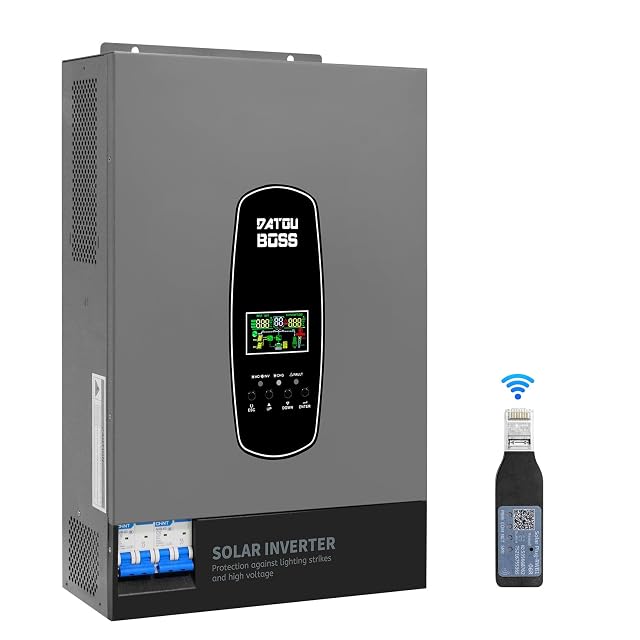
6200 W battery output, 6500 W PV inverter power, 8500 W array supported, surge not stated · PV open-circuit ceiling published · 120 A MPPT · 48 V · transfer time not published · protocols not published · efficiency not published
A 6200 W hybrid inverter for 48 V systems rated for a 6500 W PV inverter power and an 8500 W array, with integrated surge and lightning protection and an LCD diagnostic display.
Best for: A large off-grid array where oversizing the panels against the inverter is deliberate.
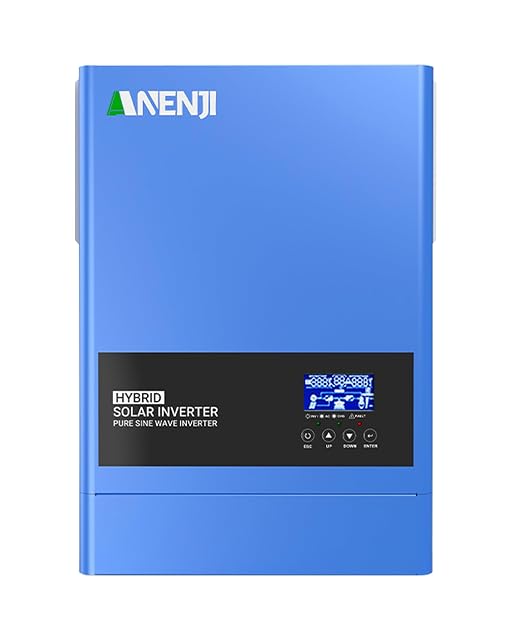
3200 W / 3200 VA continuous, surge not stated · PV 55–450 V, start above 60 V · 80 A MPPT charge, AC charger included · 24 V battery · transfer time not published · protocols not published · efficiency not published
A 3200 W pure sine hybrid inverter for 24 V systems with an 80 A MPPT controller, a 3000 W PV input rated to 450 V, and four charging modes.
Best for: A 24 V off-grid installation where the PV string voltage is already known and needs an inverter to match.