Watt-hours say how long, watts say what you can plug in · review
SinKeu R150, 97.68 Wh, 150 W AC maximum review
A 97.68 Wh station with a 150 W maximum mains output and a built-in MPPT solar input, weighing a stated 1.87 kg, whose listing says plainly that it will not run a heater or a motor.
The bottom line The smallest and plainest station here, and the only one whose listing states what it will refuse to run. The omission that matters is the chemistry: without it, nothing about the pack’s life, its winter behaviour or its storage can be read from the page.
A sub-100 Wh station, sold on portability, with a listing that is unusually direct about its ceiling.
What it publishes
97.68 Wh, a 150 W mains maximum, a 120 W DC maximum, and six outputs. MPPT tracking is named on the solar input, and the maximum input is stated as 36 W, giving a full charge in 5.5 to 6 hours.
One line that repays a second reading
The sixth bullet states that the unit will not run heaters or motorised appliances, because their starting draw can exceed 150 W and the station shuts down. Most listings on this shelf leave a buyer to discover that; this one puts it in writing.
What is missing
No cell chemistry anywhere, and therefore no cycle rating, no low-temperature figure and no storage guidance that can be read from the page. That is the single widest gap here, and it is not one this page fills by guessing.
The detail nobody explains
The two DC 12 V outputs are described as not constant. The listing says no more, and neither does this page — it is reported because it is published, and because it is the kind of line that matters to whoever plans to run a cool box from it.
Availability
German Amazon store quoted about 133 € when this page was compiled.
British, French, Italian and Spanish Amazon catalogues carry an entry for it, with nobody selling.
American Amazon store returned nothing at all, so the buy button there runs a search instead of landing on an empty page.
These figures are what Keepa reported on the day this page was last updated. Availability and pricing move without notice.
Prices quoted in this text were read on 16 September 2026. The live price is at the top of the page.
What it gets right, and what it leaves out
Strengths
The sixth bullet states outright that the unit cannot run heaters or motorised appliances, which is the limit buyers most often discover afterwards
MPPT tracking is named on the solar input rather than a simpler regulator
Stated weight of 1.87 kg with the accessories listed in the package contents
Compromises
No cell chemistry is named, so cycle life and cold behaviour cannot be placed at all
The two DC 12 V outputs are described as not constant, which the listing does not explain further
A 36 W maximum input means a full charge takes most of a working day
Specifications
Capacity
97.68 Wh, first bullet; no usable figure is published
Continuous and surge output
150 W maximum on the mains socket and 120 W maximum on DC, sixth bullet; no surge figure is given
Chemistry
Nowhere in the listing — no cell chemistry is named anywhere
Cycle life
Nowhere in the listing
Recharge time
Full in 5.5 to 6 hours at a stated maximum input of 36 W, second bullet
Output sockets
1× 230 V AC (150 W), 3× USB including one USB-C, 2× DC 12 V described as not constant, first bullet
Published thermal limits
Absent as a figure; over-temperature protection is named in the fourth bullet
Amazon reference
B09X9THQK2 (same reference on 5 Amazon marketplaces)
EAN
0645716648711
Questions owners ask about this one
Why does the listing say it cannot run a kettle?
Because the mains output is capped at 150 W and the sixth bullet says the starting draw of such appliances exceeds it, which triggers an automatic shutdown. It is unusual for a listing to say this, and it is more useful than most of what surrounds it.
Does the missing chemistry matter?
It decides cycle life, cold-weather behaviour and how the pack should be stored. With no chemistry named, none of those can be read from the listing, and this page does not infer one.
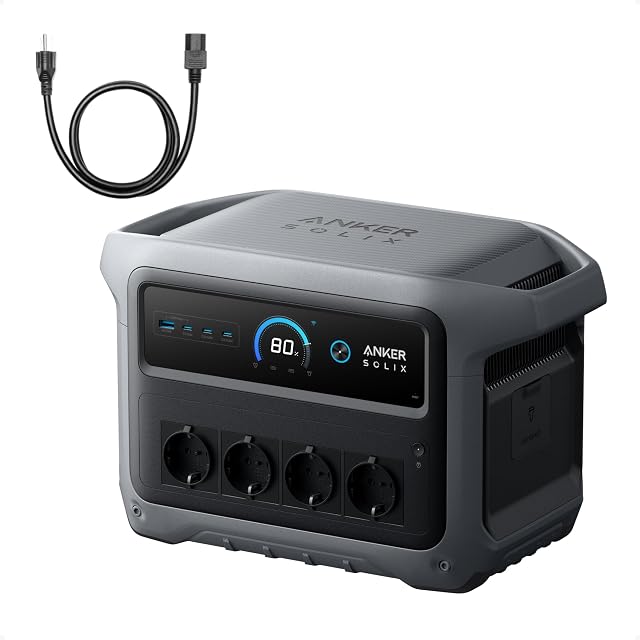
1024 Wh nominal · 2000 W continuous, 3000 W peak · 4000 cycles to 80 % · full in 49 min at 1600 W · 600 W solar at 60 V max · 10 ms UPS · 9 ports
A 1024 Wh station rated 2000 W continuous and 3000 W peak, charged in a stated 49 minutes at 1600 W, with a 600 W solar input capped at 60 V and a 10 ms switchover.
Best for: A household that will pair the station with panels and wants the input window published rather than guessed.
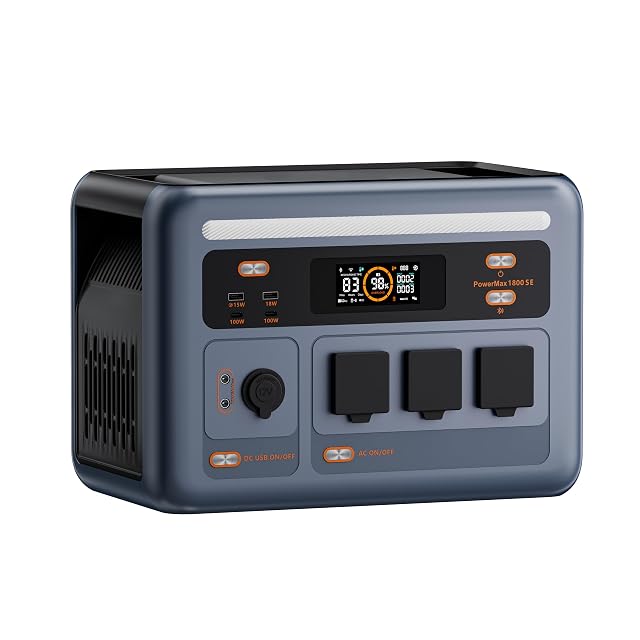
1024 Wh nominal · 1800 W · LiFePO4, 3500+ cycles · 0–80 % in 1 h at 800 W · 11 outputs · 14 kg · app control
A 1024 Wh LiFePO4 station rated 1800 W with eleven outputs, charged from 0 to 80 % in a stated hour at 800 W, and controllable from a phone application.
Best for: A household that wants three mains sockets and app monitoring rather than the lightest unit on the shelf.
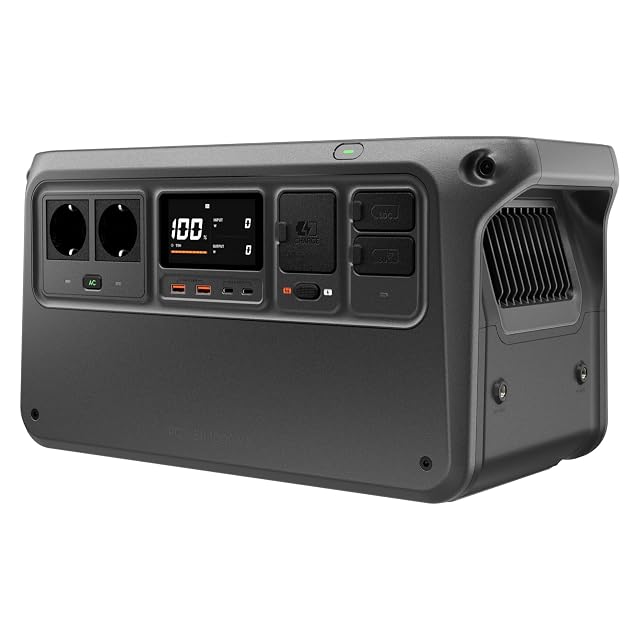
1024 Wh nominal LFP · 2600 W · 0–80 % in 37 min · 10 ms UPS switchover · 26 dB stated · 2× 140 W USB-C · 5-year warranty
A 1024 Wh LFP station rated 2600 W that reaches 80 % in a stated 37 minutes, switches to battery in 10 ms, and carries two 140 W USB-C ports and a five-year warranty.
Best for: Someone already inside the DJI ecosystem, or anyone who needs the shortest recharge and a documented switchover time.