Watt-hours say how long, watts say what you can plug in · review
VTOMAN FlashSpeed 300, 230 Wh, 300 W with a 600 W peak review
A 230 Wh LiFePO4 station rated 300 W continuous with a 600 W peak, charged in a stated 2.5 hours from the mains and offering six outputs including a 100 W USB-C port.
The bottom line A small LiFePO4 station that publishes the two things most of its shelf leaves out: a cycle count with its percentage, and four named charging inputs. What it does not publish is a usable capacity, and at 230 Wh nominal the gap between the label and the socket matters more than it would on a larger unit.
The smallest station in this family, and the one whose specification sheet is least evasive about the battery.
The figures this station writes down
A 230 Wh LiFePO4 pack, 300 W continuous with a 600 W peak, and six outputs: one mains socket, three USB-A, one 100 W USB-C and a DC5521. The second bullet gives 3000 full cycles to 80 % capacity — a count with its qualifier attached, which is worth noting because most of this shelf publishes the count alone.
Charge input, left out
A usable capacity. The 230 Wh figure describes the cells; what leaves the mains socket is less, because the chemistry keeps a reserve and the inverter costs something on the way out. No listing on this shelf publishes that second number, and this one is no exception.
The 600 W peak has no duration beside it either. A surge tolerance held for a fraction of a second and one held for several seconds are printed identically.
The limit the maker draws
Four charging routes are named — mains at 90 W, car, solar and 100 W USB-C — and the solar panel is explicitly sold separately. The full-charge time of 2.5 hours is quoted for the mains supply.
Where it sits
Against the larger units in this family it is a different class of purchase: phones, a laptop, lights and a camera, rather than anything with a heating element. VTOMAN names over-charge, over-discharge, over-voltage, over-current and short-circuit protection among ten; the manual, not this page, is where those behaviours are described.
Availability
German Amazon store quoted about 100 € when this page was compiled.
French, Italian and Spanish Amazon catalogues carry an entry for it, with nobody selling.
American and British Amazon stores returned nothing at all, so the buy button there runs a search instead of landing on an empty page.
These figures are what Keepa reported on the day this page was last updated. Availability and pricing move without notice.
Prices quoted in this text were read on 16 September 2026. The live price is at the top of the page.
What it gets right, and what it leaves out
Strengths
Cycle rating carries its capacity percentage, which most listings on this shelf leave off
100 W USB-C output is enough to charge a laptop without going through the inverter
Mains, car, solar and USB-C inputs are all named, so the unit is not tied to one charger
Compromises
No usable capacity is published — 230 Wh is what the cells hold, not what reaches the socket
The 600 W peak is quoted without the duration it is held for
Solar panel sold separately, which the third bullet states
Specifications
Capacity
230 Wh, stated in the title; no usable figure is published
Continuous and surge output
300 W continuous with a 600 W peak, fifth bullet; the peak carries no duration
Chemistry
LiFePO4, first and second bullets, described as more heat-tolerant than an NCM pack
Cycle life
3000 full cycles to 80 % of original capacity, second bullet, which the listing converts to “up to 10 years”
Recharge time
Full in 2.5 hours from a 90 W mains supply, third bullet; car, solar and 100 W USB-C inputs are also named
Output sockets
1× 230 V AC (300 W), 3× USB-A at 18 W maximum, 1× USB-C at 100 W, 1× DC5521, fifth bullet
Published thermal limits
Nowhere in the listing — over-temperature is named among the protections, without a figure
Amazon reference
B0H3B8G28F (same reference on 4 Amazon marketplaces)
EAN
0746792051461
Questions owners ask about this one
Will 230 Wh run a small fridge overnight?
That depends on what the fridge draws over a night, which is a measured figure rather than a label one. The listing publishes a nominal 230 Wh and no usable figure, so the honest answer is that the arithmetic needs a measurement this page does not have.
What does “3000 cycles” mean here?
The second bullet states 3000 full cycles with 80 % of the original capacity remaining at the end. That pair — a count and a percentage — is what makes a cycle figure comparable, and it is published in this case.
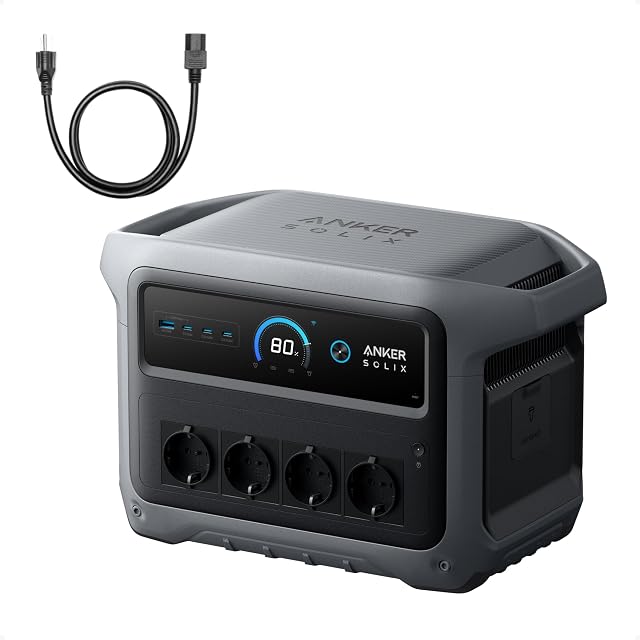
1024 Wh nominal · 2000 W continuous, 3000 W peak · 4000 cycles to 80 % · full in 49 min at 1600 W · 600 W solar at 60 V max · 10 ms UPS · 9 ports
A 1024 Wh station rated 2000 W continuous and 3000 W peak, charged in a stated 49 minutes at 1600 W, with a 600 W solar input capped at 60 V and a 10 ms switchover.
Best for: A household that will pair the station with panels and wants the input window published rather than guessed.
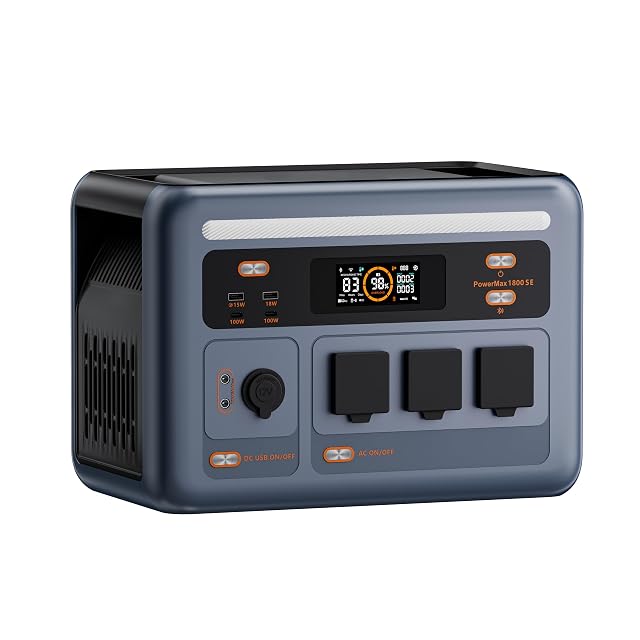
1024 Wh nominal · 1800 W · LiFePO4, 3500+ cycles · 0–80 % in 1 h at 800 W · 11 outputs · 14 kg · app control
A 1024 Wh LiFePO4 station rated 1800 W with eleven outputs, charged from 0 to 80 % in a stated hour at 800 W, and controllable from a phone application.
Best for: A household that wants three mains sockets and app monitoring rather than the lightest unit on the shelf.
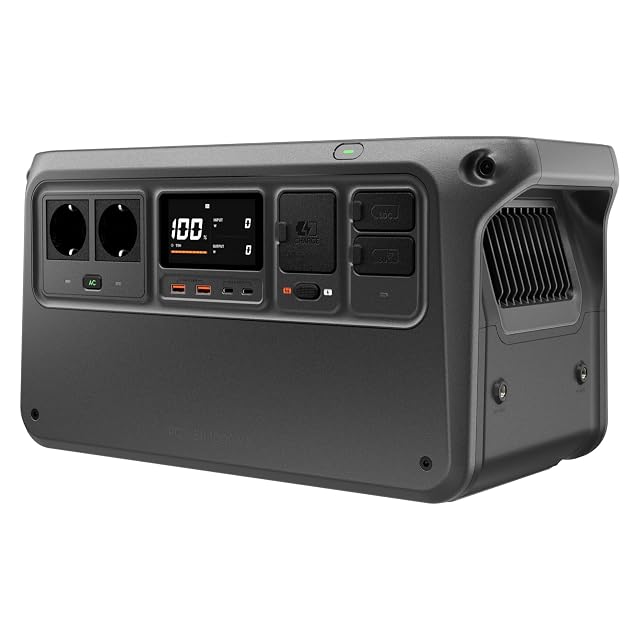
1024 Wh nominal LFP · 2600 W · 0–80 % in 37 min · 10 ms UPS switchover · 26 dB stated · 2× 140 W USB-C · 5-year warranty
A 1024 Wh LFP station rated 2600 W that reaches 80 % in a stated 37 minutes, switches to battery in 10 ms, and carries two 140 W USB-C ports and a five-year warranty.
Best for: Someone already inside the DJI ecosystem, or anyone who needs the shortest recharge and a documented switchover time.