Lumens fade with the battery, and the battery is the part that ages · review
Philips Four spotlights, 28 LEDs each, 7500 K cool white, polycrystalline panel review
A four-pack of solar spotlights with 28 LEDs each at 7500 K, using polycrystalline panels chosen for durability and corrosion resistance, switching automatically at dusk.
The bottom line The only light in this family to publish a colour temperature, and the only one to explain why it uses the panel type it does. It publishes no lumens, no battery figure and no IP code in its bullets.
Four spotlights with a published colour and an explained panel.
Seven and a half thousand kelvin
Cool white, published as a figure. Seven lights in this family and one gives a Kelvin value. The rest say warm white or nothing, which describes a family of colours rather than one.
At 7500 K this is a daylight white — good on stone and brick, less flattering on a lawn than the 3000 K lights here.
The panel, and the reasoning
Polycrystalline, chosen for durability and corrosion resistance rather than for efficiency. Naming the cell type and the reason is unusual; on a panel this small the efficiency difference matters far less than surviving five winters.
The switching
Dusk to dawn, with the mechanism described: the light detects the change in daylight and switches accordingly. No motion detection.
What is missing
Lumens, despite 28 LEDs per unit. A battery figure. An IP code — the title says waterproof and no bullet gives a rating.
Availability
German Amazon store quoted about 20 € when this page was compiled.
American, British, French, Italian and Spanish Amazon stores returned nothing at all, so the buy button there runs a search instead of landing on an empty page.
These figures are what Keepa reported on the day this page was last updated. Availability and pricing move without notice.
Prices quoted in this text were read on 16 September 2026. The live price is at the top of the page.
What it gets right, and what it leaves out
Strengths
A colour temperature is published as a figure — 7500 K — which nothing else in this family gives
The panel type is named and the reason given: polycrystalline for durability and corrosion resistance
Dusk-to-dawn switching described by mechanism rather than as a feature name
Compromises
No lumen figure despite 28 LEDs per light
The battery is described as high capacity with no number
No IP code in the bullets, only the word waterproof in the title
Specifications
Brightness
Nowhere in the listing — 28 LEDs are named without a lumen figure
Run time at a stated mode
Nowhere in the listing
Battery capacity
Described as high capacity in the second bullet; no figure is published
Replaceability
Nowhere in the listing
Panel size
Absent as a dimension; the panel is polycrystalline, chosen for durability and corrosion resistance, second bullet
Motion detection
None — dusk-to-dawn automatic switching instead, third bullet
Ingress rating
Named as waterproof in the title; no IP code appears in the bullets
Colour temperature
7500 K cool white, from the title — the only light here to publish a Kelvin value
Amazon reference
B0FCFLBVBK (same reference on 1 Amazon marketplace)
EAN
8721103124913
Questions owners ask about this one
What does 7500 K look like?
A cool, slightly blue white — closer to daylight than to a domestic bulb. Warm white lights in this family sit around 3000 K and give a yellower light. It is a matter of taste and of what is being lit; publishing the figure is what lets the choice be made.
Why polycrystalline rather than monocrystalline?
The second bullet gives durability and corrosion resistance as the reasons. Monocrystalline cells are typically more efficient; polycrystalline are cheaper and, the listing argues, more robust. On a small garden panel the efficiency difference is minor.
brightness not published · run time not published · 800 mAh NiMH battery · replaceability not stated · 120 mAh panel · light sensor, no motion detection · IP65 · warm white, no figure
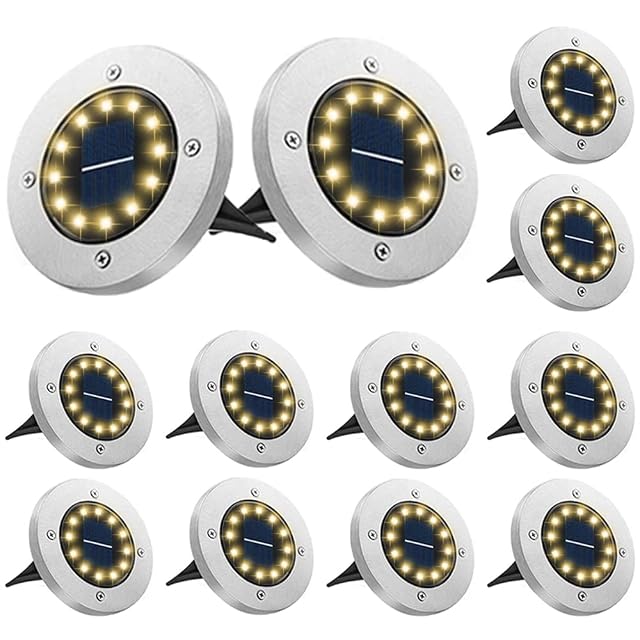
A twelve-pack of solar ground lights with 12 LEDs each, an 800 mAh NiMH battery charged by a 120 mAh panel over six hours, in 304 stainless steel with IP65.
Best for: A path that needs twelve lights and where the previous set failed at the switch.
brightness not published · run time not published · 800 mAh rechargeable battery · replaceability not stated · panel size not published · no motion detection · ingress rating not published · colour temperature not published
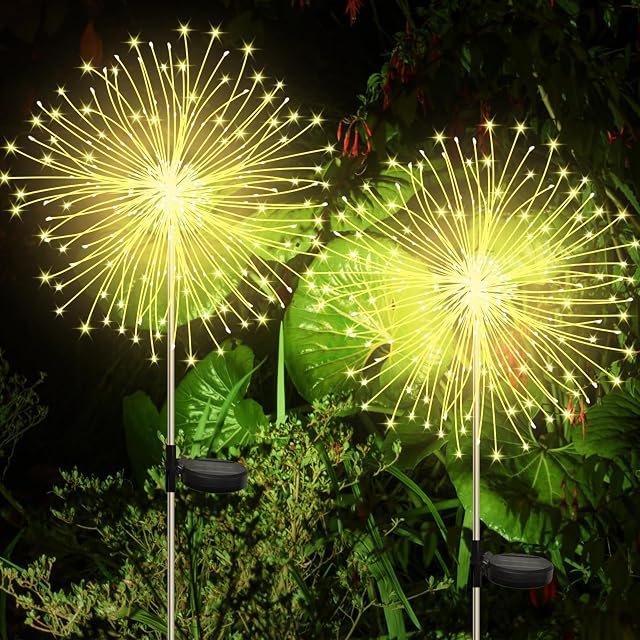
A pair of decorative solar stakes with 120 LEDs each on 60 flexible copper wire branches, with eight lighting modes and a memory function.
Best for: A summer party or a border where the effect matters and the specification does not.
brightness not published · run time not published · battery capacity not published · replaceability not stated · panel size not published · no motion detection · IP44 · 3500 K warm white
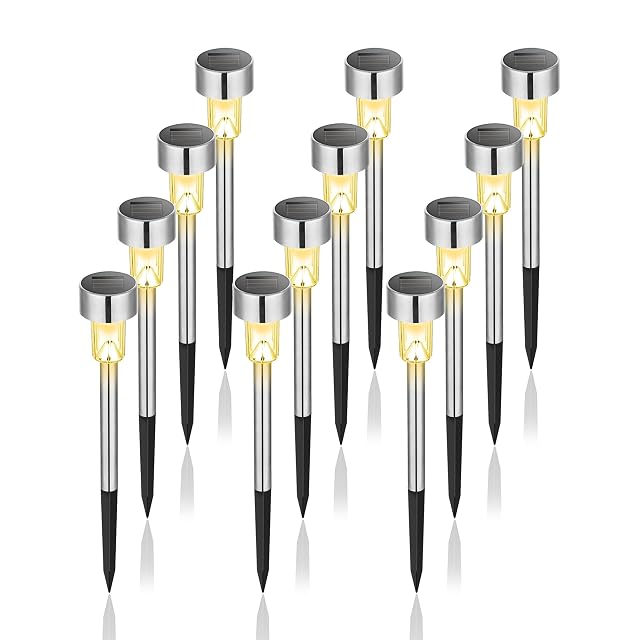
A twelve-pack of solar path lights with integrated heads and transparent shades, 3500 K warm white LEDs, in stainless steel and ABS with an IP44 rating.
Best for: A long path where twelve lights are needed and each one matters less.