Skip to content

Victron Energy 500 VA pure sine, 12 V to 230 V, 900 W peak vs Green Cell 300 W pure sine, 12 V to 230 V, 600 W peak

What does an inverter cost you when nothing is plugged in?

Both of these produce a pure sine wave from twelve volts, and both are small enough to live in a van. The interesting line is not the output. It is the idle consumption — what the inverter draws with nothing connected, hour after hour, out of the battery that is keeping it alive. Across the whole sine wave inverter family in this catalogue, exactly one listing publishes that figure.

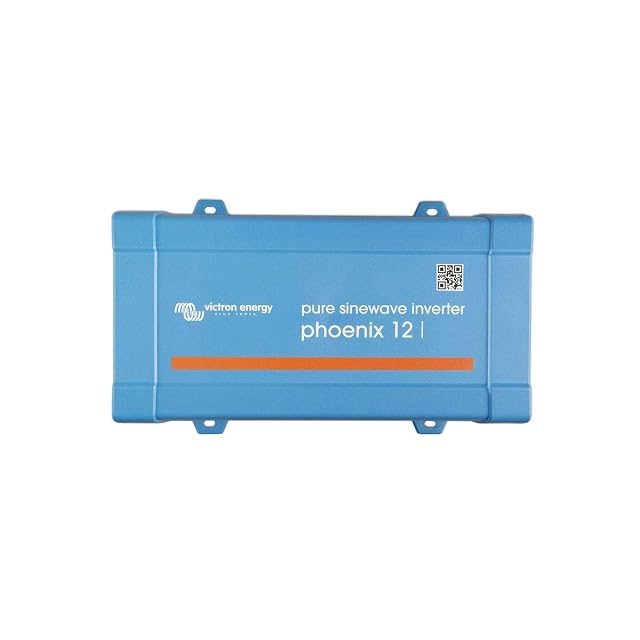
Victron Energy Phoenix 500 VA pure sine inverter with Schuko socket

Victron Energy 500 VA pure sine, 12 V to 230 V, 900 W peak

Wins 4 of 7

Check price

≈ £134 / €120

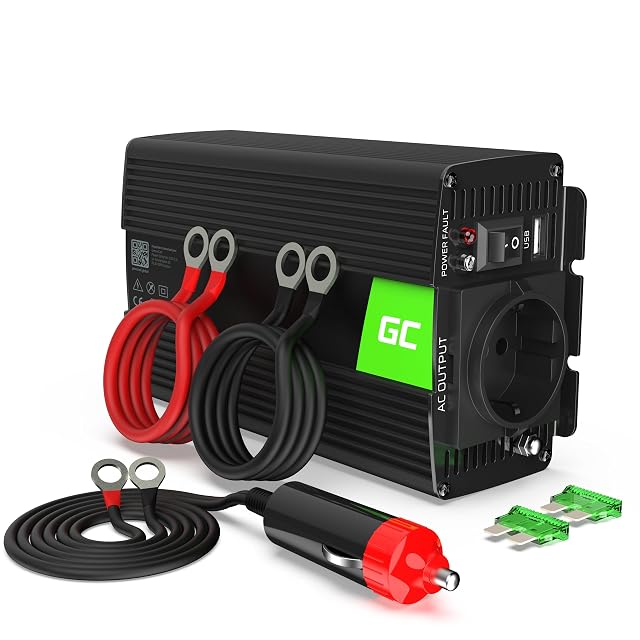
Green Cell 300 W pure sine inverter with mains socket and USB port

Green Cell 300 W pure sine, 12 V to 230 V, 600 W peak

Wins 1 of 7

Check price

≈ €49

Line by line

Compared on 500 VA pure sine, 12 V to 230 V, 900 W peak 300 W pure sine, 12 V to 230 V, 600 W peak
Waveform Pure sine, second bullet Pure sine, from the title
Continuous and surge output 500 VA continuous with a 900 W peak, second bullet; the peak carries no duration 300 W continuous with a short-term peak up to 600 W, first bullet; the peak carries no duration
Idle consumption 1 W in zero-load ECO mode, second bullet — the ONLY inverter in this family to publish an idle figure Nowhere in the listing
Efficiency Described as high in the second bullet; no percentage is published Nowhere in the listing
Input range 12 V DC from leisure or vehicle batteries, first bullet; no voltage range is published 12 V battery, first bullet; no voltage range is published
Protections Nowhere in the listing as a list Described as a range of safety features and certifications, fourth bullet; none is named individually
Cooling Absent as a description; Hybrid HF technology is named in the fifth bullet as giving compact dimensions and low weight Nowhere in the listing

A tick means one listing published something the other did not, or published a better figure. It does not mean the product is better, and the column is not a score out of anything: a maker who says less loses lines here without losing a comparison. The two verdicts below are where the page is settled.

Which one, for whom

Buy the Victron Energy 500 VA pure sine, 12 V to 230 V, 900 W peak

Wins on the figure that matters to anyone leaving an inverter switched on: one watt in zero-load ECO mode. That is roughly two amp-hours a day out of a twelve-volt battery, and an inverter that does not publish it could be drawing five times as much without anyone noticing until the morning. Higher output too, and the only cooling-related statement in the pair.

Buy the Green Cell 300 W pure sine, 12 V to 230 V, 600 W peak

Less output and less published, and it takes the protections line for a reason worth stating: it at least says protections exist. Neither listing names one individually, which on a device converting a battery bank to mains is a gap both share. For a modest load in a van, three hundred watts of pure sine is a genuine product at a genuine price.

Questions this pairing raises

Why does idle consumption matter so much?

Because an inverter left switched on draws its idle current continuously, and a battery does not care that nothing is plugged in. One watt is about two amp-hours a day at twelve volts; five watts is ten. Over a weekend parked up, that is the difference between a full battery and a flat one.

Is VA the same as W?

Not quite. Volt-amperes are apparent power; watts are real power, and the ratio between them is the power factor. For resistive loads they are the same; for motors and switching supplies they are not. One of these is rated in VA and the other in W, which is worth remembering when comparing the two numbers directly.

Does pure sine actually matter?

For some things, decisively. Motors run hotter on a modified wave, certain medical equipment refuses it outright, and some electronics buzz audibly. Both of these produce pure sine, which is why that line is a tie — and it is the first thing to establish about any inverter.

The full reviews

  • Victron Energy 500 VA pure sine, 12 V to 230 V, 900 W peak

    pure sine · 500 VA continuous, 900 W peak, duration not stated · 1 W in zero-load ECO mode · high efficiency, figure not published · 12 V input · protections not listed · Hybrid HF technology, cooling not described

    A 500 VA pure sine inverter drawing a stated 1 W in zero-load ECO mode, with a VE.Direct communication port and a high starting capability for motor loads.

    Best for: A van or boat where the inverter stays switched on and the idle draw is the deciding specification.

    ≈ £134 / €120

  • Green Cell 300 W pure sine, 12 V to 230 V, 600 W peak

    pure sine · 300 W continuous, 600 W peak, duration not stated · idle consumption not published · efficiency not published · 12 V input · protections named without a list · cooling not described

    A 300 W pure sine inverter with a 600 W short-term peak, mains sockets and a USB port for small devices, sold with safety certifications named but not identified.

    Best for: Occasional use from a car battery where the loads are small and the inverter is switched off between them.

    ≈ €49

A price quoted in the text of a PowerVerdict page dates from the day that page was written; the live figure beside each product is fetched while you read and replaces it.